Votar en DEMOCRACIA es un acto que se realiza sin mayor protocolo y queda en su totalidad bajo la organización, supervisión y poder de la SOCIEDAD CIVIL. Votar en DEMOCRACIA es tener la plena seguridad de que el gobierno sabrá mantenerse en su lugar y que respetará irrestrictamente, los resultados. Incluso hay países donde no se afecta ninguna actividad. Cada quien vota a la hora y día que puede (y si quiere), en sitios acondicionados (y hasta por correo), que para nada interfieren con algo tan importante como son las clases.
Votar en DEMOCRACIA es saber que la POLICIA, quien es la UNICA encargada de brindar
seguridad al acto, se limitará a estar presente (sólo en la periferia del sitio de votación),
para actuar sólo en el caso de que la SOCIEDAD CIVIL lo solicite.
Votar en DEMOCRACIA es tener la plena seguridad de que el EJERCITO y LAS ARMAS estarán absolutamente ausentes durante TODO el proceso de elección y durante TODO el acto de votación.
En Venezuela, como NO tenemos DEMOCRACIA, votar significa:
1) Imponerse al miedo de expresar libremente su preferencia política
2) Defender y hasta tener que pelear, para que se respete nuestra decisión
2) Calarse la presencia, la interferencia, la
intromisión y hasta las órdenes, de los militares
3) Exponerse a pasar un mal rato o un rato de
extremo peligro, o hasta perder la opción de
votar, si osa reclamar ante cualquier irregularidad
4) Perder clases y trabajo
5) Apertrecharse de comida y medicinas; agua y
enseres de primera necesidad, como si nos
preparáramos para una eventualidad de alto riesgo
6) Enfrentarse a la violencia de un régimen que
se sabe perdido y que usará todo el poder para
imponerse fraudulentamente, como ya lo ha hecho,
reiteradamente, en pasadas elecciones.
7) Prepararse emocionalmente, físicamente y
moralmente, para los acontecimientos posteriores
al cierre del acto de votación.
Pregunto a los colegas que hayan vivido lo suficiente como para recordar si en nuestra vida
democrática, ¿pasamos antes por semejante cadena de obstáculos tan sólo por acudir a votar?.
Prof. Alicia Villamizar G.
sábado, noviembre 25, 2006


viernes, noviembre 24, 2006
Un Blog repleto de música y videos
Excelente blog. Vale la pena ver la historia completa del cantante Fredy Mercury. Haga click arriba.
miércoles, noviembre 22, 2006
La Historia y la Política
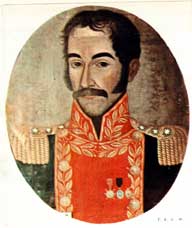
Una entrevista con el historiador venezolano ELIAS PINO ITURRIETA.
Poseedor de una brillante carrera académica, el nombre de este autor ha estado ligado a la investigación historiográfica venezolana desde hace décadas. Actualmente, reparte sus horas entre el trabajo como director del
Instituto de Investigaciones Históricas de la Universidad Católica Andrés Bello y la metódica labor de "esculcar" en la azarosa memoria colectiva del país. Fruto de este interés surgen exitosos libros donde vierte la poderosa
capacidad analítica de sus saberes en un lenguaje diáfano y ameno.
Entrevista de ALBINSON LINARES.
El culto al prócer necesario
¿Cuánto daño cree que ha hecho la "liturgia bolivariana"?
Ha sido terrible. Bolívar se convirtió en una cortina que nos impide ver la realidad. La sociedad frente a sus retos está miope o ciega. Siempre se le interpone la liturgia del héroe. Para los problemas internacionales está la Carta de Jamaica, para los de educación se puede mirar el Discurso de Angostura y así se usa una cantidad de anacronismos considerados como evangelios y muy pocas personas se atreven a develar la cortina de humo. Somos niños chiquitos, párvulos que dependemos del mensaje de un maestro muerto. Es de miedo la patología que eso representa.
Al exaltar a los próceres, ¿el Gobierno busca legitimarse?
Sin duda.Chávez se proclama heredero de una parte de la historia, que es la única que considera importante. Se remite a la Guerra de Independencia y niega toda la historia posterior, los avances del siglo XX, uno de los más ricos de la historia venezolana, y se propone como el hilo conductor entre ese período y el destino futuro de la sociedad Simplemente lo que hace es ignorar, a propósito, una parte de la historia de Venezuela.
Chavez quiere convertirse en el constructor de la que debiera ser la "verdadera" historia, lo que ya es una locura. El hecho es que quiere ser el hijo unigénito de Bolívar y, en consecuencia, hace una ruptura de la conciencia nacional.
¿Qué intención revisten los cambios de forma como el nuevo nombre de la República y la reforma de los símbolos patrios?
Borrar la historia. Esto se relaciona con los regímenes totalitarios que niegan el pasado o lo inventan a su manera. El pasado existió y no se puede mover, aunque este Gobierno lo altera a su gusto.
Ejemplos sobran como Stalin, Hitler, Mao y el mismo Chávez. En esos cambios hay un empeño de apropiación del poder a través de la apropiación de la memoria, más que del pensamiento. Se trata de adecuarse al proyecto de hegemonía política como lo hizo Stalin en su momento.
¿Qué efectos tiene la descalificación constante de la historia reciente que el Presidente hace en sus alocuciones?
Cuando Chávez niega estos 50 años nos está negando a nosotros mismos. Está negando la obra de nuestros padres y abuelos. Es curioso y enfermizo que a pesar de esa negación nosotros lo apoyemos. Hay una relación sumamente patológica entre Hugo Chávez y la sociedad contemporánea. El Presidente niega al siglo XX al decir que fue un siglo perdido para Venezuela, del cual somos los protagonistas, y pese a esto vamos y votamos por él. Hay una sintonía entre la prepotencia del profeta y la minusvalía de la sociedad
venezolana que acepta con beneplácito que la insulten.
Entre elecciones y juramentos
Como académico, ¿percibe una ideología clara en el discurso revolucionario?
No me atrevería a hablar de ideologías. Ahí no hay ninguna organización coordinada de pensamiento que le permita a un analista serio decir con responsabilidad que hay una plataforma ideológica o un entramado de ideas que sirven de sustrato para un proyecto político. Lo que hay es una
apropiación progresiva del poder y en función de eso, el Presidente hace estereotipos y proposiciones sueltas para justificarse en la medida que el tiempo pasa.
¿El abuso de este culto podría agotar el discurso oficialista?
Aquí hay un problema muy digno de atención, la exacerbación del culto hecha por Chávez plantea la posibilidad de su desaparición porque a los dioses no se les "chotea". No puedes sacar la eucaristía del templo y tirarla a la avenida o repartirla desde una carroza.
Cuando lo desacralizas y lo pones demasiado cerca le ves las limitaciones al héroe; ése es el riesgo de la apuesta chavista... también puede ocurrir la moderación. Es decir, la existencia de una figura ejemplar que nos inspira, pero que no nos determina la vida.
¿Cuánto influiría la desaparición física de Fidel Castro en la política venezolana?
Su fallecimiento influiría enormemente si hay una reacción digna por parte de la sociedad cubana. Eso va a depender de cómo el pueblo de Cuba sienta la muerte de Castro, si muestra repudio ante tantos años de despotismo eso
determinará nuestra vida y ayudará al debate venezolano.
Entonces se demostrará que el pueblo de Cuba no ha navegado por el mar de la felicidad como dicen algunos.
Pese a las constantes legitimaciones, ¿considera democrático este gobierno?
Para nada: es reaccionario. La trampa la hicimos nosotros al tener como único guía al Padre de la Patria desde 1830. Eso es algo que ninguna sociedad puede entender si ha pensado en un proyecto de vida sucesivo, es decir, que dependa de una evolución progresiva de las cosas que han sucedido a través del tiempo. Como marchan los tiempos, el talante obliga a tener cierta distancia con los totalitarismos tradicionales. Aquí lo más grave, que ni siquiera sucedió en la época del dictador Gómez, es la imposición del capricho de un solo hombre.
Gómez, el tirano por antonomasia, consultaba todas las noches con Vallenilla Lanz, por lo menos. Éste no; lo que piensa en la noche aparece al día siguiente en la Gaceta Oficial, ése es el problema que tenemos. El resumen de toda la sociedad y de toda la República en la persona de este teniente coronel. Por fortuna, así como hay un personalismo presente también hay una evolución republicana que ha corrido en paralelo a través del tiempo.
¿Cuán importante es la cita de los electores venezolanos el próximo 3 de diciembre?
Así como persisten el personalismo y sus seguidores vienen también del pasado un hábito de republicanismo y un compromiso de ciudadanía cada vez más crecientes. Se trata de dos fuerzas en pugna desde el comienzo del ensayo liberal de 1830 que adquiere mayor vigor después de la muerte de Gómez, en la tercera década del siglo XX. No es una fuerza histórica relativamente significativa, sino cada vez más vigorosa que le puede dar con éxito la pelea al personalismo encarnado en Chávez.
Desde mi perspectiva como historiador, un encontronazo de ese tipo, el choque de las dos locomotoras en cuyos vagones hemos viajado desde hace doscientos años, debe ocurrir en las elecciones del 3 de diciembre. De la colisión puede salir un nuevo país que se viene anunciando desde el propio
momento de su nacimiento.
¿Qué significado tendría para la oposición venezolana la reelección del presidente Chávez?
Si gana, como espero que no ocurra, se comprobará algo elemental y fundamental: que sus adversarios no somos cuatro gatos. Somos media Venezuela o un poco más y si la gente sale a votar el 3 de diciembre no estaremos lamentando la derrota sino celebrando la victoria. Algo importante es que pese a los 7 años del proyecto hegemónico hay una sociedad que se debate por el interés democrático, eso abre perspectivas muy halagüeñas a la sociedad venezolana del futuro. Creo que esto evitará la redondez de esta autocracia que Chávez ha fabricado progresivamente.
¿Cree que es mejor hablar entre nosotros los humanos que hablar con los dioses o con los héroes?
Por supuesto, ése es el epígrafe de mi libro “El Divino Bolívar”.La historia no la hacen los dioses, sino los hombres; a veces se juega con la mitología y el psicoanálisis para demostrar cómo de veras el destino depende de nosotros. No podemos dejar esto en manos de los dioses. En primer lugar porque hubo un tiempo sin dioses y en segundo porque en buena medida los dioses son criaturas que nosotros hemos hecho. En consecuencia, los podemos
deshacer y crear nuevos en casos de necesidad.
domingo, noviembre 19, 2006
Un dia en la vida de un jubilado
A day in the life of a retired
The best epoch of the life although think the contrary
Alfredo Ascanio (askain)
When I was very young I had an erroneous concept of a person of more than 60 years and besides retired. In my country retired account for 5% of the population.
With my frequent trips to Miami I have acquired a taste for the hotel of the old seated set against a boulevard without doing nothing. But today the people retired will have to make an about face in its traditional methods, if it wishes to align itself with modern trends. One changes one’s views as one gets along in years.
For example I feel youth and I try to live my life without complexes. But my wife recalls me the following thing: “you should start acting your age and stop buying those flashy dresses”.
But they are my children the ones that encourage me and they affirm: “despite 60 years of work and more work he is still alive and kicking”.
Today was born a new granddaughter. The daughter of my son Fernando (Fer). When the girl was born I was charged with announcing the glad tidings.
When that happens, all the friends want to come to greet. We expected only a few people but they came all and sundry. And they asked me for the new granddaughter Veronica and by their parents. The conversation was so interesting that it was midnight before we knew it.
We were traveling all day long to go to the clinic and to return to the house. The traffic in Caracas is frightening!!
After so an hour to travel we arrived at the clinic all in. All in all they numbered only twenty kilometers. Therefore my wife suggested to travel in a taxi. All in all is the best solution.
I was about to board the taxi when all of to sudden I realized that I had lost my key of the house. Believe it or not, the key is as old as the rest of the universe. Therefore I did not worry. Besides my wife has a new key.
“I don’t think we have enough champagne to go round”, said Fernando and immediately I answered him: "Why not go fifty-fifty on the deal?”
Everybody says that the girl has taken after his father. Fernando´s wife being such an adorable child, she takes all the good things of life for granted, as though she had a right to them, and is always discontented as a result.
In my time it was considered remove the thing to send not only flowers but to send a thank a note to person who had invited us to to know the new son or daughter.
To return to the house it was such to pleasant day that I decided to strike out for the country with my wife. To sum up, the walk was to success. Nevertheless, this Sunday I’m going to work up the lectures for next week and my reports for OhmyNews.
You can’t get something for nothing and I couldn’t go to bed before one o’clock. I’ve always been a night owl.
The best epoch of the life although think the contrary
Alfredo Ascanio (askain)
When I was very young I had an erroneous concept of a person of more than 60 years and besides retired. In my country retired account for 5% of the population.
With my frequent trips to Miami I have acquired a taste for the hotel of the old seated set against a boulevard without doing nothing. But today the people retired will have to make an about face in its traditional methods, if it wishes to align itself with modern trends. One changes one’s views as one gets along in years.
For example I feel youth and I try to live my life without complexes. But my wife recalls me the following thing: “you should start acting your age and stop buying those flashy dresses”.
But they are my children the ones that encourage me and they affirm: “despite 60 years of work and more work he is still alive and kicking”.
Today was born a new granddaughter. The daughter of my son Fernando (Fer). When the girl was born I was charged with announcing the glad tidings.
When that happens, all the friends want to come to greet. We expected only a few people but they came all and sundry. And they asked me for the new granddaughter Veronica and by their parents. The conversation was so interesting that it was midnight before we knew it.
We were traveling all day long to go to the clinic and to return to the house. The traffic in Caracas is frightening!!
After so an hour to travel we arrived at the clinic all in. All in all they numbered only twenty kilometers. Therefore my wife suggested to travel in a taxi. All in all is the best solution.
I was about to board the taxi when all of to sudden I realized that I had lost my key of the house. Believe it or not, the key is as old as the rest of the universe. Therefore I did not worry. Besides my wife has a new key.
“I don’t think we have enough champagne to go round”, said Fernando and immediately I answered him: "Why not go fifty-fifty on the deal?”
Everybody says that the girl has taken after his father. Fernando´s wife being such an adorable child, she takes all the good things of life for granted, as though she had a right to them, and is always discontented as a result.
In my time it was considered remove the thing to send not only flowers but to send a thank a note to person who had invited us to to know the new son or daughter.
To return to the house it was such to pleasant day that I decided to strike out for the country with my wife. To sum up, the walk was to success. Nevertheless, this Sunday I’m going to work up the lectures for next week and my reports for OhmyNews.
You can’t get something for nothing and I couldn’t go to bed before one o’clock. I’ve always been a night owl.
sábado, noviembre 18, 2006
Si queremos la libertad hay que salir a conquistarla
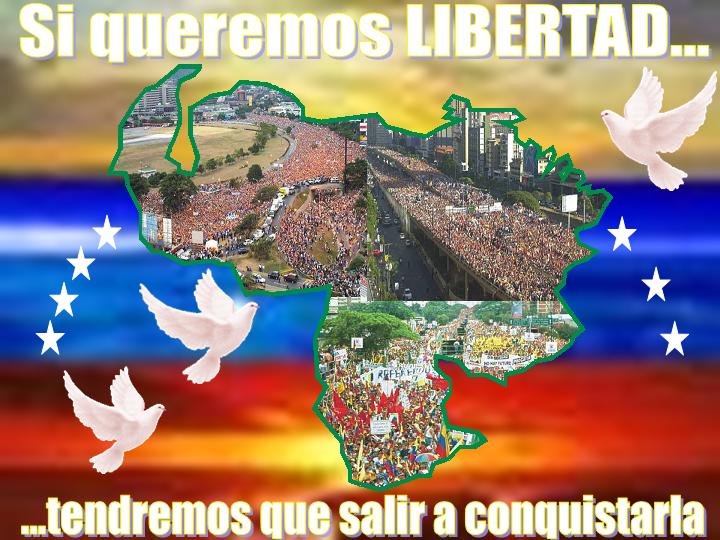
Esto es la pura verdad...hay que votar y defender el voto. El futuro está aquí...muy cerca.
Como ejemplo podemos ver la HOJA WEB del nuevo Presidente de México Felipe Calderón:
jueves, noviembre 16, 2006
New-Assignment es un proyecto nuevo
Un nuevo proyecto de periodismo ciudadano parecido a OhMyNews esta naciendo para comenzar en el primer trimestre del año 2.007. Allí estaremos participando.
A new project of civic journalism seemed to OhMyNews this being born to begin in the first quarter of the year 2.007. There I will be participating.
Las normas de estilo para periodistas cooperativos:
COOPERATIVA
El verdadero periodismo ciudadano está en:
The verdadro civic journalism is here
OHMyNews
A new project of civic journalism seemed to OhMyNews this being born to begin in the first quarter of the year 2.007. There I will be participating.
Las normas de estilo para periodistas cooperativos:
El verdadero periodismo ciudadano está en:
The verdadro civic journalism is here
martes, noviembre 14, 2006
En AMERICAN-Rhetoric encontrarán buenos discursos
AMERICAN-Rhetoric es un banco de discursos políticos de la Nación Norteamericana.Allí pueden oir y leer desde los discursos de Martin Luther King hasta el más actual de Nancy Pelosi.O los discursos del Presidente George W. Bush o Ronald Reagan. Los 100 discursos más importantes.
lunes, noviembre 13, 2006
The war of the surveys
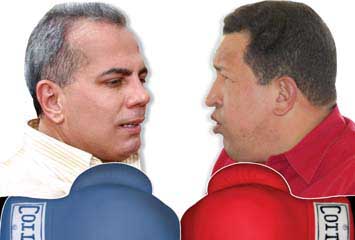
Venezuela: The War of the Surveys
In the quest for power, uncertainty appears
Alfredo Ascanio (askain)
Published 2006-11-16 14:49 (KST)
A recent Evans/McDonough poll shows that only 65 percent of Venezuelans are confident about next month's elections. But answers to a majority of the questions in this survey indicate that the country is politically polarized. This phenomenon creates uncertainty for the elections.
Forty percent of the voters think the vote will be conducted with fraud. In other words, a full 4 out of 10 Venezuelans doubt the integrity of their own electronic voting machines.
The other issue is "the war of the surveys." On Nov. 7, as unknown Venezuelan business -- Consultants 30.11 -- announced that President Hugo Chavez had the support of 57 percent of the people. His challenger, Manuel Rosales, had 35 percent. But it should be noted that Petroleum of Venezuela (PDVSA) paid that poll.
On Wednesday, the University Complutense of Madrid and the Venezuelan business Veneopsa said that with a sample of more than 3,000 polled, Chavez had 57.8 percent of the votes, Rosales 26.9 percent.
Investigative journalist Alfred Keller found that almost 6 million votes came from Rosales's group and another 6 million came from Chavez's group; in other words, a full tie between Chavez and Rosales (both at 40 percent).
Chavez's reelection campaign has been less aggressive. He has said that to gain votes he needs new support and another strategy. The new support consisted of inviting Brazilian President Luiz Inacio Lula da Silva to inaugurate a second bridge on the Orinoco River, which was built by companies run by both governments.
Lula's visit was very important because he spoke with passion about the work of Chavez and he recognized that he had faced the same problems in his reelection campaign. A director of the National Electoral Counsel protested the presence of Lula and his endorsement on TV for Chavez.
Elections in Venezuela will be held on Dec. 3. The two candidates are very different leaders. Chavez has the advantage of political power but Rosales has the example of his work as governor of Zulia state.
According to another survey, it is possible that Rosales will obtain 48 percent of the votes and Chavez 40 percent. But in the current political climate, there is a dangerous possibility that the votes will be very close. We could see a crisis as happened in Mexico recently. Another possibility: Chavez, 57.4 percent, Rosales, 30.9 percent. These averages are the most recent data.
In countries with little political culture, it is not acceptable for a contender to win a presidential election with a few votes more than his opponent. Always protests arise.
I have interviewed some local people about the presidential election. Some of the inhabitants of poor neighborhoods complain that the government has promised them dwellings but have failed to deliver. Others say that the fault for these failures lie not with Chavez but with his ministers.
The middle class complains about unemployment, currently at 15 percent, and inflation, 12 percent per year. Members of this social class are more conscious that the government is populist and autocratic and believe that it espouses the same communist ideology as Cuba.
Come Dec. 3, we expect that uncertainty will be high because the Venezuelan political campaign will be watched not only by Venezuelans but also by all Latin Americans and even by the United States and European.
©2006 OhmyNews
Other articles by reporter Alfredo Ascanio
2006/11/14 오전 6:20
Today 15 November the University Complutence of Madrid and the business Venezuelan Veneopsa said that with a sample of more than three thousand polled people Hugo Chavez has the 57,8% of the votes and Roales the 26,9%.
Hoy en GLOVISION se presentó Douglas Shoen, director ejecutivo de la famosa empresa de encuestas PENN SHOEN AND BERLAND y señaló que el trabajo que ellos realizaron con una muestra representativa del universo y con 3% de margen de error de todos los inscritos en el Registro Electoral, indica que la elección será muy cerrada pues casi existe para hoy 16 de noviembre un empate técnico entre Chávez y Rosales y que los resultados de ellos coiciden con los de Alfredo Keller. Aunque no se puede predecir quién ganaría la contienda, lo que se puede decir es que la tendencia favorece a Rosales y que lo más probable es que los indecisos decidan el ganador.
Esta apreciación se confirma en este enlace:
Los enlaces para ser un buen periodista
Voy a colocar dos enlaces para que un periodista perefeccione su trabajo. El primer enlace aparece arriba y se trata Polynter Org. Y en segundo enlace aparece de inmediato:
JOURNALISM
domingo, noviembre 12, 2006
Un reportaje importante

En el Diario Venezolano QUINTO DIA del 10 al 17 de noviembre aparece un reportaje escrito por Lorenzo Glusty sobre el aporte en dólares que ha hecho el Presidente Chávez a otros países. La suma total es mayor de 17 mil millones de dólares, pero de esa asombrosa cantidad que represnta casi el 57% de la deuda externa venezolana, los países más favorecidos por esa manejo autoritario y personal de los recursos del país, son: CUBA con casi 7 mil millones de dólares (el 41% del total), ARGENTINA con un poco más de 4 mil millones de dólares (24% del total) y una cantidad también de casi 4 mil millones de dólares para BRAZIL (24% del total). El 11% del total, o sea casi 2 mil millones de dólares se donaron para el Caribe Insular y otros países como: Ecuador, Bolivia,Paraguay, Uruguay, Indonesia, Niger,Burkina Faso,Mauritania, Mali y un aporte al Canal Oficial de TV llamado TELE-SUR.
En cuanto al intercambio recurriendo al sistema feudal del TRUEQUE se supone que el país debería haber recibido una buena cantidad de vacas preñadas y otros productos agropecuarios. Pero como no se ha hecho una auditoria para saber dónde se encuentran esos bienes, existe la duda de que realmente existan o en caso de existir en que finca se encuentran esas cabezas de ganado.
Además el Presidente ha realizado más de 100 viajes con fines políticos a un coste medio de 2 millones de dólares cada viaje en un avión con un valor de 80 millones de dólares que compró el gobierno para esa finalidad.Estas dos partidas suman 280 millones de dólares.
Es la segunda vez que un gobierno venezolano distribuye dinero con fines proselitistas. La primera vez fue cuando se llevó a Juicio al Presidente Carlos Andrés Pérez por aportar 250 mil dólares a los Contras de Nicaragua.
In the FIFTH DAY Venezuelan Newspaper, of the 10 al 17 of November, appears a report written by Lorenzo Glusty about the contribute in dolares that has done the President Chévez to other countries.
The grand total is over 17 thousand million dollars, but of that amazing quantity that represnta almost the 57% of the Venezuelan external debt.
The most favored countries by that authoritarian management and personnel one of the resources of the country, they are: CUBA with almost 7 thousand million dollars (the 41% of the total) , ARGENTINA with a little more than 4 thousand million dollars (24% of the total) and a quantity also of almost 4 thousand million dollars for BRAZIL (24% of the total). The 11% of the total, that is to say almost 2 thousand million dollars were donated for the Insular Caribbean and other countries.
As soon as commutation through al feudal system of the EXCHANGE 0il by other goods, It is supposed that the country should have received a goods quantity of pregnant cows and other farm products. But as themselves not an control has done to know where those goods are found, the doubt exists that really they exist or in case to exist in which farm those heads of cattle are found.
Besides the President has carried out more than 100 trips with political end to a medium price of 2 million dollars each trip in an airplane with a value of 80 million dollars that bought the government for that purpose.These two departures they add 280 million dollars.
It is the second time that a Venezuelan government distributes money with end procelitistas. The first time was when was carried to Judgment al President Carlos Andrés Pérez by contributing 250 thousand dollars to the Contras of Nicaragua.
viernes, noviembre 03, 2006
El analisis de un experto en Campañas Presidenciales
Las cuatro (4) conclusions de un experto:
Conclusion 1: the 10 million votes slogan for Chavez is dead. At most around 10 million people will bother to vote on election day, and even if we assume the polls most favorable to Chavez, at least 30% will not vote for him. In other words Chavez will be lucky if he even gets close to 7 million votes if all goes his way until December, no matter that Ameliach already conceded it would not pass the 8 million mark.
Conclusion 2: there are very anomalous shifts in voting patterns between states. The way in which these shifts happened allow to suspect that any normalization of the voting pattern is more likely to favor Rosales than Chavez. That is, it will be very difficult for Chavez to get back his 2004 60% high. Unless of course the CNE helps along as it does already by being shamelessly lenient on all the campaign abuses committed by chavismo.
Conclusion 3: Chavismo has a top vote, a “plafond”, which should not be more than 6 million if we consider the electoral history of the elections since 1998. It is very, very unlikely that chavismo will pass that 6 million mark. And this assuming that the past CNE results are real results. If we think that something is amiss (look at Aragua for example, something that cannot be explained with normal and historical voting patterns) then Chavez might not even reach 5 million.
Conclusion 4: The best scenario so far is Chavez winning with 55% of votes cast but only 35% of the electorate. This would be a good victory if we were in a democratic regime where no major changes are planned. However this result is woefully insufficient for the massive socialization plans and constitutional changes that Chavez has announced. An opposition renewed with 40% or more of the vote will not simplify the political life of the country in the way that Chavez hopes. In other words, far from bringing peace to Venezuela, the result of December 3 might in fact bring back instability for a long, long time. Chavez set himself the trap in which he is falling. By aiming for 10 million, and then 8 and then getting 6 at most, he will turn his victory into a defeat, a self inflicted political wound which will make him a lameduck president from day one of his new term.
There is one month left before the election. We will see.
Conclusion 1: the 10 million votes slogan for Chavez is dead. At most around 10 million people will bother to vote on election day, and even if we assume the polls most favorable to Chavez, at least 30% will not vote for him. In other words Chavez will be lucky if he even gets close to 7 million votes if all goes his way until December, no matter that Ameliach already conceded it would not pass the 8 million mark.
Conclusion 2: there are very anomalous shifts in voting patterns between states. The way in which these shifts happened allow to suspect that any normalization of the voting pattern is more likely to favor Rosales than Chavez. That is, it will be very difficult for Chavez to get back his 2004 60% high. Unless of course the CNE helps along as it does already by being shamelessly lenient on all the campaign abuses committed by chavismo.
Conclusion 3: Chavismo has a top vote, a “plafond”, which should not be more than 6 million if we consider the electoral history of the elections since 1998. It is very, very unlikely that chavismo will pass that 6 million mark. And this assuming that the past CNE results are real results. If we think that something is amiss (look at Aragua for example, something that cannot be explained with normal and historical voting patterns) then Chavez might not even reach 5 million.
Conclusion 4: The best scenario so far is Chavez winning with 55% of votes cast but only 35% of the electorate. This would be a good victory if we were in a democratic regime where no major changes are planned. However this result is woefully insufficient for the massive socialization plans and constitutional changes that Chavez has announced. An opposition renewed with 40% or more of the vote will not simplify the political life of the country in the way that Chavez hopes. In other words, far from bringing peace to Venezuela, the result of December 3 might in fact bring back instability for a long, long time. Chavez set himself the trap in which he is falling. By aiming for 10 million, and then 8 and then getting 6 at most, he will turn his victory into a defeat, a self inflicted political wound which will make him a lameduck president from day one of his new term.
There is one month left before the election. We will see.
Un video que es una aberración política.
Arriba apare un video que alguien gravó en una reunión del Ministro de Energía y Presidente de Petróleo de Venezuela (PDVSA) donde vulnerando muchas reglas de la República e incluso vulnerando la Constitución Nacional señala que PDVSA es roja, rojísima y que el funcionario que no esté de acuerdo con la revolución es mejor que no trabaje en esa empresa. O sea, un simple funcionario público, empleado del pueblo de Venezuela, sirviendo de operador político para hacer el más vil de los chantajes: "si ud, no está con nosotros, pues lo tenemos que votar". Incluso en las leyes venezolanas ese comportamiento es penado con 2 años de carcel. Pero de inmediato el Presidente señaló que no importa lo que digan,que el que no sea revolucionario pues no puede estar trabajando con el gobierno. Un chantaje para crear miedo y para que el funcionario público vote por Chávez.
En la época del General Pérez Jimenez también se dijo que todos los funcionarios tenían que votar por él, cuando se realizó un referendo, y aunque Pérez Jimenez perdió y se supo que eñ Partdido Unión Republicana Democratica (URD) había ganado, se hizo un fraude para que continuara en el poder el dictador. Es decir que toda autocracia bien sea de derecha o de izquierda utiliza los mismos procediientos de chantaje. Esto realmente es una aberración política.
Más o menos dijo:
I am indignant as you, because still in this business exist Light peoples, peoples that say that here we are in some processes that should be transparent; not mister, here all of us are in the middle of a revolution and the one that itself be resisted we are going to recall it with force and with courage, this business is red and has to be faithful to our President, and that not accept that objective has to renounce so that the true revolutionary come.
Es que en los gobiernos dictatoriales y autocráticos las leyes no valen nada . Las leyes es un PARAPETO para aparentar que se está en democracia, hasta que al surgir los hechos como el que relatamos aquí, nos damos cuenta de que no les interesa el marco legal
martes, octubre 31, 2006
YOU TUBE...
Cuando se dicen mentiras...son para no destapar lo que vendría luego. Antes de ser presidente se dicen muchas mentiras y medias verdades. En este caso a una pregunta del periodista entrevistador se asegura "Yo no soy socialista" y después de muchos años se descubre que no era comunista sino peor aún : fachista.
When are told with lies. .. for not uncover what would come then. Before being president many lies are told. In this case to a question of the journalist interviewer : "I am not a socialist" and after many years is discovered that only could not be communist but worse still: fachista.
When are told with lies. .. for not uncover what would come then. Before being president many lies are told. In this case to a question of the journalist interviewer : "I am not a socialist" and after many years is discovered that only could not be communist but worse still: fachista.
lunes, octubre 30, 2006
Hopes for Lula's New Term
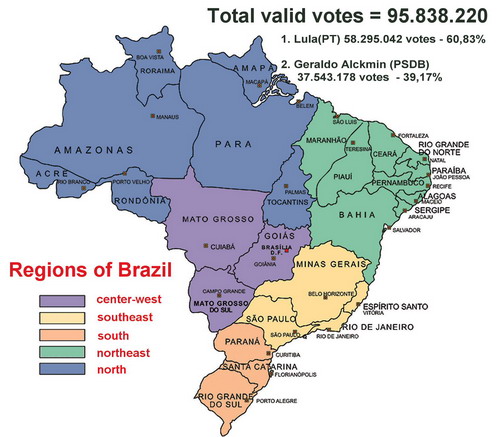
Hopes for Lula's New Term
Brazil's growth depends on economic reforms
Antonio Carlos Rix (carlosrix)
Published 2006-10-31
Luis Inacio Lula da Silva has practically repeated his voting success of 2002 when he was elected president of Brazil for the first time. Now he has four more years to make his name good in the history of Brazilian presidents.
President Lula got 61.27 percent of the valid votes (with 52.8 million votes) four years ago. Now, with 58.3 million votes that represent 60.83 percent of the valid votes he has done even better.
Proportionally, it was in Brasilia Federal District that the voting for Lula grew most. It jumped from 499,407 votes to 765,008, 53 percent in the second turn. Alckmin lost votes in 23 units of the federation in relation to his first turn, he had a weak performance.
Different sectors of the economy have evaluated as positive the re-election of President Lula, but they want reforms so that the country can grow in the next four years.
For Armando Monteiro Neto, president of the Nacional Confederation of Industry, the priority of the new government must be fiscal reformation. "It is necessary to grow more and better. It is necessary to complete the cycle of reforms and, over all, to prioritize the pro-growth agenda," he said.
Marcio Cypriano, president of the Febraban (Brazilian Federacy of Banks) and of the Bradesco (private bank) said that "it is necessary to insist on a new cast of reforms, starting with tax. It is necessary for the economy to reduce its costs to produce more and to extend the base of the fiscal collection. Work reform also is vital so that the companies produce new job vacancies."
Abram Szajman, president of the Fecomercio-SP (Federacy of the Commerce of the State of Sao Paulo), says that the challenge for the president will be to promote economic growth more efficiently, in accordance with a new insertion of Brazil in the world market. "To reach out next to the modern economies of the world is the task necessary to fight the delay and to improve our conditions of life," said Szajman.
Once again the Brazilian people give their vote of trust to Lula.
The hope of many is that the president uses to his advantage this chance, yes, a chance to clean a government still spotted by many scandals. The most recent of them: illicit money used to try to purchase a false dossier against rival presidential candidate Geraldo Alckmin. The case resulted directly in the change of the direction of Lula's PT party, and punishment of the militants involved just weeks before the voting of this last Sunday. This was the main reason Alckmin actually came second.
President Lula and his allies have evidently been able to revert the unfavorable picture in time for the polls. Now it remains to discover if the federal prosecutors and federal police will take these cases to their conclusion point: punish the ones involved. The fact is, the case of the dossier by itself could be enough reason for the impeachment of President Lula.
Brazilians want to see justice done. Will it happen?! Not likely I think, only time will tell.
©2006 OhmyNews
Total valid votes: 95.838.220
Lula (PT) 58.295.042 votes. 60,83%
Alckmin (PSDB) 37.543.178 votes. 39,17%
Periodismo Brasileño
En el enlace de arriba aparece el No. 7 de la revista PJ:BR, sobre el periodismo en Brasil.
Revista PJ:Br - Jornalismo Brasileiro (ISSN 1806-2776), which is an academic electronic publication produced by the "Pensamento Jornalístico Brasileiro" Study Group (ECA/USP), announces the launching of its 7th issue – The Borders of Journalism -, relative to the second semester of 2006. The current issue presents a diversified manifold of investigative approaches to the field of journalism, divulging a set of works that are in constant dialogue with other areas of knowledge and open to multiple methodological tendencies.
Revista PJ:Br - Jornalismo Brasileiro (ISSN 1806-2776), which is an academic electronic publication produced by the "Pensamento Jornalístico Brasileiro" Study Group (ECA/USP), announces the launching of its 7th issue – The Borders of Journalism -, relative to the second semester of 2006. The current issue presents a diversified manifold of investigative approaches to the field of journalism, divulging a set of works that are in constant dialogue with other areas of knowledge and open to multiple methodological tendencies.
Returns the Dirty War
Returns the Dirty War
A dangerous presidential campaign
Today has occurred somewhat unusual in Venezuela. The government has intercepted 12.000 e-mail and its passwords of people for them suspicious.
The authors of this illegal fact are the Cuban specialists (G2 Cuban) that work the the Situational Room of the offices of the government.
The hakers of this work are some Indian specialists that were brought to Venezuela to do this "dirty war".
This explains that the present government has distrust of many so much people of its own groups as of the groups that the adversan.
This fact is linked with the news that the candidate of the opposition will cross the linea percentage of the intention of the vote (40% Chavez and 40% Rosales), according to the last surveys.
The groups that support to Chavez they are not sure that they will gain the presidential elections.
The Radio Nexx, located in Miami and conducted by Bernando Sworn, reported that a disicente of the G2 Cuban (intelligence service) them supply the CD with the complete information.
This notified source to be sure of the fidelity of these e-mails has asked some people that aparecenen the list if is certain that that is their e-mail and their password and the people coonfirmaron that was certain and they remained surprised.
This fact is alarming the country because is a first step to deteriorate the democracy. Only in the epoch of the dictatorship of the General Marcos Pérez Jimenez, in the decade of the years 50, procedures seemed were used al to intercept the private telephones.
The story of this event appears in a link of the Radio Nexx and trasmitido in Spanish language.
HAGA CLICK AQUI
A dangerous presidential campaign
Today has occurred somewhat unusual in Venezuela. The government has intercepted 12.000 e-mail and its passwords of people for them suspicious.
The authors of this illegal fact are the Cuban specialists (G2 Cuban) that work the the Situational Room of the offices of the government.
The hakers of this work are some Indian specialists that were brought to Venezuela to do this "dirty war".
This explains that the present government has distrust of many so much people of its own groups as of the groups that the adversan.
This fact is linked with the news that the candidate of the opposition will cross the linea percentage of the intention of the vote (40% Chavez and 40% Rosales), according to the last surveys.
The groups that support to Chavez they are not sure that they will gain the presidential elections.
The Radio Nexx, located in Miami and conducted by Bernando Sworn, reported that a disicente of the G2 Cuban (intelligence service) them supply the CD with the complete information.
This notified source to be sure of the fidelity of these e-mails has asked some people that aparecenen the list if is certain that that is their e-mail and their password and the people coonfirmaron that was certain and they remained surprised.
This fact is alarming the country because is a first step to deteriorate the democracy. Only in the epoch of the dictatorship of the General Marcos Pérez Jimenez, in the decade of the years 50, procedures seemed were used al to intercept the private telephones.
The story of this event appears in a link of the Radio Nexx and trasmitido in Spanish language.
domingo, octubre 29, 2006
Las Opiniones de Francisco Mires
Por Fernando Mires
Chileno, catederatico de la
Universidad de Oldenburg, Alemania.
Chávez es un gobernante que insulta a casi todo el mundo. Ni siquiera los obispos y cardenales de la Iglesia católica escapan a su desmedida procacidad. A diferencias de Castro, quien posee un excelente uso del idioma, Chávez tiene serias dificultades para articular una frase con otra, y por eso, podría pensarse, suplanta la retórica con el insulto. Sin embargo, hay en su enorme capacidad de injuria, un propósito que obedece -conciente o inconscientemente- a un cálculo muy frío.
Los de Chávez son insultos cuidadosamente programados destinados a crear una zona de hipertensión emocional e impedir así que la política se articule en torno a algo que no sea el mismo.
De este modo, él neurotiza la vida política hasta tal punto, que resulta imposible, en medio de tanta injuria -las que sus seguidores de "camisas rojas", multiplican- que los polos que se forman alrededor de su persona puedan encontrar algún medio civilizado de comunicación.
Efectivamente: lo primero que sorprende a un visitante en Venezuela, es que después de siete años de gobierno, Chávez ha conseguido partir al país político en dos pedazos.
Esos pedazos no son de izquierda o de derecha. Pues a un lado están quienes aman a Chávez. Al otro lado, los que lo odian. Entre ambos no hay ninguna conexión. Quienes eran amigos, ya no lo son. Quienes se respetaban, se desacreditan mutuamente. Nadie discute con nadie.
Chávez ha conseguido destruir la polémica, condición de la política, e introducir en su lugar dos monólogos paralelos. El mismo monologa sin limitación de tiempo (hasta siete horas) en su programa semanal, mientras las "camisas rojas" aplauden las vulgaridades más grandes que es posible oír de nadie (ni siquiera en Berlusconi, quien en materia de vulgaridades es vicecampeón mundial).
Si alguien ha leído relatos de los primeros años del fascismo en Italia no se sorprenderá si los encuentra de nuevo en Venezuela.
La comunicación política ha sido destruida radicalmente por el propio gobernante. Y la destrucción de la comunicación política es la primera condición para todo proceso de facistización. Eso es lo que está viviendo Venezuela. "Esto va a terminar muy mal", me dicen muchos venezolanos. "Que Dios no los oiga", les digo yo.
Naturalmente, también hay chavistas inteligentes. Pero cada vez que uno habla de Chávez, dicen -como avergonzados- que lo principal no es Chávez, sino el proceso del cual Chávez es sólo un símbolo. "¿Cuándo habían alcanzado los pobres más representación que durante Chávez? En eso hay que fijarse", dicen. "Chávez es secundario", afirman. Pero, ¿es que se puede hablar del proceso sin Chávez? Chávez está en todas partes, nadie realiza una "misión" (palabra militar-clerical) sin su autorización. Nadie tiene ninguna idea que no sea de Chávez.
Él, como el mismo se definió, es el coach del equipo. Eso quiere decir que él decide quién jugará o no. "Ah pero Chávez ha llevado a los pobres a la sociedad", dicen los chavistas inteligentes. ¿A cúal sociedad? - se pregunta uno, asombrado.
No importa que en Chile, Argentina, Brasil, tengan lugar políticas sociales más importantes y sobre todo más racionales que las que han tenido lugar en Venezuela.
Lo decisivo es que Chávez, a diferencia de los gobernantes de esos países, no ha integrado a los pobres a la sociedad, sino que al Estado. Sin suprimir la pobreza, Chávez la ha estatizado. Las misiones, entre otras tantas iniciativas populistas, son los cordones umbilicales que atan a los pobres con el Estado. Y el Estado es Chávez.
Los pobres son de Chávez; por eso deben seguir siendo pobres. Si, hay por cierto, algunos chavistas inteligentes. Pero no lo son tanto como para reconocer que Chávez no representa un proyecto de sociedad, como ellos imaginan, sino que, antes que nada y sobre todo, un proyecto de toma de poder.
Las misiones, los círculos bolivarianos, los comandos de "camisas rojas" son medios para tomar el poder desde abajo. La constitución (a quien él en su estilo llama: "la bicha"), el escudo, la bandera, sobre todo Bolívar, todos los poderes simbólicos de una nación, han pasado a ser propiedad de Chávez quien los modifica o interpreta según su antojo. Chávez intenta tomar el poder desde todos lados. Desde abajo, desde el medio, y por supuesto, por arriba cuando haciéndose aclamar en "foros mundiales" despotrica en nombre de la justicia universal, en contra de su ultimo descubrimiento: el "imperialismo norteamericano".
Pero Chávez no es antiimperialista. Chávez es en primera línea, antidemócrata. Por eso ha insultado, de la manera más soez, a diferentes gobernantes y políticos democráticos de América Latina. Lagos, Fox, Toledo, Uribe, Lourdes Torres, entre tantos, han debido sufrir las injurias de Chávez.
Nadie ha insultado en su vida a tantas personas decentes como ha hecho Chávez. No obstante, se equivocan aquellos que piensan que Chávez insulta por insultar. Como ha sido dicho, sus insultos, cuidadosamente calculados, forman parte de su estrategia de poder. Mediante el insulto, destruye las posibilidades del diálogo político, tanto hacia el interior como hacia el exterior del país.
Y donde no hay política, comienza el terror. La creciente ocupación de la administración pública por personeros militares, es el ejemplo más visual de la corrosión de la política que tiene lugar en Venezuela. Mientras en el pasado los militares latinoamericanos tomaban el poder de golpe, en Venezuela lo toman en "cámara lenta". El segundo paso, será la militarización de la nación, y es desde ese objetivo que hay que entender los llamados del Presidente a defender al país de una invasión norteamericana.
El objetivo de Chávez es, evidentemente, provocar un clima de alta tensión con los EEUU. Sus injurias a Bush han ido aumentando en cantidad y en volumen. Exasperado tal vez porque el gobierno de EE UU no pisa (todavía) la trampa, ha agredido en los términos más repugnantes que es posible imaginar, a Condolezza Rice, algo que nunca habría hecho un Fidel Castro (dictador, pero educado).
La verdad es que Venezuela no tiene ningún problema real con los EE UU: ni económico, ni territorial, ni de ninguna índole. A diferencias de Castro quien siempre arremete verbalmente en contra de USA sobre la base de problemas concretos, Chávez arremete gratuitamente, con el objetivo más que evidente, de provocar un conflicto internacional.
Ahora bien, en una situación de alta tensión internacional, Chávez intentará dividir al país entre "patriotas antiimperialistas", y "esbirros al servicio del imperialismo". De este modo, estar en contra de Chávez significará "traicionar a la patria". Los ataques a EE UU son, evidentemente, una pieza clave en su proyecto de toma total del poder.
Va ser muy difícil para la oposición democrática de Venezuela terminar con el chavismo. El régimen no sólo controla el Estado (y el petróleo) sino que se ha infiltrado hacia el interior de la sociedad civil. Los comandos chavistas actúan en las provincias, pueblos y barrios, y la violencia crece "hacia dentro". El chavismo controla, además, los medios de recuento electoral. Y desde el exterior, los Ramonet y los Chomsky (y la izquierda festiva que les sirve de coro) están dispuestos a legitimar cualquiera monstruosidad siempre que sea antinorteamericana.
Es cierto que Chávez llegó al poder como consecuencia de la corrosión de la democracia venezolana, y esa es la deuda histórica que tienen los dos principales partidos con su nación. Pero siete años ya es suficiente castigo.
Es cierto también que en Abril del 2002, una fracción enloquecida de la oposición, siguiendo el juego a Chávez, se embarcó en una aventura golpista. Gracias a esa aventura, realizada a espaldas de la mayoría de la oposición (justo en el momento cuando Chávez estaba políticamente cercado) Chávez obtuvo como regalo una legitimación democrática que, el menos que nadie, puede ostentar.
Pero poco a poco, la oposición ha ido ordenando sus filas. Chávez intentará destruirla al crear una línea divisoria "o Venezuela o los EEUU". Si la oposición estará en condiciones de imponer la verdadera línea divisoria que atraviesa a Venezuela, que es la de "chavismo o democracia" (o incluso, "fascismo o democracia") es algo que está por verse. Pero si la oposición triunfa -y un día, más temprano que tarde triunfará- puede que ese no sea un triunfo de "la izquierda". En cualquier caso, será un triunfo de la democracia. Pero, antes que nada, será, un triunfo de la decencia.
Chileno, catederatico de la
Universidad de Oldenburg, Alemania.
Chávez es un gobernante que insulta a casi todo el mundo. Ni siquiera los obispos y cardenales de la Iglesia católica escapan a su desmedida procacidad. A diferencias de Castro, quien posee un excelente uso del idioma, Chávez tiene serias dificultades para articular una frase con otra, y por eso, podría pensarse, suplanta la retórica con el insulto. Sin embargo, hay en su enorme capacidad de injuria, un propósito que obedece -conciente o inconscientemente- a un cálculo muy frío.
Los de Chávez son insultos cuidadosamente programados destinados a crear una zona de hipertensión emocional e impedir así que la política se articule en torno a algo que no sea el mismo.
De este modo, él neurotiza la vida política hasta tal punto, que resulta imposible, en medio de tanta injuria -las que sus seguidores de "camisas rojas", multiplican- que los polos que se forman alrededor de su persona puedan encontrar algún medio civilizado de comunicación.
Efectivamente: lo primero que sorprende a un visitante en Venezuela, es que después de siete años de gobierno, Chávez ha conseguido partir al país político en dos pedazos.
Esos pedazos no son de izquierda o de derecha. Pues a un lado están quienes aman a Chávez. Al otro lado, los que lo odian. Entre ambos no hay ninguna conexión. Quienes eran amigos, ya no lo son. Quienes se respetaban, se desacreditan mutuamente. Nadie discute con nadie.
Chávez ha conseguido destruir la polémica, condición de la política, e introducir en su lugar dos monólogos paralelos. El mismo monologa sin limitación de tiempo (hasta siete horas) en su programa semanal, mientras las "camisas rojas" aplauden las vulgaridades más grandes que es posible oír de nadie (ni siquiera en Berlusconi, quien en materia de vulgaridades es vicecampeón mundial).
Si alguien ha leído relatos de los primeros años del fascismo en Italia no se sorprenderá si los encuentra de nuevo en Venezuela.
La comunicación política ha sido destruida radicalmente por el propio gobernante. Y la destrucción de la comunicación política es la primera condición para todo proceso de facistización. Eso es lo que está viviendo Venezuela. "Esto va a terminar muy mal", me dicen muchos venezolanos. "Que Dios no los oiga", les digo yo.
Naturalmente, también hay chavistas inteligentes. Pero cada vez que uno habla de Chávez, dicen -como avergonzados- que lo principal no es Chávez, sino el proceso del cual Chávez es sólo un símbolo. "¿Cuándo habían alcanzado los pobres más representación que durante Chávez? En eso hay que fijarse", dicen. "Chávez es secundario", afirman. Pero, ¿es que se puede hablar del proceso sin Chávez? Chávez está en todas partes, nadie realiza una "misión" (palabra militar-clerical) sin su autorización. Nadie tiene ninguna idea que no sea de Chávez.
Él, como el mismo se definió, es el coach del equipo. Eso quiere decir que él decide quién jugará o no. "Ah pero Chávez ha llevado a los pobres a la sociedad", dicen los chavistas inteligentes. ¿A cúal sociedad? - se pregunta uno, asombrado.
No importa que en Chile, Argentina, Brasil, tengan lugar políticas sociales más importantes y sobre todo más racionales que las que han tenido lugar en Venezuela.
Lo decisivo es que Chávez, a diferencia de los gobernantes de esos países, no ha integrado a los pobres a la sociedad, sino que al Estado. Sin suprimir la pobreza, Chávez la ha estatizado. Las misiones, entre otras tantas iniciativas populistas, son los cordones umbilicales que atan a los pobres con el Estado. Y el Estado es Chávez.
Los pobres son de Chávez; por eso deben seguir siendo pobres. Si, hay por cierto, algunos chavistas inteligentes. Pero no lo son tanto como para reconocer que Chávez no representa un proyecto de sociedad, como ellos imaginan, sino que, antes que nada y sobre todo, un proyecto de toma de poder.
Las misiones, los círculos bolivarianos, los comandos de "camisas rojas" son medios para tomar el poder desde abajo. La constitución (a quien él en su estilo llama: "la bicha"), el escudo, la bandera, sobre todo Bolívar, todos los poderes simbólicos de una nación, han pasado a ser propiedad de Chávez quien los modifica o interpreta según su antojo. Chávez intenta tomar el poder desde todos lados. Desde abajo, desde el medio, y por supuesto, por arriba cuando haciéndose aclamar en "foros mundiales" despotrica en nombre de la justicia universal, en contra de su ultimo descubrimiento: el "imperialismo norteamericano".
Pero Chávez no es antiimperialista. Chávez es en primera línea, antidemócrata. Por eso ha insultado, de la manera más soez, a diferentes gobernantes y políticos democráticos de América Latina. Lagos, Fox, Toledo, Uribe, Lourdes Torres, entre tantos, han debido sufrir las injurias de Chávez.
Nadie ha insultado en su vida a tantas personas decentes como ha hecho Chávez. No obstante, se equivocan aquellos que piensan que Chávez insulta por insultar. Como ha sido dicho, sus insultos, cuidadosamente calculados, forman parte de su estrategia de poder. Mediante el insulto, destruye las posibilidades del diálogo político, tanto hacia el interior como hacia el exterior del país.
Y donde no hay política, comienza el terror. La creciente ocupación de la administración pública por personeros militares, es el ejemplo más visual de la corrosión de la política que tiene lugar en Venezuela. Mientras en el pasado los militares latinoamericanos tomaban el poder de golpe, en Venezuela lo toman en "cámara lenta". El segundo paso, será la militarización de la nación, y es desde ese objetivo que hay que entender los llamados del Presidente a defender al país de una invasión norteamericana.
El objetivo de Chávez es, evidentemente, provocar un clima de alta tensión con los EEUU. Sus injurias a Bush han ido aumentando en cantidad y en volumen. Exasperado tal vez porque el gobierno de EE UU no pisa (todavía) la trampa, ha agredido en los términos más repugnantes que es posible imaginar, a Condolezza Rice, algo que nunca habría hecho un Fidel Castro (dictador, pero educado).
La verdad es que Venezuela no tiene ningún problema real con los EE UU: ni económico, ni territorial, ni de ninguna índole. A diferencias de Castro quien siempre arremete verbalmente en contra de USA sobre la base de problemas concretos, Chávez arremete gratuitamente, con el objetivo más que evidente, de provocar un conflicto internacional.
Ahora bien, en una situación de alta tensión internacional, Chávez intentará dividir al país entre "patriotas antiimperialistas", y "esbirros al servicio del imperialismo". De este modo, estar en contra de Chávez significará "traicionar a la patria". Los ataques a EE UU son, evidentemente, una pieza clave en su proyecto de toma total del poder.
Va ser muy difícil para la oposición democrática de Venezuela terminar con el chavismo. El régimen no sólo controla el Estado (y el petróleo) sino que se ha infiltrado hacia el interior de la sociedad civil. Los comandos chavistas actúan en las provincias, pueblos y barrios, y la violencia crece "hacia dentro". El chavismo controla, además, los medios de recuento electoral. Y desde el exterior, los Ramonet y los Chomsky (y la izquierda festiva que les sirve de coro) están dispuestos a legitimar cualquiera monstruosidad siempre que sea antinorteamericana.
Es cierto que Chávez llegó al poder como consecuencia de la corrosión de la democracia venezolana, y esa es la deuda histórica que tienen los dos principales partidos con su nación. Pero siete años ya es suficiente castigo.
Es cierto también que en Abril del 2002, una fracción enloquecida de la oposición, siguiendo el juego a Chávez, se embarcó en una aventura golpista. Gracias a esa aventura, realizada a espaldas de la mayoría de la oposición (justo en el momento cuando Chávez estaba políticamente cercado) Chávez obtuvo como regalo una legitimación democrática que, el menos que nadie, puede ostentar.
Pero poco a poco, la oposición ha ido ordenando sus filas. Chávez intentará destruirla al crear una línea divisoria "o Venezuela o los EEUU". Si la oposición estará en condiciones de imponer la verdadera línea divisoria que atraviesa a Venezuela, que es la de "chavismo o democracia" (o incluso, "fascismo o democracia") es algo que está por verse. Pero si la oposición triunfa -y un día, más temprano que tarde triunfará- puede que ese no sea un triunfo de "la izquierda". En cualquier caso, será un triunfo de la democracia. Pero, antes que nada, será, un triunfo de la decencia.
sábado, octubre 28, 2006
The Chávez play - Venezuela and Argentina
The Chávez play - Venezuela and Argentina
Why did Hugo Chávez buy Argentina's debt? Venezuela's president tries his hand at financial
arbitrage.
Just as Venezuela is known for its exports of crude, Argentina is famous for its exports of IOUs. Less than two years after it handed its creditors a world-record loss in a sovereign
debt-exchange, Argentina's government has found an eager new patron in its oil-rich ally. Over the last year, the government in Caracas has bought some $3.1 billion in Argentine bonds. Is this a case of Hugo Chávez, Venezuela's tub-thumping president, putting political solidarity ahead of fiscal prudence? Look
closer.
The roots of the deal lie in the currency controls Mr Chávez imposed on his country during the economic meltdown of 2003. To halt capital flight, he pegged the bolívar, Venezuela's currency, to the dollar (the official rate is now 2,150 to 1), and sharply curtailed opportunities to
buy dollars at that price. As a result, a black market in foreign exchange soon opened up. The
bolívar could not hold its value at the kerbside—a dollar has traded for anything from 2,400 to 2,900 bolívars in the past year—adding to inflationary pressures.
However, unlike most of his countrymen, Mr Chávez can help himself to dollars from the state oil company, PDVSA, or from his own central bank at the official rate. This he did to acquire the $3.1 billion he needed to buy the dollar bonds from Argentina's government, which started
issuing debt with indecent haste after completing its huge bond restructuring in mid-2005.
Argentina's president, Néstor Kirchner, was more than pleased to borrow directly from Venezuela. Doing business with a fellow Latin American leftist is more palatable than asking for money
from the private international lenders he repeatedly bashes. Moreover, Mr Chávez was, in effect, offering to underwrite his debt issue. Venezuela's big purchases meant that Mr Kirchner did not need to test the market's appetite for his government's bonds too deeply.
But almost as soon as he got the Argentine paper, Mr Chávez began to sell it to local Venezuelan banks, at the rate of 2,400 bolívars to the dollar. All told, his government off-loaded $2.4 billion-worth of bonds, pocketing a tidy profit. How tidy? His finance team eagerly announced a
gain of $309m to the press last month; though the true figure may be a bit different.
The banks too were happy. They were free to sell the bonds abroad for dollars, which they promptly did for a handsome profit. Some of them converted the greenbacks back into bolívars at black-market rates, others hung on to them. Either way, this new source of foreign exchange
has relieved pressure on the black market; the bolívar has stabilised and one source of inflationary pressure has eased.
Within Venezuela, critics have complained not about the deal itself, but about who was in on it, and who wasn't. The government has still not revealed its method of choosing which banks would be eligible for a chunk of the massive return Mr Chávez was offering. “Any operation that
hands out $300m discretionally, regardless of the mechanism, is a clear incentive forcorruption,” says Alejandro Grisanti of the Caracas consultancy Ecoanalítica. In the absence of an open bidding process, government officials were free to route the Argentine bonds to banks
already supportive of Mr Chávez, to tie the sale to future support, or to receive payments or favours in exchange for offering them.
But despite this carping, can the two presidents not congratulate themselves on a clever financial manoeuvre that had something for everybody who was party to it? Argentina's government found a reliable customer for its debt; Mr Chávez achieved lower inflation and a $309m
profit for the Venezuelan exchequer; and the local banks divvied up a further gain of $250m-300m.
Unfortunately, there are no free lunches, and there is one big, hidden loser in this transaction: the Venezuelan central bank. Mr Chávez, in effect, plundered its reserves for about $580m, both by forcing it to sell him dollars at the official exchange rate, and by taking dollars
from the state oil company that traditionally went to the central bank. That is a heavy loss to the country, which might need its reserves in a pinch. “But no one's going to complain,” says Walter Molano of BCP Securities, “because nobody owns that money.”
Why did Hugo Chávez buy Argentina's debt? Venezuela's president tries his hand at financial
arbitrage.
Just as Venezuela is known for its exports of crude, Argentina is famous for its exports of IOUs. Less than two years after it handed its creditors a world-record loss in a sovereign
debt-exchange, Argentina's government has found an eager new patron in its oil-rich ally. Over the last year, the government in Caracas has bought some $3.1 billion in Argentine bonds. Is this a case of Hugo Chávez, Venezuela's tub-thumping president, putting political solidarity ahead of fiscal prudence? Look
closer.
The roots of the deal lie in the currency controls Mr Chávez imposed on his country during the economic meltdown of 2003. To halt capital flight, he pegged the bolívar, Venezuela's currency, to the dollar (the official rate is now 2,150 to 1), and sharply curtailed opportunities to
buy dollars at that price. As a result, a black market in foreign exchange soon opened up. The
bolívar could not hold its value at the kerbside—a dollar has traded for anything from 2,400 to 2,900 bolívars in the past year—adding to inflationary pressures.
However, unlike most of his countrymen, Mr Chávez can help himself to dollars from the state oil company, PDVSA, or from his own central bank at the official rate. This he did to acquire the $3.1 billion he needed to buy the dollar bonds from Argentina's government, which started
issuing debt with indecent haste after completing its huge bond restructuring in mid-2005.
Argentina's president, Néstor Kirchner, was more than pleased to borrow directly from Venezuela. Doing business with a fellow Latin American leftist is more palatable than asking for money
from the private international lenders he repeatedly bashes. Moreover, Mr Chávez was, in effect, offering to underwrite his debt issue. Venezuela's big purchases meant that Mr Kirchner did not need to test the market's appetite for his government's bonds too deeply.
But almost as soon as he got the Argentine paper, Mr Chávez began to sell it to local Venezuelan banks, at the rate of 2,400 bolívars to the dollar. All told, his government off-loaded $2.4 billion-worth of bonds, pocketing a tidy profit. How tidy? His finance team eagerly announced a
gain of $309m to the press last month; though the true figure may be a bit different.
The banks too were happy. They were free to sell the bonds abroad for dollars, which they promptly did for a handsome profit. Some of them converted the greenbacks back into bolívars at black-market rates, others hung on to them. Either way, this new source of foreign exchange
has relieved pressure on the black market; the bolívar has stabilised and one source of inflationary pressure has eased.
Within Venezuela, critics have complained not about the deal itself, but about who was in on it, and who wasn't. The government has still not revealed its method of choosing which banks would be eligible for a chunk of the massive return Mr Chávez was offering. “Any operation that
hands out $300m discretionally, regardless of the mechanism, is a clear incentive forcorruption,” says Alejandro Grisanti of the Caracas consultancy Ecoanalítica. In the absence of an open bidding process, government officials were free to route the Argentine bonds to banks
already supportive of Mr Chávez, to tie the sale to future support, or to receive payments or favours in exchange for offering them.
But despite this carping, can the two presidents not congratulate themselves on a clever financial manoeuvre that had something for everybody who was party to it? Argentina's government found a reliable customer for its debt; Mr Chávez achieved lower inflation and a $309m
profit for the Venezuelan exchequer; and the local banks divvied up a further gain of $250m-300m.
Unfortunately, there are no free lunches, and there is one big, hidden loser in this transaction: the Venezuelan central bank. Mr Chávez, in effect, plundered its reserves for about $580m, both by forcing it to sell him dollars at the official exchange rate, and by taking dollars
from the state oil company that traditionally went to the central bank. That is a heavy loss to the country, which might need its reserves in a pinch. “But no one's going to complain,” says Walter Molano of BCP Securities, “because nobody owns that money.”
miércoles, octubre 25, 2006
Vietnam: el nuevo fenómeno capitalista
Vietnam’s Roaring Economy Is Set for World Stage
Chau Doan for The New York Times
By KEITH BRADSHER
Published: October 25, 2006
HO CHI MINH CITY, Vietnam — Nearly four decades ago, South Vietnamese leaders mapped out their battle plans inside the presidential palace here. When they lost the war, the palace became the base for the Ho Chi Minh City People’s Committee, which worked to impose tight Communist
control.
But in September it was the scene of a very different gathering: a board meeting of the Hongkong and Shanghai Bank.
In the three decades since Vietnam has gone from communism to a form of capitalism, it has begun surpassing many neighbors. It has Asia’s second-fastest-growing economy, with 8.4 percent growth last year, trailing only China’s, and the pace of exports to the United States is rising faster than even China’s.
American companies like Intel and Nike, and investors across the region,are pouring billions of dollars into the country; overseas Vietnamese are returning to run the ventures.
In the latest sign of Vietnam’s economic vitality, trade negotiators from around the world are preparing, after more than a decade of talks, to put the finishing touches on an agreement, possibly by Oct. 26, for Vietnam to join the World Trade Organization. President Bush, President
Hu Jintao of China, President Vladimir V. Putin of Russia and other heads of state plan to come to Hanoi in mid-November for an Asia-Pacific
Economic Cooperation summit meeting.
For Vietnam, the meeting will be a coming-out party, critical to its pride in much the way the 2008 Olympics in Beijing are for China.
“I think they are the next China,” said Michael R. P. Smith, chief executive of the Hongkong and Shanghai Banking Corporation. “It’s not the scale of China, but it’s a significant economy.”
Through the end of last year; Vietnam’s growth rate exceeded that of Thailand, Malaysia, Taiwan, South Korea and even India, its closest rival.
The latest Asian economic tiger, Vietnam now produces and uses more cement than France, its former colonial ruler. The main index for the Ho Chi Minh City stock market and a smaller exchange in Hanoi have nearly doubled in value this year. Vietnam has become the talk of investment bankers and investors across Asia.
But with such growth has come controversy, here and in the United States. Republicans in Congress are divided over a coming vote soon after the midterm elections: Should the United States grant permanent, full trade relations to Vietnam, given the two countries’ history and Vietnam’s current position, where it sells almost nine times as much to Americans as it buys?
Corporate America is divided, too, over a Bush administration initiative to win votes for full trade status by throwing a bone late in September to Southern senators representing states where textiles are made. Vietnamese officials are furious with Washington over what they see as a
last-minute protectionist attempt to limit the exports of their country’s booming garment industry.
In Vietnam, nearly double-digit growth is starting to produce the same shortages of skilled labor as in India and China. Executives at multinationals like Groupe Lafarge of France and Prudential of Britain say that local accountants, human relations managers and other professionals are so scarce that salaries are soaring 30 percent to 50 percent a year.
Many educated Vietnamese now are like Ha Nguyen, 34, a chemical engineer who is working at his third job in three years, having received big raises each time he changed companies. “Right now, it’s easy in Vietnam to find a job,” he said, pausing while doing a chemical analysis of
cement quality at a corporate laboratory here.
Roads and ports in this country are increasingly choked with cars and ships, the congestion worse than China’s but not yet as bad as India’s. Yet deep-seated corruption has slowed construction; the government has put the brakes on highway building across northern Vietnam this year after uncovering a graft scandal that led to resignations and detentions all the way to the top of the Transport Ministry.
Balanced against these problems is a government that, like China’s, has embraced capitalism after becoming disillusioned with the widespread poverty and sometimes hunger that accompanied tight
state control of the
economy.
Economic liberalization policies have been pursued in earnest since the early 90’s, after poor harvests and economic mismanagement left millions facing malnutrition in 1990.
Among the architects of this change are a handful of bright economists like Le Dang Doanh, a top adviser to the government and the Communist Party who studied in the old Soviet Union and East Germany but became deeply disillusioned with the corruption and inefficiency of state-owned
industries.
“The reform is definitely irreversible,” Mr. Doanh said. “Any attempt to come back to a centrally planned economy, to overplay the state sector, is economically irrational, inefficient and psychologically is counterproductive.”
If anything, Vietnam has leaned in the other direction. The Finance Ministry has just produced a draft personal-taxation law, expected to be approved by January, that offers more tax breaks for the wealthy than the United States does. Inheritances among immediate family members will
be entirely exempt from taxation. So will interest on all but the largest bank accounts, and a fierce debate is under way over whether capital gains should be taxed.
And in some ways, Vietnam is more pro-business than China. Reluctant to anger city dwellers, state-owned power companies in China minimize blackouts in residential areas but cut off power to factories as much as three days a week, forcing them to run on costly diesel generators.
Vietnam takes the opposite course. Takashima Masayuki, general director of a Japanese-owned factory that makes shirts and jackets in Bien Hoa city, said the factory did not even have a generator because the authorities never allowed power to be cut off in the industrial zone
where it is situated. By contrast, Ho Chi Minh City residents say they have brief power interruptions as often as twice a day.
Like China and India, Vietnam has benefited enormously from the return of a diaspora — people who had fled the country. Thousands of overseas Vietnamese have come home after learning English, gaining entrepreneurial experience and acquiring technical skills.
Phu Than, Intel’s country manager for Vietnam and Indochina, was 14 when he was evacuated in the last days before the fall of Saigon, leaving by helicopter with his mother, an employee of the old American Consulate in Danang.
He earned an electrical engineering degree from the University of California, Davis, then joined Intel and now oversees the largest foreign investment in Vietnam, the construction of a semiconductor assembly and test factory that will cost $300 million for the first phase and another $300 million for a likely expansion later.
American businesses are catching on to Vietnam’s attractions, but they still lag behind Taiwan companies, which are the biggest foreign investors in Vietnam, followed by Singapore.
Vietnam’s appeal to foreign companies rests on its young labor pool. Three-fifths of its 84 million people are under 27. And with a policy of limiting families to two children, as distinct from China’s one, Vietnam will continue for many years to have a large proportion of hard-working
low-skill employees.
Typical is Nguyen Thi Hong, 30, who rides each morning on her rusty bicycle to stand outside factories and look for work in Bien Hoa, 15 miles northeast of Ho Chi Minh City; in China, factories advertise far and wide even for unskilled workers.
A brightly patterned kerchief protecting her from air pollution, Mrs. Hong said she and her husband, a mechanic who has found work here, have left their year-old son with his parents in their hometown in the central part of the country.
Vietnam has reduced the percentage of its people living in abject poverty — less than $1 a day — to 8 percent from 51 percent in 1990, a greater advance than either China or India.
But incomes are still far short of Western levels. Few of these Vietnamese can afford to eat American beef or fly in Boeing jets. The country’s trade surplus with the United States has soared — it exported $5.56 billion worth of goods to the American market in the first eight
months of this year while importing $625.9 million.
That imbalance, much of it in the garment industry, has complicated the Bush administration’s effort to persuade lawmakers to approve normal trade relations with Vietnam. The administration tried to shore up support by sending a letter on Sept. 28 to two Republican senators, Elizabeth Dole of North Carolina and Lindsey Graham of South Carolina, saying that the Commerce Department may file its own antidumping cases against low-price shipments of Vietnamese clothing without waiting for American companies to do so.
But the letter has upset retailers and other importers, who worry that they may end up paying any punitive duties that are imposed.
“The retail industry is really split on this,” said Brad Figel, the government affairs director at Nike, which remains in favor of the bill and is seeking clarification of administration
policy.
Antidumping duties are an emotional issue in Vietnam, after the United States imposed them on catfish exports three years ago and the European Union recently imposed them on Vietnamese and Chinese shoe exports.
Vietnamese officials warn that dumping cases could hurt the regulatory environment for American businesses and cause layoffs at garment factories, where most workers are low-income women.
“These people suffered from the war a lot already, and we would not want them to suffer again,” said Nguyen Anh Tuan, vice director of Vietnam’s Foreign Investment Agency. “American investors should not lose their foothold in Vietnam.”
Talk to garment-factory workers in Vietnam these days, though, and they are looking forward to a future where their children live far better than they do. “My parents were very poor,” said Nguyen Thu Hoai, 28, said as she folded green Nike jackets in a state-owned factory in Ho Chi
Minh City.
“But I will be able to give my son a good education,” she said, describing a modest Prudential life insurance policy she bought for her 2-year-old son that includes a savings fund for educational expenses. “He will have more opportunities.”
(Que Havez se vea en ese espejo...)
Chau Doan for The New York Times
By KEITH BRADSHER
Published: October 25, 2006
HO CHI MINH CITY, Vietnam — Nearly four decades ago, South Vietnamese leaders mapped out their battle plans inside the presidential palace here. When they lost the war, the palace became the base for the Ho Chi Minh City People’s Committee, which worked to impose tight Communist
control.
But in September it was the scene of a very different gathering: a board meeting of the Hongkong and Shanghai Bank.
In the three decades since Vietnam has gone from communism to a form of capitalism, it has begun surpassing many neighbors. It has Asia’s second-fastest-growing economy, with 8.4 percent growth last year, trailing only China’s, and the pace of exports to the United States is rising faster than even China’s.
American companies like Intel and Nike, and investors across the region,are pouring billions of dollars into the country; overseas Vietnamese are returning to run the ventures.
In the latest sign of Vietnam’s economic vitality, trade negotiators from around the world are preparing, after more than a decade of talks, to put the finishing touches on an agreement, possibly by Oct. 26, for Vietnam to join the World Trade Organization. President Bush, President
Hu Jintao of China, President Vladimir V. Putin of Russia and other heads of state plan to come to Hanoi in mid-November for an Asia-Pacific
Economic Cooperation summit meeting.
For Vietnam, the meeting will be a coming-out party, critical to its pride in much the way the 2008 Olympics in Beijing are for China.
“I think they are the next China,” said Michael R. P. Smith, chief executive of the Hongkong and Shanghai Banking Corporation. “It’s not the scale of China, but it’s a significant economy.”
Through the end of last year; Vietnam’s growth rate exceeded that of Thailand, Malaysia, Taiwan, South Korea and even India, its closest rival.
The latest Asian economic tiger, Vietnam now produces and uses more cement than France, its former colonial ruler. The main index for the Ho Chi Minh City stock market and a smaller exchange in Hanoi have nearly doubled in value this year. Vietnam has become the talk of investment bankers and investors across Asia.
But with such growth has come controversy, here and in the United States. Republicans in Congress are divided over a coming vote soon after the midterm elections: Should the United States grant permanent, full trade relations to Vietnam, given the two countries’ history and Vietnam’s current position, where it sells almost nine times as much to Americans as it buys?
Corporate America is divided, too, over a Bush administration initiative to win votes for full trade status by throwing a bone late in September to Southern senators representing states where textiles are made. Vietnamese officials are furious with Washington over what they see as a
last-minute protectionist attempt to limit the exports of their country’s booming garment industry.
In Vietnam, nearly double-digit growth is starting to produce the same shortages of skilled labor as in India and China. Executives at multinationals like Groupe Lafarge of France and Prudential of Britain say that local accountants, human relations managers and other professionals are so scarce that salaries are soaring 30 percent to 50 percent a year.
Many educated Vietnamese now are like Ha Nguyen, 34, a chemical engineer who is working at his third job in three years, having received big raises each time he changed companies. “Right now, it’s easy in Vietnam to find a job,” he said, pausing while doing a chemical analysis of
cement quality at a corporate laboratory here.
Roads and ports in this country are increasingly choked with cars and ships, the congestion worse than China’s but not yet as bad as India’s. Yet deep-seated corruption has slowed construction; the government has put the brakes on highway building across northern Vietnam this year after uncovering a graft scandal that led to resignations and detentions all the way to the top of the Transport Ministry.
Balanced against these problems is a government that, like China’s, has embraced capitalism after becoming disillusioned with the widespread poverty and sometimes hunger that accompanied tight
state control of the
economy.
Economic liberalization policies have been pursued in earnest since the early 90’s, after poor harvests and economic mismanagement left millions facing malnutrition in 1990.
Among the architects of this change are a handful of bright economists like Le Dang Doanh, a top adviser to the government and the Communist Party who studied in the old Soviet Union and East Germany but became deeply disillusioned with the corruption and inefficiency of state-owned
industries.
“The reform is definitely irreversible,” Mr. Doanh said. “Any attempt to come back to a centrally planned economy, to overplay the state sector, is economically irrational, inefficient and psychologically is counterproductive.”
If anything, Vietnam has leaned in the other direction. The Finance Ministry has just produced a draft personal-taxation law, expected to be approved by January, that offers more tax breaks for the wealthy than the United States does. Inheritances among immediate family members will
be entirely exempt from taxation. So will interest on all but the largest bank accounts, and a fierce debate is under way over whether capital gains should be taxed.
And in some ways, Vietnam is more pro-business than China. Reluctant to anger city dwellers, state-owned power companies in China minimize blackouts in residential areas but cut off power to factories as much as three days a week, forcing them to run on costly diesel generators.
Vietnam takes the opposite course. Takashima Masayuki, general director of a Japanese-owned factory that makes shirts and jackets in Bien Hoa city, said the factory did not even have a generator because the authorities never allowed power to be cut off in the industrial zone
where it is situated. By contrast, Ho Chi Minh City residents say they have brief power interruptions as often as twice a day.
Like China and India, Vietnam has benefited enormously from the return of a diaspora — people who had fled the country. Thousands of overseas Vietnamese have come home after learning English, gaining entrepreneurial experience and acquiring technical skills.
Phu Than, Intel’s country manager for Vietnam and Indochina, was 14 when he was evacuated in the last days before the fall of Saigon, leaving by helicopter with his mother, an employee of the old American Consulate in Danang.
He earned an electrical engineering degree from the University of California, Davis, then joined Intel and now oversees the largest foreign investment in Vietnam, the construction of a semiconductor assembly and test factory that will cost $300 million for the first phase and another $300 million for a likely expansion later.
American businesses are catching on to Vietnam’s attractions, but they still lag behind Taiwan companies, which are the biggest foreign investors in Vietnam, followed by Singapore.
Vietnam’s appeal to foreign companies rests on its young labor pool. Three-fifths of its 84 million people are under 27. And with a policy of limiting families to two children, as distinct from China’s one, Vietnam will continue for many years to have a large proportion of hard-working
low-skill employees.
Typical is Nguyen Thi Hong, 30, who rides each morning on her rusty bicycle to stand outside factories and look for work in Bien Hoa, 15 miles northeast of Ho Chi Minh City; in China, factories advertise far and wide even for unskilled workers.
A brightly patterned kerchief protecting her from air pollution, Mrs. Hong said she and her husband, a mechanic who has found work here, have left their year-old son with his parents in their hometown in the central part of the country.
Vietnam has reduced the percentage of its people living in abject poverty — less than $1 a day — to 8 percent from 51 percent in 1990, a greater advance than either China or India.
But incomes are still far short of Western levels. Few of these Vietnamese can afford to eat American beef or fly in Boeing jets. The country’s trade surplus with the United States has soared — it exported $5.56 billion worth of goods to the American market in the first eight
months of this year while importing $625.9 million.
That imbalance, much of it in the garment industry, has complicated the Bush administration’s effort to persuade lawmakers to approve normal trade relations with Vietnam. The administration tried to shore up support by sending a letter on Sept. 28 to two Republican senators, Elizabeth Dole of North Carolina and Lindsey Graham of South Carolina, saying that the Commerce Department may file its own antidumping cases against low-price shipments of Vietnamese clothing without waiting for American companies to do so.
But the letter has upset retailers and other importers, who worry that they may end up paying any punitive duties that are imposed.
“The retail industry is really split on this,” said Brad Figel, the government affairs director at Nike, which remains in favor of the bill and is seeking clarification of administration
policy.
Antidumping duties are an emotional issue in Vietnam, after the United States imposed them on catfish exports three years ago and the European Union recently imposed them on Vietnamese and Chinese shoe exports.
Vietnamese officials warn that dumping cases could hurt the regulatory environment for American businesses and cause layoffs at garment factories, where most workers are low-income women.
“These people suffered from the war a lot already, and we would not want them to suffer again,” said Nguyen Anh Tuan, vice director of Vietnam’s Foreign Investment Agency. “American investors should not lose their foothold in Vietnam.”
Talk to garment-factory workers in Vietnam these days, though, and they are looking forward to a future where their children live far better than they do. “My parents were very poor,” said Nguyen Thu Hoai, 28, said as she folded green Nike jackets in a state-owned factory in Ho Chi
Minh City.
“But I will be able to give my son a good education,” she said, describing a modest Prudential life insurance policy she bought for her 2-year-old son that includes a savings fund for educational expenses. “He will have more opportunities.”
(Que Havez se vea en ese espejo...)
MI WEB de Noticias en Yahoo
Yahoo nos otorga la oportunidad de mantener en MYWEB las mejores noticias internacionales y nacionales, por eso yo utilizo esa herramienta.
lunes, octubre 23, 2006
El Discurso de Cantinflas (México)
Lean esta joya ... por su contenido social y como parte de la época "de oro" del cine mexicano. Por mi parte pienso que es un excelente homenaje, a un hombre honesto,sensible, y lleno de sano humor que nos legó MEXICO,
a todos sus hermanos Latinoamericanos...
¡GRACIAS MARIO MORENO
POR TODO LO QUE NOS DISTE !
El discurso tiene cuarenta años pero, sin quitarle una coma, podría repetirse en cualquier foro político con absoluta y vigente pertinencia.
Este fue el mismo filósofo de aquella célebre y crucial pregunta, formulada justo antes de sentarse a jugar dominó
"¿Vamos a jugar como caballeros ó como lo que somos?"
disfrútenlo.
A alguien se le ocurrió rescatar este discurso, pronunciado hace 40 años por Cantinflas, supuestamente ante la Organización de Naciones Unidas, en una película en la cual él hacía el papel de embajador.
Esta es la pieza oratoria:
"Me ha tocado en suerte ser último orador, cosa que me alegra mucho porque, como quien dice, así me los agarro cansados.
Sin embargo, sé que a pesar de la insignificancia de mi país que no tiene poderío militar, ni político, ni económico ni mucho menos atómico, todos ustedes esperan con interés mis palabras ya que de mi voto depende el triunfo de los Verdes o de los Colorados.
Señores Representantes:
Estamos pasando un momento crucial en que la humanidad se enfrenta a la misma humanidad.
Estamos viviendo un momento histórico en que el hombre científica e intelectualmente es un gigante, pero moralmente es un pigmeo.
La opinión mundial está tan profundamente dividida en dos bandos aparentemente irreconciliables, que dado el singular caso, que queda en sólo un voto.
El voto de un país débil y pequeño pueda hacer que la balanza se cargue de un lado o se cargue de otro lado.
Estamos, como quien dice, ante una gran báscula: por un platillo ocupado por los Verdes y con otro platillo ocupado por los Colorados.
Y ahora llego yo, que soy de peso pluma como quien dice, y según donde yo me coloque, de ese lado seguirá la balanza.
¡Háganme el favor!...
¿No creen ustedes que es mucha responsabilidad para un solo
ciudadano? No considero justo que la mitad de la humanidad, sea la que fuere, quede condenada a vivir bajo un régimen político y económico que no es de su agrado, solamente porque un frívolo embajador haya votado, o lo hayan hecho votar, en un sentido o en otro.
El que les habla, su amigo... yo... no votaré por ninguno de los dos bandos (voces de protesta).
Y yo no votaré por ninguno de los dos bandos debido a tres razones: Primera, porque, repito que no se sería justo que el sólo voto de un representante, que a lo mejor está enfermo del hígado, decidiera el destino
de cien naciones; Segunda, estoy convencido de que los procedimientos, repito, recalco, los procedimientos de los Colorados son desastrosos (voces de protesta de parte de los Colorados);
¡y Tercera!... porque los procedimientos de los Verdes tampoco son de lo más bondadoso que digamos (ahora protestan los Verdes).
Y si no se callan ya yo no sigo, y se van a quedar con la sensación de saber lo que tenía que decirles.
Insisto que hablo de procedimientos y no de ideas ni de doctrinas.
Para mí todas las ideas son respetables aunque sean "ideítas" o "ideotas" aunque no esté de acuerdo con ellas.
Lo que piense ese señor, o ese otro señor, o ese señor (señala), o ese de allá de bigotico que no piensa nada porque ya se nos durmió, eso no impide que todos nosotros seamos muy buenos amigos.
Todos creemos que nuestra manera de ser, nuestra manera de vivir, nuestra manera de pensar y hasta nuestro modito de andar son los mejores; y el chaleco se lo tratamos de imponérselo a los demás y si no lo aceptan decimos que son unos tales y unos cuales y al ratito andamos a la greña.
¿Ustedes creen que eso está bien?
Tan fácil que sería la existencia si tan sólo respetásemos el modo de vivir de cada quien.
Hace cien años ya lo dijo una de las figuras más humildes pero más grandes de nuestro continente: "El respeto al derecho ajeno es la paz" (aplausos).
Así me gusta... no que me aplaudan, pero sí que reconozcan la sinceridad de mis palabras.
Yo estoy de acuerdo con todo lo que dijo el representante de Salchichonia (alusión a Alemania) con humildad, con humildad de albañiles no agremiados debemos de luchar por derribar la barda que nos separa, la barda de la incomprensión, la barda de la mutua desconfianza, la barda del odio, el día que lo logremos podemos decir que nos volamos la barda (risas).
Pero no la barda de las ideas, ¡eso no!, ¡nunca!, el día que pensemos igual y actuemos igual dejaremos de ser hombres para convertirnos en máquinas, en
autómatas.
Este es el grave error de los Colorados, el querer imponer por la fuerza sus ideas y su sistema político y económico, hablan de libertades humanas, pero yo les pregunto: ¿existen esas libertades en sus propios países?
Dicen defender los Derechos del Proletariado pero sus propios obreros no tienen siquiera el derecho elemental de la huelga, hablan de la cultura universal al alcance de las masas pero encarcelan a sus escritores porque se atreven a decir la verdad, hablan de la libre determinación de los pueblos y sin embargo hace años que oprimen una serie de naciones sin permitirle que se den la forma de gobierno que más les convenga.
¿Cómo podemos votar por un sistema que habla de dignidad y acto seguido atropella lo más sagrado de la dignidad humana que es la libertad de conciencia eliminando o pretendiendo eliminar a Dios por decreto?
No, señores representantes, yo no puedo estar con los Colorados, o mejor dicho con su modo de actuar; respeto su modo de pensar, allá ellos, pero no puedo dar mi voto para que su sistema se implante por la fuerza en todos los países de la tierra (voces de protesta).
¡El que quiera ser Colorado que lo sea, pero que no pretenda teñir a los demás!- los Colorados se levantan para salir de la Asamblea-.
¡Un momento jóvenes!, ¿pero por qué tan sensitivos?
Pero si no aguantan nada, no, pero si no he terminado, tomen asiento.
Ya sé que es costumbre de ustedes abandonar estas reuniones en cuanto oyen algo que no es de su agrado; pero no he terminado, tomen asiento, no sean precipitosos... todavía tengo que decir algo de los Verdes, ¿no les es gustaría escucharlo?
Siéntese (va y toma agua y hace gárgaras, pero se da cuenta que es Vodka).
Y ahora, mis queridos colegas Verdes,¿ustedes qué dijeron?:
"Ya votó por nosotros", ¿no?, pues no, jóvenes, y no votaré por ustedes porque ustedes también tienen mucha culpa de lo que pasa en el mundo, ustedes también son medio soberbios, como que si el mundo fueran ustedes y los demás tienen una importancia muy relativa, y aunque hablan de paz, de democracia y de cosas muy bonitas, a veces también pretenden imponer su voluntad por la fuerza, por la fuerza del dinero.
Yo estoy de acuerdo con ustedes en que debemos luchar por el bien colectivo e individual, en combatir la miseria y resolver los tremendos problemas de la vivienda, del vestido y del sustento.
Pero en lo que no estoy de acuerdo con ustedes es la forma que ustedes pretenden resolver esos problemas, ustedes también han sucumbido ante el materialismo, se han olvidado de los más bellos valores del espíritu pensando sólo en el negocio, poco a poco se han ido convirtiendo en los acreedores de la humanidad y por eso la humanidad los ve con desconfianza.
El día de la inauguración de la Asamblea, el señor embajador de Lobaronia dijo que el remedio para todos nuestros males estaba en tener automóviles, refrigeradores, aparatos de televisión; ju... y yo me pregunto: ¿para qué
queremos automóviles si todavía andamos descalzos?, ¿para qué queremos refrigeradores si no tenemos alimentos que meter dentro de ellos?, ¿para qué queremos tanques y armamentos si no tenemos suficientes escuelas para
nuestros hijos? (aplausos).
Debemos de pugnar para que el hombre piense en la paz, pero no solamente impulsado por su instinto de conservación, sino fundamentalmente por el deber que tiene de superarse y de hacer del mundo una morada de paz y de
tranquilidad cada vez más digna de la especie humana y de sus altos destinos.
Pero esta aspiración no será posible sino hay abundancia para todos, bienestar común, felicidad colectiva y justicia social.
Es verdad que está en manos de ustedes, de los países poderosos de la tierra, ¡Verdes y Colorados!, el ayudarnos a nosotros los débiles, pero no con dádivas ni con préstamos, ni con alianzas militares.
Ayúdennos pagando un precio más justo, más equitativo por nuestras materias primas, ayúdennos compartiendo con nosotros sus notables adelantos en la ciencia, en la técnica... pero no para fabricar bombas sino para acabar con el hambre y con la miseria (aplausos).
Ayúdennos respetando nuestras costumbres, nuestras costumbres, nuestra dignidad como seres humanos y nuestra personalidad como naciones por pequeños y débiles que seamos; practiquen la tolerancia y la verdadera fraternidad que nosotros sabremos corresponderles, pero dejen ya de tratarnos como simples peones de ajedrez en el tablero de la política internacional.
Reconózcannos como lo que somos, no solamente como clientes o como ratones de laboratorios, sino como seres humanos que sentimos, que sufrimos, que lloramos.
Señores representantes, hay otra razón más por la que no puedo dar mi voto: hace exactamente veinticuatro horas que presenté mi renuncia como embajador de mi país, espero me sea aceptada.
Consecuentemente no les he hablado a ustedes como Excelencia sino como un simple ciudadano, como un hombre libre, como un hombre cualquiera pero que, sin embargo, cree interpretar el máximo anhelo de todos los hombres de la tierra, el anhelo de vivir en paz, el anhelo de ser libre, el anhelo delegar a nuestros hijos y a los hijos de nuestros hijos un mundo mejor en el que reine la buena voluntad y la concordia.
Y qué fácil sería, señores, lograr ese mundo mejor en que todos los hombres blancos, negros, amarillos y cobrizos, ricos y pobres pudiésemos vivir como hermanos.
Si no fuéramos tan ciegos, tan obcecados, tan orgullosos, si tan sólo rigiéramos nuestras vidas por las sublimes palabras, que hace dos mil años, dijo aquel humilde carpintero de Galilea, sencillo, descalzo, sin frac ni condecoraciones: "Amaos... amaos los unos a los otros", pero desgraciadamente ustedes entendieron mal, confundieron los términos, ¿y qué es lo que han hecho?, ¿qué es lo que hacen?: "Armaos los unos contra los otros"....
He dicho...".
Cantinflas 1966, México
a todos sus hermanos Latinoamericanos...
¡GRACIAS MARIO MORENO
POR TODO LO QUE NOS DISTE !
El discurso tiene cuarenta años pero, sin quitarle una coma, podría repetirse en cualquier foro político con absoluta y vigente pertinencia.
Este fue el mismo filósofo de aquella célebre y crucial pregunta, formulada justo antes de sentarse a jugar dominó
"¿Vamos a jugar como caballeros ó como lo que somos?"
disfrútenlo.
A alguien se le ocurrió rescatar este discurso, pronunciado hace 40 años por Cantinflas, supuestamente ante la Organización de Naciones Unidas, en una película en la cual él hacía el papel de embajador.
Esta es la pieza oratoria:
"Me ha tocado en suerte ser último orador, cosa que me alegra mucho porque, como quien dice, así me los agarro cansados.
Sin embargo, sé que a pesar de la insignificancia de mi país que no tiene poderío militar, ni político, ni económico ni mucho menos atómico, todos ustedes esperan con interés mis palabras ya que de mi voto depende el triunfo de los Verdes o de los Colorados.
Señores Representantes:
Estamos pasando un momento crucial en que la humanidad se enfrenta a la misma humanidad.
Estamos viviendo un momento histórico en que el hombre científica e intelectualmente es un gigante, pero moralmente es un pigmeo.
La opinión mundial está tan profundamente dividida en dos bandos aparentemente irreconciliables, que dado el singular caso, que queda en sólo un voto.
El voto de un país débil y pequeño pueda hacer que la balanza se cargue de un lado o se cargue de otro lado.
Estamos, como quien dice, ante una gran báscula: por un platillo ocupado por los Verdes y con otro platillo ocupado por los Colorados.
Y ahora llego yo, que soy de peso pluma como quien dice, y según donde yo me coloque, de ese lado seguirá la balanza.
¡Háganme el favor!...
¿No creen ustedes que es mucha responsabilidad para un solo
ciudadano? No considero justo que la mitad de la humanidad, sea la que fuere, quede condenada a vivir bajo un régimen político y económico que no es de su agrado, solamente porque un frívolo embajador haya votado, o lo hayan hecho votar, en un sentido o en otro.
El que les habla, su amigo... yo... no votaré por ninguno de los dos bandos (voces de protesta).
Y yo no votaré por ninguno de los dos bandos debido a tres razones: Primera, porque, repito que no se sería justo que el sólo voto de un representante, que a lo mejor está enfermo del hígado, decidiera el destino
de cien naciones; Segunda, estoy convencido de que los procedimientos, repito, recalco, los procedimientos de los Colorados son desastrosos (voces de protesta de parte de los Colorados);
¡y Tercera!... porque los procedimientos de los Verdes tampoco son de lo más bondadoso que digamos (ahora protestan los Verdes).
Y si no se callan ya yo no sigo, y se van a quedar con la sensación de saber lo que tenía que decirles.
Insisto que hablo de procedimientos y no de ideas ni de doctrinas.
Para mí todas las ideas son respetables aunque sean "ideítas" o "ideotas" aunque no esté de acuerdo con ellas.
Lo que piense ese señor, o ese otro señor, o ese señor (señala), o ese de allá de bigotico que no piensa nada porque ya se nos durmió, eso no impide que todos nosotros seamos muy buenos amigos.
Todos creemos que nuestra manera de ser, nuestra manera de vivir, nuestra manera de pensar y hasta nuestro modito de andar son los mejores; y el chaleco se lo tratamos de imponérselo a los demás y si no lo aceptan decimos que son unos tales y unos cuales y al ratito andamos a la greña.
¿Ustedes creen que eso está bien?
Tan fácil que sería la existencia si tan sólo respetásemos el modo de vivir de cada quien.
Hace cien años ya lo dijo una de las figuras más humildes pero más grandes de nuestro continente: "El respeto al derecho ajeno es la paz" (aplausos).
Así me gusta... no que me aplaudan, pero sí que reconozcan la sinceridad de mis palabras.
Yo estoy de acuerdo con todo lo que dijo el representante de Salchichonia (alusión a Alemania) con humildad, con humildad de albañiles no agremiados debemos de luchar por derribar la barda que nos separa, la barda de la incomprensión, la barda de la mutua desconfianza, la barda del odio, el día que lo logremos podemos decir que nos volamos la barda (risas).
Pero no la barda de las ideas, ¡eso no!, ¡nunca!, el día que pensemos igual y actuemos igual dejaremos de ser hombres para convertirnos en máquinas, en
autómatas.
Este es el grave error de los Colorados, el querer imponer por la fuerza sus ideas y su sistema político y económico, hablan de libertades humanas, pero yo les pregunto: ¿existen esas libertades en sus propios países?
Dicen defender los Derechos del Proletariado pero sus propios obreros no tienen siquiera el derecho elemental de la huelga, hablan de la cultura universal al alcance de las masas pero encarcelan a sus escritores porque se atreven a decir la verdad, hablan de la libre determinación de los pueblos y sin embargo hace años que oprimen una serie de naciones sin permitirle que se den la forma de gobierno que más les convenga.
¿Cómo podemos votar por un sistema que habla de dignidad y acto seguido atropella lo más sagrado de la dignidad humana que es la libertad de conciencia eliminando o pretendiendo eliminar a Dios por decreto?
No, señores representantes, yo no puedo estar con los Colorados, o mejor dicho con su modo de actuar; respeto su modo de pensar, allá ellos, pero no puedo dar mi voto para que su sistema se implante por la fuerza en todos los países de la tierra (voces de protesta).
¡El que quiera ser Colorado que lo sea, pero que no pretenda teñir a los demás!- los Colorados se levantan para salir de la Asamblea-.
¡Un momento jóvenes!, ¿pero por qué tan sensitivos?
Pero si no aguantan nada, no, pero si no he terminado, tomen asiento.
Ya sé que es costumbre de ustedes abandonar estas reuniones en cuanto oyen algo que no es de su agrado; pero no he terminado, tomen asiento, no sean precipitosos... todavía tengo que decir algo de los Verdes, ¿no les es gustaría escucharlo?
Siéntese (va y toma agua y hace gárgaras, pero se da cuenta que es Vodka).
Y ahora, mis queridos colegas Verdes,¿ustedes qué dijeron?:
"Ya votó por nosotros", ¿no?, pues no, jóvenes, y no votaré por ustedes porque ustedes también tienen mucha culpa de lo que pasa en el mundo, ustedes también son medio soberbios, como que si el mundo fueran ustedes y los demás tienen una importancia muy relativa, y aunque hablan de paz, de democracia y de cosas muy bonitas, a veces también pretenden imponer su voluntad por la fuerza, por la fuerza del dinero.
Yo estoy de acuerdo con ustedes en que debemos luchar por el bien colectivo e individual, en combatir la miseria y resolver los tremendos problemas de la vivienda, del vestido y del sustento.
Pero en lo que no estoy de acuerdo con ustedes es la forma que ustedes pretenden resolver esos problemas, ustedes también han sucumbido ante el materialismo, se han olvidado de los más bellos valores del espíritu pensando sólo en el negocio, poco a poco se han ido convirtiendo en los acreedores de la humanidad y por eso la humanidad los ve con desconfianza.
El día de la inauguración de la Asamblea, el señor embajador de Lobaronia dijo que el remedio para todos nuestros males estaba en tener automóviles, refrigeradores, aparatos de televisión; ju... y yo me pregunto: ¿para qué
queremos automóviles si todavía andamos descalzos?, ¿para qué queremos refrigeradores si no tenemos alimentos que meter dentro de ellos?, ¿para qué queremos tanques y armamentos si no tenemos suficientes escuelas para
nuestros hijos? (aplausos).
Debemos de pugnar para que el hombre piense en la paz, pero no solamente impulsado por su instinto de conservación, sino fundamentalmente por el deber que tiene de superarse y de hacer del mundo una morada de paz y de
tranquilidad cada vez más digna de la especie humana y de sus altos destinos.
Pero esta aspiración no será posible sino hay abundancia para todos, bienestar común, felicidad colectiva y justicia social.
Es verdad que está en manos de ustedes, de los países poderosos de la tierra, ¡Verdes y Colorados!, el ayudarnos a nosotros los débiles, pero no con dádivas ni con préstamos, ni con alianzas militares.
Ayúdennos pagando un precio más justo, más equitativo por nuestras materias primas, ayúdennos compartiendo con nosotros sus notables adelantos en la ciencia, en la técnica... pero no para fabricar bombas sino para acabar con el hambre y con la miseria (aplausos).
Ayúdennos respetando nuestras costumbres, nuestras costumbres, nuestra dignidad como seres humanos y nuestra personalidad como naciones por pequeños y débiles que seamos; practiquen la tolerancia y la verdadera fraternidad que nosotros sabremos corresponderles, pero dejen ya de tratarnos como simples peones de ajedrez en el tablero de la política internacional.
Reconózcannos como lo que somos, no solamente como clientes o como ratones de laboratorios, sino como seres humanos que sentimos, que sufrimos, que lloramos.
Señores representantes, hay otra razón más por la que no puedo dar mi voto: hace exactamente veinticuatro horas que presenté mi renuncia como embajador de mi país, espero me sea aceptada.
Consecuentemente no les he hablado a ustedes como Excelencia sino como un simple ciudadano, como un hombre libre, como un hombre cualquiera pero que, sin embargo, cree interpretar el máximo anhelo de todos los hombres de la tierra, el anhelo de vivir en paz, el anhelo de ser libre, el anhelo delegar a nuestros hijos y a los hijos de nuestros hijos un mundo mejor en el que reine la buena voluntad y la concordia.
Y qué fácil sería, señores, lograr ese mundo mejor en que todos los hombres blancos, negros, amarillos y cobrizos, ricos y pobres pudiésemos vivir como hermanos.
Si no fuéramos tan ciegos, tan obcecados, tan orgullosos, si tan sólo rigiéramos nuestras vidas por las sublimes palabras, que hace dos mil años, dijo aquel humilde carpintero de Galilea, sencillo, descalzo, sin frac ni condecoraciones: "Amaos... amaos los unos a los otros", pero desgraciadamente ustedes entendieron mal, confundieron los términos, ¿y qué es lo que han hecho?, ¿qué es lo que hacen?: "Armaos los unos contra los otros"....
He dicho...".
Cantinflas 1966, México
domingo, octubre 22, 2006
The tourism and the environmental ethics
The tourism and the environmental ethics
The difficulties to achieve an equilibrium
Alfredo Ascanio (askain)
It does more than 50 years Aldo Leopol already presented the dilemma that existed between the development and the conservation of the environment in its book of titled A Sand County Almanac (1949). In the chapter IV, “The Upshot”, Leopol said that “the land ethic did not yet exist; there is as yet not ethic dealing with man’s relation to land and to the animals and plants which grow upon it…the land-relation is still strictly economic, entailing privileges but not obligations."
Twenty years later Charles A. Reich in its work The Greening of America indicated that the question is, “can we develop to new consciousness that places the individual and humanistic value above the machine? “ And now in this century Andrew Holden of University of Luton (United Kingdom) asked himself: “is needed a new environmental ethics for the tourism?
The matter is that up to now the environmental ethics is only anthropocentric, that is to say an economics ethics that ignores the responsibility of the man with the nature.
Holden says that "is difficult to achieve a homogeneous environmental ethics for the tourism by the variety of its interests. The imposed politics by imperative economic and neglecting the environmental price of the use of the geographical spaces, only conducted to the governments to establish criteria of conservation to avoid the impacts, but in truth of what treats is of preserve the middle for assure the energetic development of the tourism".
An unacceptable ambiguity by some ONGs more extremists as the "echo-warlike" of the mountains of Colorado to be opposed to the reintroduction of the Lynx inside the ecosystem.
Al contrary of it what occurs with the anthropocentric ethics, that ignores the intrinsic value of the nature, the true environmental ethics offers to all the not human entities (animal, plants, rocks) the same moral position that the human beings.
All the entities not-humans should enjoy the life liberty rights and of other legal rights, the same as the individual rights that demands the man for if.
The problem is to recognize the right intrinsic of the nature then the tourism as business carefully. The tourism should be revised because to reach the true sustainable tourism the value of the environment would have a greater importance that the value like a resource of leisure.
The tour operators in the market of the tourism of masses like Touristik Union International (TUI) now united to Thomson Travel Group, have developed politic environmental but that is only a slant ethnocentric to reduce their energy losses and of emissions contaminants but for elevate their profit value of their business and also the codes of conducts are based on conserve for be able to develop the tourism in ambiances a lot more natural by reasons that they damage not al sector.
Who benefits or damages a new environmental ethics? That new ethics he consists of passing from the anthropocentric ethics to a not anthropocentric ethics that assure the equality of the rights of the nature of the man.
That is to say: an echo-holistic ethics to put the emphasis in the survival of the species and the ecosystems, but the the development of the tourism would have restrictions in certain natural areas, which seems that is impossible for now because this new model suppose and a conceptual change in the system of far away beliefs of the rational thing for return at most spiritual.
Despite its promise, for this subject not exists a simple answer. Beyond the concept of echo-holistic ethics for the majority of the parts interested in the tourism it supposes a very drastic change that would be able them to damage.
2006/10/23 오전 10:07
The difficulties to achieve an equilibrium
Alfredo Ascanio (askain)
It does more than 50 years Aldo Leopol already presented the dilemma that existed between the development and the conservation of the environment in its book of titled A Sand County Almanac (1949). In the chapter IV, “The Upshot”, Leopol said that “the land ethic did not yet exist; there is as yet not ethic dealing with man’s relation to land and to the animals and plants which grow upon it…the land-relation is still strictly economic, entailing privileges but not obligations."
Twenty years later Charles A. Reich in its work The Greening of America indicated that the question is, “can we develop to new consciousness that places the individual and humanistic value above the machine? “ And now in this century Andrew Holden of University of Luton (United Kingdom) asked himself: “is needed a new environmental ethics for the tourism?
The matter is that up to now the environmental ethics is only anthropocentric, that is to say an economics ethics that ignores the responsibility of the man with the nature.
Holden says that "is difficult to achieve a homogeneous environmental ethics for the tourism by the variety of its interests. The imposed politics by imperative economic and neglecting the environmental price of the use of the geographical spaces, only conducted to the governments to establish criteria of conservation to avoid the impacts, but in truth of what treats is of preserve the middle for assure the energetic development of the tourism".
An unacceptable ambiguity by some ONGs more extremists as the "echo-warlike" of the mountains of Colorado to be opposed to the reintroduction of the Lynx inside the ecosystem.
Al contrary of it what occurs with the anthropocentric ethics, that ignores the intrinsic value of the nature, the true environmental ethics offers to all the not human entities (animal, plants, rocks) the same moral position that the human beings.
All the entities not-humans should enjoy the life liberty rights and of other legal rights, the same as the individual rights that demands the man for if.
The problem is to recognize the right intrinsic of the nature then the tourism as business carefully. The tourism should be revised because to reach the true sustainable tourism the value of the environment would have a greater importance that the value like a resource of leisure.
The tour operators in the market of the tourism of masses like Touristik Union International (TUI) now united to Thomson Travel Group, have developed politic environmental but that is only a slant ethnocentric to reduce their energy losses and of emissions contaminants but for elevate their profit value of their business and also the codes of conducts are based on conserve for be able to develop the tourism in ambiances a lot more natural by reasons that they damage not al sector.
Who benefits or damages a new environmental ethics? That new ethics he consists of passing from the anthropocentric ethics to a not anthropocentric ethics that assure the equality of the rights of the nature of the man.
That is to say: an echo-holistic ethics to put the emphasis in the survival of the species and the ecosystems, but the the development of the tourism would have restrictions in certain natural areas, which seems that is impossible for now because this new model suppose and a conceptual change in the system of far away beliefs of the rational thing for return at most spiritual.
Despite its promise, for this subject not exists a simple answer. Beyond the concept of echo-holistic ethics for the majority of the parts interested in the tourism it supposes a very drastic change that would be able them to damage.
2006/10/23 오전 10:07
sábado, octubre 21, 2006
Internet Good for Democracy
Internet Good for Democracy
Restrictive regimes censor Web access
Alfredo Ascanio (askain)
Published 2006-10-21 14:25 (KST)
The Chinese government practices extensive Internet censorship. Web sites that can not be viewed in China include those related to controversial issues such as Tibetan and Taiwanese independence, as well as religious Web sites and major news organizations like the BBC and Voice of America.
Even Google and Yahoo conform to Internet censorship in China. The "Great Firewall" of China has become notorious.
The Chinese government is scared that a free Internet will undermine its power. Any sites that might be critical of its actions, like Amnesty International and Human Rights Watch are blocked.
China also maintains filters for the navigation on the internet and had prohibited Wikipedia, although seems that the negotiations have permitted their use restricted.
In Castro's Cuba, approval is needed before citizens can buy computers. This approval is almost impossible to obtain. Approval is also needed to sign up with the Communist country's Internet provider. The government claims that it does not block Web sites, but according to BBC reporter Stephen Gibbs, Web sites published by the regime's opponents are usually unavailable.
The Islamic government of Iran also wants to fight the influence of the Internet. Some Web sites have been blocked, like the BBC's Farsi service and in Sept. it was reported that major bloghost Persianblog had been filtered.
Iran wants to fight the influence of the internet and a way is to restrict the velocity of the navigation only to 128 kilobytes by second and even to limit the use of the wide band.Last week, Mr Ahmadinejad launched to fierce attack on the head of the state broadcasting organisation, IRIB, which there I am blamed for stokingpublic fears about inflation. Iran' s leading reformist newspaper, Shargh, was also closed last month.
Internet speeds in Iranian homes and Internet cafes have also been reduced. The aim of this is of course to hinder free exploration of the Web and to prevent political opponents from networking and expressing themselves.
In democratic countries it is clear that the Internet is needed to further education and science. Students and researchers the world over access Web sites to obtain information and make contacts with people who can help them. For example Simpapur that with its new program of wireless
connection, that calls Wireless@SG, permit in free form to incorporate to its population so that can sail to 512 kilobytes and in free form.
In non-democratic countries that censor the Internet, the fear is that online material will contaminate citizens and turn them against the regimes.
The Internet has already achieved considerable political significance in the free world.
An increasing number of citizens use it to learn about government policies and actions, engage in debate, contact elected representatives, and participate in online political campaigning. Some citizen journalism articles for OhmyNews fall into this category.
The Internet provides an opportunity for everyone in democratic countries to take advantage of new possibilities for political learning and action.
Some have argued that thanks to the Internet, politics is increasingly less centered around institutions like political parties, and more around issue-based group politics. Perhaps the debates surrounding Bush's policies in the United States can be taken as one such example of this.
CENSORING
©2006 OhmyNews
Other articles by reporter Alfredo Ascanio
Restrictive regimes censor Web access
Alfredo Ascanio (askain)
Published 2006-10-21 14:25 (KST)
The Chinese government practices extensive Internet censorship. Web sites that can not be viewed in China include those related to controversial issues such as Tibetan and Taiwanese independence, as well as religious Web sites and major news organizations like the BBC and Voice of America.
Even Google and Yahoo conform to Internet censorship in China. The "Great Firewall" of China has become notorious.
The Chinese government is scared that a free Internet will undermine its power. Any sites that might be critical of its actions, like Amnesty International and Human Rights Watch are blocked.
China also maintains filters for the navigation on the internet and had prohibited Wikipedia, although seems that the negotiations have permitted their use restricted.
In Castro's Cuba, approval is needed before citizens can buy computers. This approval is almost impossible to obtain. Approval is also needed to sign up with the Communist country's Internet provider. The government claims that it does not block Web sites, but according to BBC reporter Stephen Gibbs, Web sites published by the regime's opponents are usually unavailable.
The Islamic government of Iran also wants to fight the influence of the Internet. Some Web sites have been blocked, like the BBC's Farsi service and in Sept. it was reported that major bloghost Persianblog had been filtered.
Iran wants to fight the influence of the internet and a way is to restrict the velocity of the navigation only to 128 kilobytes by second and even to limit the use of the wide band.Last week, Mr Ahmadinejad launched to fierce attack on the head of the state broadcasting organisation, IRIB, which there I am blamed for stokingpublic fears about inflation. Iran' s leading reformist newspaper, Shargh, was also closed last month.
Internet speeds in Iranian homes and Internet cafes have also been reduced. The aim of this is of course to hinder free exploration of the Web and to prevent political opponents from networking and expressing themselves.
In democratic countries it is clear that the Internet is needed to further education and science. Students and researchers the world over access Web sites to obtain information and make contacts with people who can help them. For example Simpapur that with its new program of wireless
connection, that calls Wireless@SG, permit in free form to incorporate to its population so that can sail to 512 kilobytes and in free form.
In non-democratic countries that censor the Internet, the fear is that online material will contaminate citizens and turn them against the regimes.
The Internet has already achieved considerable political significance in the free world.
An increasing number of citizens use it to learn about government policies and actions, engage in debate, contact elected representatives, and participate in online political campaigning. Some citizen journalism articles for OhmyNews fall into this category.
The Internet provides an opportunity for everyone in democratic countries to take advantage of new possibilities for political learning and action.
Some have argued that thanks to the Internet, politics is increasingly less centered around institutions like political parties, and more around issue-based group politics. Perhaps the debates surrounding Bush's policies in the United States can be taken as one such example of this.
©2006 OhmyNews
Other articles by reporter Alfredo Ascanio
miércoles, octubre 18, 2006
Voting for U.N. Security Council
Venezuela: Fight Is Against 'Owners of the Universe'
Voting for U.N. Security Council seat continues on Oct. 19
Alfredo Ascanio (askain)
Published 2006-10-19 08:56 (KST)
After further voting on Tuesday it has still not been decided whether Guatemala or Venezuela will occupy the fifth seat on the U.N. security council. There have been 22 rounds of votes so far and voting will be continued on Thursday.
There are many who think that this is because Chavez's government has not achieved a consensus in the region.
The proof of the lack of consensus is that many Latin American countries indicated that they would vote for Guatemala. Guatemala's supporters were Mexico, Colombia, the Dominican Republic, Nicaragua, Panama, Honduras, Costa Rica and El Salvador.
Brazil, Argentina, Uruguay and Paraguay, Bolivia and Cuba are suspected to have voted in favor of Venezuela, jointly with China, Russia, Iran, Belarus, Syria, Lebanon and some African countries. However, it is not possible to know for certain because it was a secret ballot.
Chavez toured the world promising millions of dollars of support to a wide range of countries in an attempt to win support for Venezuela's bid. Bolivia, for example, received US$140 million in loans, scholarships, donations and agricultural machinery.
In the final round of voting on Tuesday, when 120 votes would have been enough for either country to win, Guatemala received 102 and Venezuela 77. Twelve countries abstained, including Ecuador and Chile.
In Venezuela Chavez's followers say that Venezuela received a good share of the vote in each round and "that for the Venezuelan politics is already a triumph."
Guatemala has in fact received more votes than Venezuela in each round.
This it is the second time that a vote for a place on the Security Council has gone into a high number of rounds. During the Cold War in 1979 when Cuba and Colombia were contending for the position, there were 155 rounds of votes over three months. In the end Mexico was elected by consensus.
It was expected that a third Latin-American country would be put forward to break the deadlock, but in meetings on Wednesday no consensus country was found.
Making reference to the United States's extensive support for Guatemala, the Venezuelan ambassador to the U.N., Francisco Arias Cardenas, has said that the fight for the Security Council seat is not against a "brother country" but against "the owners of the universe."
The United States are anxious to ensure that Venezuela does not win the seat because Chavez hopes to use it to extend his international influence. The Venezuelan president has been vocal in his opposition to the U.S. foreign policy.
©2006 OhmyNews
Other articles by reporter Alfredo Ascanio
Voting for U.N. Security Council seat continues on Oct. 19
Alfredo Ascanio (askain)
Published 2006-10-19 08:56 (KST)
After further voting on Tuesday it has still not been decided whether Guatemala or Venezuela will occupy the fifth seat on the U.N. security council. There have been 22 rounds of votes so far and voting will be continued on Thursday.
There are many who think that this is because Chavez's government has not achieved a consensus in the region.
The proof of the lack of consensus is that many Latin American countries indicated that they would vote for Guatemala. Guatemala's supporters were Mexico, Colombia, the Dominican Republic, Nicaragua, Panama, Honduras, Costa Rica and El Salvador.
Brazil, Argentina, Uruguay and Paraguay, Bolivia and Cuba are suspected to have voted in favor of Venezuela, jointly with China, Russia, Iran, Belarus, Syria, Lebanon and some African countries. However, it is not possible to know for certain because it was a secret ballot.
Chavez toured the world promising millions of dollars of support to a wide range of countries in an attempt to win support for Venezuela's bid. Bolivia, for example, received US$140 million in loans, scholarships, donations and agricultural machinery.
In the final round of voting on Tuesday, when 120 votes would have been enough for either country to win, Guatemala received 102 and Venezuela 77. Twelve countries abstained, including Ecuador and Chile.
In Venezuela Chavez's followers say that Venezuela received a good share of the vote in each round and "that for the Venezuelan politics is already a triumph."
Guatemala has in fact received more votes than Venezuela in each round.
This it is the second time that a vote for a place on the Security Council has gone into a high number of rounds. During the Cold War in 1979 when Cuba and Colombia were contending for the position, there were 155 rounds of votes over three months. In the end Mexico was elected by consensus.
It was expected that a third Latin-American country would be put forward to break the deadlock, but in meetings on Wednesday no consensus country was found.
Making reference to the United States's extensive support for Guatemala, the Venezuelan ambassador to the U.N., Francisco Arias Cardenas, has said that the fight for the Security Council seat is not against a "brother country" but against "the owners of the universe."
The United States are anxious to ensure that Venezuela does not win the seat because Chavez hopes to use it to extend his international influence. The Venezuelan president has been vocal in his opposition to the U.S. foreign policy.
©2006 OhmyNews
Other articles by reporter Alfredo Ascanio
Cambry plays Rachmaninoff Momento Musical No.3
En YouTube de arriba podemos deleitarnos con la pieza de Rachmaninoff Momento Musical No. 3. El pianista es Jonathan Oaul Cambry. Nació en Chicago en 1982.Comenzó a estudiar piano a los 3 años de edad y estudio con el profesor David Andrews por 16 años. Si les gusta Beethoven entonces pueden escuchar la Pathetique Sonata (primer movimiento):
Hacer Click Aquí
O bien también la Polonesa de Chopin:
Hacer Click aquí
O bien también la Polonesa de Chopin:
lunes, octubre 16, 2006
Singapur: paraíso de los internautas
Singapur se convertirá a partir del próximo enero en un paraíso para los internautas, cuando se ponga en práctica el programa Wireless@SG (conexión sin cable en Singapur) diseñado por las autoridades y que hará de la ciudad-Estado un espacio con red inalámbrica.
Desde entonces, sólo será necesario contar con un ordenador o un portátil para poder disfrutar de internet de forma gratuita desde centros comerciales, barrios de negocios y locales comunitarios. Navegar en la red a una velocidad de banda ancha de 512 kilobits por segundo en lugares públicos y sin ningún tipo de coste será una realidad a partir de enero de 2007, gracias a un experimento gubernamental que durará "al menos dos años", durante los cuales las autoridades pretenden que su población se zambulla de lleno en la "era digital". "No somos los primeros del mundo en ofrecer gratuitamente internet sin cable", ha dicho Dawn Lim, gerente de comunicaciones de la Agencia de Desarrollo de Comunicación de la Información (IDA, sigla en inglés). "Antes que nosotros ya lo han hecho ciudades como San Francisco, Filadelfia (ambas en EEUU) o Taipei".
No obstante, ha añadido la responsable, "donde seguro que sí somos los primeros es en lograr unir a varios operadores para que los usuarios puedan permanecer conectados a internet sin interrupción,independientemente de dónde se encuentren". Actualmente numerosos lugares públicos de la isla ya ofrecen acceso a internet a todo aquél que tenga suscrito un servicio con alguna compañía de telecomunicaciones que provea ese servicio y, dependiendo de cuál sea ésta, el usuario puede "navegar" en unos u otros lugares.
Pero Wireless@SG no sólo reducirá la tarifa de conexión a 0 dólares (si bien se tendrán que abonar gastos en caso de solicitar mayor velocidad), sino que cualquiera que tenga un portátil, un ordenador o una PDA podrá acceder a internet independientemente de con qué compañía se suscriba. La IDA también ha pensado en los turistas y empresarios que lleguen a Singapur para unos días ya que éstos podrán beneficiarse de la iniciativa en igualdad de condiciones. La red inalámbrica pasará de los actuales 900 puntos de conexión a 5.000 en septiembre de 2007.
En el desarrollo de ésta participan los operadores SingTel, iCell y QMax, empresas que se han asegurado unos 19 millones de dólares de subsidios gubernamentales por apoyar la iniciativa. El primer ministro del país, Lee Hsien Loong, comentó respecto a Wireless@SG que "en la era digital, la cuestión de la conectividad es clave" y se comprometió para que el proyecto no deje de lado a los estudiantes con pocos recursos ni a los incapacitados y personas mayores. Para ello ya ha anunciado que a éstos se les darán herramientas básicas para navegar, así como subsidios para poder comprar ordenadores. Los responsables del plan esperan que de los alrededor de 50.000 usuarios que hay actualmente en la ciudad-Estado, se pase a 250.000 en los dos próximos años, en un país que cuenta con una poblaciób de algo más de 4 milllones de habitantes en un territorio inferior a los 700 kilómetros cuadrados.
Este plan forma parte de un proyecto más ambicioso denominado "Nación Inteligente 2015" desarrollado por la IDA, en el que se han involucrado más de medio millar de ejecutivos y líderes empresariales del país. Su objetivo es estimular la competitividad económica y las comunicaciones de la información para la próxima década. Después de los 24 meses de prueba, que podrían ser ampliados si "el estado del mercado es propicio o los operadores ven un valor en extenderlo”, ha apuntado Lim-, la idea del gobierno es que internet continúe siendo "altamente asequible" para todos los bolsillos. EFE
Desde entonces, sólo será necesario contar con un ordenador o un portátil para poder disfrutar de internet de forma gratuita desde centros comerciales, barrios de negocios y locales comunitarios. Navegar en la red a una velocidad de banda ancha de 512 kilobits por segundo en lugares públicos y sin ningún tipo de coste será una realidad a partir de enero de 2007, gracias a un experimento gubernamental que durará "al menos dos años", durante los cuales las autoridades pretenden que su población se zambulla de lleno en la "era digital". "No somos los primeros del mundo en ofrecer gratuitamente internet sin cable", ha dicho Dawn Lim, gerente de comunicaciones de la Agencia de Desarrollo de Comunicación de la Información (IDA, sigla en inglés). "Antes que nosotros ya lo han hecho ciudades como San Francisco, Filadelfia (ambas en EEUU) o Taipei".
No obstante, ha añadido la responsable, "donde seguro que sí somos los primeros es en lograr unir a varios operadores para que los usuarios puedan permanecer conectados a internet sin interrupción,independientemente de dónde se encuentren". Actualmente numerosos lugares públicos de la isla ya ofrecen acceso a internet a todo aquél que tenga suscrito un servicio con alguna compañía de telecomunicaciones que provea ese servicio y, dependiendo de cuál sea ésta, el usuario puede "navegar" en unos u otros lugares.
Pero Wireless@SG no sólo reducirá la tarifa de conexión a 0 dólares (si bien se tendrán que abonar gastos en caso de solicitar mayor velocidad), sino que cualquiera que tenga un portátil, un ordenador o una PDA podrá acceder a internet independientemente de con qué compañía se suscriba. La IDA también ha pensado en los turistas y empresarios que lleguen a Singapur para unos días ya que éstos podrán beneficiarse de la iniciativa en igualdad de condiciones. La red inalámbrica pasará de los actuales 900 puntos de conexión a 5.000 en septiembre de 2007.
En el desarrollo de ésta participan los operadores SingTel, iCell y QMax, empresas que se han asegurado unos 19 millones de dólares de subsidios gubernamentales por apoyar la iniciativa. El primer ministro del país, Lee Hsien Loong, comentó respecto a Wireless@SG que "en la era digital, la cuestión de la conectividad es clave" y se comprometió para que el proyecto no deje de lado a los estudiantes con pocos recursos ni a los incapacitados y personas mayores. Para ello ya ha anunciado que a éstos se les darán herramientas básicas para navegar, así como subsidios para poder comprar ordenadores. Los responsables del plan esperan que de los alrededor de 50.000 usuarios que hay actualmente en la ciudad-Estado, se pase a 250.000 en los dos próximos años, en un país que cuenta con una poblaciób de algo más de 4 milllones de habitantes en un territorio inferior a los 700 kilómetros cuadrados.
Este plan forma parte de un proyecto más ambicioso denominado "Nación Inteligente 2015" desarrollado por la IDA, en el que se han involucrado más de medio millar de ejecutivos y líderes empresariales del país. Su objetivo es estimular la competitividad económica y las comunicaciones de la información para la próxima década. Después de los 24 meses de prueba, que podrían ser ampliados si "el estado del mercado es propicio o los operadores ven un valor en extenderlo”, ha apuntado Lim-, la idea del gobierno es que internet continúe siendo "altamente asequible" para todos los bolsillos. EFE
sábado, octubre 14, 2006
The political lies.The aims justify the fraud
The political lies
The aims justify the fraud
Alfredo Ascanio (askain)
In his message for this day, the Director-General of UNESCO, Koichiro Matsuura, stressed that “Literacy is widely acknowledged as one of the most powerful tools of development, which makes its relative neglect all the more frustrating.” Mr Matsuura added that literacy is also “a lever of change and an instrument for achieving further social progress.”
But, at the outset of the 21st century, there are still an estimated 880 million adults who cannot read nor write in the world; two-thirds of whom are women. Many children won't learn to read and write in school - as an estimated 113 million children of primary school-age are not attending. And many more children drop out or complete school without even learning to read or write.
According to the estadisticas of UNESCO Latin American and the Caribbean has a to population over 548 millions of inhabitants. This population is growing to a rate of the 1.4% al year and the population among 0-14 years is of the 30%.
The rural population the 23%. The rate of fertility (born by woman) is of 2.4.
The children in primary school are 69 million, that is to say the 13% of the total population, but there is 3 million children that are outside of the primary school that is to say the 4% of the children that if they respond to this educational level.
The rate of adults alphabetized and over 15 years is of an average of the 90% between men and women, that is to say that the 10% remainder is not alphabetized.
If we compare the data of Venezuela with its region we find that Venezuela has a population of more or less 26 million inhabitants, that is to say the 5% of the population of Latin America and the Caribbean. The medium growth of its population is of the 1,8%, that is to say 1,29 times more than the growth of the region.
The population among 0-14 years is equal al 32%, that is to say 1,07 greater that the regional percentage. The rural population is equal al 12%, that is to say 0,52 of the regional data. The rate of fertility is equal to 2,7 that is to say 1,13 greater that the regional data. The 6% of the children they are outside of the primary education, that is to say almost two greater times that the regional data.
The 55% of the children they attend the primary education, remaining a 45% out of the educational system, when the regional average is of the 60% that if they attend.
The rate of adults over 15 years and alphabetized is equal to 93%, that is to say that the percentage of done not alphabetize is equal al 7% of that population of adults, that is to say 3% less than the regional data. But for the 2.006 still the rate of adults done not alphabetize was equal al 4% of the total population (http://www.uis.unesco.org/profiles/EN/EDU/countryProfile_en.aspx?code=8620 )
All in all in Venezuela there are one million 154 thousand illiterate ones, according to the World-wide Report of education 2006 of UNESCO, it said Jose Luis Farias expert in the subject and adviser of Manuel Rosales, candidate to the Presidency of Venezuela.
Farias affirmed: “Chavez deceived the country and the world when he said, in the 2004, that he had ended the illiteracy in six months”. Just then the analysts said: very short time to be able to carry out this task.
When the official lies of Venezuela like “free territory of illiteracy” is fulfilled a year, they arise serious and described tests, between that is the Report of UNESCO, on the veracity of such affirmation.
The supposed “successes” of the plan of alphabetization of Chavez hit the reality, because the World-wide Report of Education 2006 of UNESCO indicates that in Venezuela there is 1 million 154 thousand illiterate ones (4% del total de la poblacion), of which 136,000 are young, between 15 and 24 years of age.
The total of illiterate represents 7% of the greater population of 15 years, 52% are women. To the rate of the plans of alphabetization of the government, the Report indicates that in 2015 there will be still 972,000 illiterate ones. Hardly equivalent to a diminution of 2% of the rate of illiteracy. What could be worse if we took into account that in 2005 50,000 children less entered the first degree of education.
We are with an extraordinary mediatic farce, a crude educative swindle to the nation that is imperative to denounce. The experts in the Venezuelan education always had doubts of which it seemed to them a information very badly sustained and oriented to mount a great educative fraud.
In eight years of the government of Chavez some in the matter of alphabetization has been no significant advance. In agreement with the Information on Human Development of the PNUD and the Information of World-wide Education of UNESCO, in 1999, when Chavez took the power in Venezuela, the rate of adult Alphabetization was of 92.3% and in 1990 it was of 88.9%, that is to say, in nine years it increased 3.4% to an annual growth of 0.35%.
During eight years of lies, wastefulness and corruption in the Government of Chavez in 2006 the alphabetization as soon as 0.7% raised to locate itself in 93%, that is to say, the alphabetization rate descended to a fifth part from the maintained one in the previous decade.
Luis Bravo, director of the doctorate in education of the Central University of Venezuela (UCV), it asked: “Venezuela free territory of illiteracy, miracle or farce?” The investigator said that that there was to hope the report of UNESCO to know the reality. But brave it said that data did not exist to affirm or to deny the presidential affirmations although what says the government seems a fraud.
The advertising unfolding of the government to promote its educative farce held fast in a conduct without ethics to play with the human misery. The lies and the lack of scruples are of the more well-known psychotics characteristics in the personality of Chavez.
Also the Venezuelans we remembered when Chavez invented, in 2000, that his government incorporated 600,000 new students to the educative system and the report of his Ministry of Education denied the fact and only said that that the increase had been of 234,000 new students.
“The revolutionary” aim justifies those lies or frauds of the head of the Government.
Links :
http://www.uis.unesco.org/ev_en.php?ID=5204_201&ID2=DO_TOPIC2
http://www.uis.unesco.org/ev_en.php?ID=2867_201&ID2=DO_SITEMAP
http://www.uis.unesco.org/profiles/EN/EDU/countryProfile_en.aspx?code=8620
The aims justify the fraud
Alfredo Ascanio (askain)
In his message for this day, the Director-General of UNESCO, Koichiro Matsuura, stressed that “Literacy is widely acknowledged as one of the most powerful tools of development, which makes its relative neglect all the more frustrating.” Mr Matsuura added that literacy is also “a lever of change and an instrument for achieving further social progress.”
But, at the outset of the 21st century, there are still an estimated 880 million adults who cannot read nor write in the world; two-thirds of whom are women. Many children won't learn to read and write in school - as an estimated 113 million children of primary school-age are not attending. And many more children drop out or complete school without even learning to read or write.
According to the estadisticas of UNESCO Latin American and the Caribbean has a to population over 548 millions of inhabitants. This population is growing to a rate of the 1.4% al year and the population among 0-14 years is of the 30%.
The rural population the 23%. The rate of fertility (born by woman) is of 2.4.
The children in primary school are 69 million, that is to say the 13% of the total population, but there is 3 million children that are outside of the primary school that is to say the 4% of the children that if they respond to this educational level.
The rate of adults alphabetized and over 15 years is of an average of the 90% between men and women, that is to say that the 10% remainder is not alphabetized.
If we compare the data of Venezuela with its region we find that Venezuela has a population of more or less 26 million inhabitants, that is to say the 5% of the population of Latin America and the Caribbean. The medium growth of its population is of the 1,8%, that is to say 1,29 times more than the growth of the region.
The population among 0-14 years is equal al 32%, that is to say 1,07 greater that the regional percentage. The rural population is equal al 12%, that is to say 0,52 of the regional data. The rate of fertility is equal to 2,7 that is to say 1,13 greater that the regional data. The 6% of the children they are outside of the primary education, that is to say almost two greater times that the regional data.
The 55% of the children they attend the primary education, remaining a 45% out of the educational system, when the regional average is of the 60% that if they attend.
The rate of adults over 15 years and alphabetized is equal to 93%, that is to say that the percentage of done not alphabetize is equal al 7% of that population of adults, that is to say 3% less than the regional data. But for the 2.006 still the rate of adults done not alphabetize was equal al 4% of the total population (http://www.uis.unesco.org/profiles/EN/EDU/countryProfile_en.aspx?code=8620 )
All in all in Venezuela there are one million 154 thousand illiterate ones, according to the World-wide Report of education 2006 of UNESCO, it said Jose Luis Farias expert in the subject and adviser of Manuel Rosales, candidate to the Presidency of Venezuela.
Farias affirmed: “Chavez deceived the country and the world when he said, in the 2004, that he had ended the illiteracy in six months”. Just then the analysts said: very short time to be able to carry out this task.
When the official lies of Venezuela like “free territory of illiteracy” is fulfilled a year, they arise serious and described tests, between that is the Report of UNESCO, on the veracity of such affirmation.
The supposed “successes” of the plan of alphabetization of Chavez hit the reality, because the World-wide Report of Education 2006 of UNESCO indicates that in Venezuela there is 1 million 154 thousand illiterate ones (4% del total de la poblacion), of which 136,000 are young, between 15 and 24 years of age.
The total of illiterate represents 7% of the greater population of 15 years, 52% are women. To the rate of the plans of alphabetization of the government, the Report indicates that in 2015 there will be still 972,000 illiterate ones. Hardly equivalent to a diminution of 2% of the rate of illiteracy. What could be worse if we took into account that in 2005 50,000 children less entered the first degree of education.
We are with an extraordinary mediatic farce, a crude educative swindle to the nation that is imperative to denounce. The experts in the Venezuelan education always had doubts of which it seemed to them a information very badly sustained and oriented to mount a great educative fraud.
In eight years of the government of Chavez some in the matter of alphabetization has been no significant advance. In agreement with the Information on Human Development of the PNUD and the Information of World-wide Education of UNESCO, in 1999, when Chavez took the power in Venezuela, the rate of adult Alphabetization was of 92.3% and in 1990 it was of 88.9%, that is to say, in nine years it increased 3.4% to an annual growth of 0.35%.
During eight years of lies, wastefulness and corruption in the Government of Chavez in 2006 the alphabetization as soon as 0.7% raised to locate itself in 93%, that is to say, the alphabetization rate descended to a fifth part from the maintained one in the previous decade.
Luis Bravo, director of the doctorate in education of the Central University of Venezuela (UCV), it asked: “Venezuela free territory of illiteracy, miracle or farce?” The investigator said that that there was to hope the report of UNESCO to know the reality. But brave it said that data did not exist to affirm or to deny the presidential affirmations although what says the government seems a fraud.
The advertising unfolding of the government to promote its educative farce held fast in a conduct without ethics to play with the human misery. The lies and the lack of scruples are of the more well-known psychotics characteristics in the personality of Chavez.
Also the Venezuelans we remembered when Chavez invented, in 2000, that his government incorporated 600,000 new students to the educative system and the report of his Ministry of Education denied the fact and only said that that the increase had been of 234,000 new students.
“The revolutionary” aim justifies those lies or frauds of the head of the Government.
Links :
http://www.uis.unesco.org/ev_en.php?ID=5204_201&ID2=DO_TOPIC2
http://www.uis.unesco.org/ev_en.php?ID=2867_201&ID2=DO_SITEMAP
http://www.uis.unesco.org/profiles/EN/EDU/countryProfile_en.aspx?code=8620
China's New Left calls for a social alternative
China's New Left calls for a social alternative
By Pankaj Mishra (*)
The New York Times Magazine
Published: October 13, 2006
BEIJING One day earlier this year I met Wang Hui at the Thinker's Cafe near Tsinghua University in Beijing, where he teaches. A small, compact man with streaks of gray in his short hair and a pleasant face that always seems ready to break into a smile, he arrived, as he would to all our subsequent meetings, on an old-fashioned bicycle, dressed in dark corduroys, a suede jacket and a black turtleneck that would not be amiss on an American campus.
Co-editor of China's leading intellectual journal, Dushu (Reading), and the author of a four-volume history of Chinese thought, Wang, still in his mid-40's, has emerged as a central figure among a group of writers and academics known collectively as the New Left. New Left intellectuals advocate a "Chinese alternative" to the neoliberal market economy, one that will guarantee the welfare of the country's 800 million peasants left behind by recent reforms. And unlike much of China's dissident class, which grew out of the protests in Tiananmen Square in 1989 and consists largely of human rights and pro-democracy activists, Wang and the New Left view the Communist leadership as a likely force for change. Recent events - the purge of party leaders on anticorruption charges late last month and continuing efforts to curb market excesses - suggest that this view is neither utopian nor paradoxical. Though New Leftists have never directed government policy, their concerns are increasingly amplified by the central leadership.
In the last few years, Wang has reflected eloquently and often on what outsiders see as the central paradox of contemporary China: an authoritarian state fostering a free-market economy while espousing socialism. On this first afternoon, he barely paused for small talk before embarking on an analysis of the country's problems. He described how the Communist Party, though officially dedicated to egalitarianism, had opened its membership to rich businessmen. Many of its local officials, he said, used their arbitrary power to become successful entrepreneurs at the expense of the rural populations they were meant to serve and joined up with real estate speculators to seize collectively owned land from peasants. (According to Chinese officials, 60 percent of land acquisitions are illegal.) The result has been an alliance of elite political and commercial interests, Wang said, that recalls similar alliances in the United States and many East Asian countries.
As he spoke about how market reforms have widened the gap between rich and poor, between rural and urban areas, smartly dressed students browsed through a highbrow collection (Leo Strauss, Jürgen Habermas), checked their e-mail and sipped their mochas. At the privately owned Thinker's Cafe and the adjoining All Sages bookshop, Wang seemed to be famous. Students greeted him reverentially; the staff was extra attentive. Yet Wang still belongs to a minority. Recoiling from the excesses of Maoism and the failures of the old planned economy, most Chinese intellectuals, even those with no connection to the state, see the market economy as indispensable to China's modernization and revival. Zhu Xueqin, a history professor at Shanghai University who is one of China's best-known liberal intellectuals, told me that he wants more, not fewer, market reforms. For him, China's present instability is caused not by economic forces but by a politically repressive regime that has prevented the emergence of a representative democracy and a constitutional government.
Wang readily acknowledges that China's efforts at economic reform have not been without great benefits. He applauds the first phase, which lasted from 1978 to 1985, for improving agricultural output and the rural standard of living. It is the central government's more recent obsession with creating wealth in urban areas - and its decision to hand over political authority to local party bosses, who often explicitly disregard entral government directives - that has led, he said, to deep inequalities within China. The embrace of a neoliberal market economy has meant the dismantling of welfare systems, a widening income gap between rich and poor and deepening environmental crises not only in China but in the United States and other developed countries. For Wang, it is the task of intellectuals to remind the state of its old, unfulfilled obligations to peasants and workers.
Despite his invocation of socialist principles, Wang was quick to tell me that he dislikes the New Left label, even though he has used it himself. "Intellectuals reacted against 'leftism' in the 80's, blaming it for all of China's problems," he said, "and right-wing radicals use the words 'New Left' to discredit us, make us look like remnants from the Maoist days." Wang also doesn't care to be identified with the radical intellectuals of the 60's in America and Europe, to whom the term New Left was originally applied. Many of them, he said, had passion and slogans but very little practical politics, and not surprisingly, more than a few ended up with the neoconservatives, supporting "fantasy projects" like democracy in Iraq.
Wang prefers the term "critical intellectual" for himself and like-minded colleagues, some of whom are also part of China's nascent activist movement in the countryside, working to alleviate rural poverty and environmental damage. Though broadly left wing, Dushu publishes writing from across the ideological spectrum. Wang's own work draws on a broad range of Western thinkers, from the French historian Fernand Braudel to the globalization theorist Immanuel Wallerstein. "Intellectual quality is important to me," Wang said. "I don't want to run just any left-wing garbage." The magazine has carried abstract debates on postcolonial theory as well as, he claims, some of the most interesting analyses in China of how the government's urban-oriented reforms have damaged rural society. There are restrictions on what Dushu can publish, of course, and Wang is frank about them. As with all intellectual journals in mainland China, authors and editors at Dushu have to exercise a degree of self-censorship. Articles cannot directly criticize the leadership or deviate much from the official line on subjects that the Chinese government considers most sensitive - Taiwan or restive Muslim and Buddhist minorities in Xinjiang and Tibet.
"I get asked in Western countries, 'How do you define your position?"' Wang said. "'Are you a dissident?' I say no. What is a dissident? It is a cold-war category. And it has no meaning now. Many of the Chinese dissidents in America can return to China. But they don't want to. They are doing well in the U.S. To people who ask me if we are dissidents, I say, we are critical intellectuals. Some government policies we support. Others, we oppose. It really depends on the content of the policy."
Born in Yangzhou in the southeast province of Jiangsu, Wang was just 7 and entering primary school when the Cultural Revolution began in 1966. The decade-long chaos, which traumatized older generations, seems to have left benign memories for Wang. He remembers being taken by his school to work in the villages for a week or two during the school year. "My generation of urban intellectuals," he said, with a hint of pride, "is the last to have firsthand experience of conditions in the countryside."
He counts the 20 months he spent working in factories around Yangzhou after middle school as a valuable experience. In 1977, he took the first university entrance exams to be held after the Cultural Revolution, during which many universities were either shut or would admit only peasants, workers and soldiers. "Thousands of aspiring students," he reminisced, "were competing for a single place."
When he moved from Yangzhou to Beijing to begin his doctoral studies in the mid-80's, Wang found himself part of an even more privileged class. "Intellectuals," he said, "had been targeted during Mao's time; now, post-Mao, they were the elite again." And by then, Wang said, they all agreed on what needed to be done: China had to abandon its "feudal" and socialist traditions and catch up with the capitalist West. Scarred by the Cultural Revolution, intellectuals saw socialism in China as a failure. Consequently, they had, Wang argues, no real debate on whether a Western-style consumerist society could be successfully recreated or was environmentally sustainable in China. The West, especially the United States, was idealized.
Wang first began to develop his own views on contemporary China while working on a dissertation about one of the most admired of modern Chinese writers, Lu Xun (1881 –1936). Lu Xun, Wang explained to me, was a writer of the left, but he was very critical of left-wing writers and activists. He criticized Chinese tradition, but was also an excellent classical scholar. He welcomed the Western idea of progress, but was also skeptical of it. The paradoxes in Lu Xun helped Wang to see that Chinese modernity could not be a simple matter of abandoning the old and embracing the new - as it had been for both Maoists and free-market capitalists.
For Wang, the problems associated with China's uneven development were first identified by the demonstrators in Tiananmen Square in 1989. Wang himself was one of the last protesters to leave the square on the morning of June 4, 1989, as the tanks of the People's Liberation Army closed in. Normally rather brisk and matter-of-fact, he grew animated as he described in fluent, if occasionally idiosyncratic, English how a "broad social movement" began to grow out of the distress caused by the shock therapy of market reforms. The students demanding freedom of speech and assembly were certainly the most visible. But there were, he said, many more Chinese in the cities - workers, government officials and small businessmen - demanding that the government control corruption and inflation, which had shot up to 30 percent after price controls on basic commodities were lifted.
In the spring of 1989, Wang was a fellow at the prestigious Chinese Academy of Social Sciences. Wang told me that he saw "democratic potential" in the protests and felt obliged to participate even though he had reservations about the students' lack of "theoretical or methodological coherence." For Wang, the student leaders recalled the Chinese intellectuals of the early 20th century, who were never more united than when they radically rejected everything in the past. Nevertheless, after the government sought to crush dissent by declaring martial law on May 20, 1989, Wang was drawn deeper into the movement. On the night of June 3, when the tanks and armored cars charged through Beijing, killing hundreds of unarmed resisters and injuring thousands more, Wang was among those assembled in the center of Tiananmen Square. He could hear the gunfire, but some of the more radical among the students still refused to leave.
Wang decided to stay and to try to persuade the students not to sacrifice their lives. "I knew," he said, "that if the result was violence, it would be disastrous for the whole country." Wang said that his fears were proved right: violence shrank the space for political debate, and the Chinese government used the period of intellectual silence that followed to begin dismantling more aspects of the welfare state, like the state-owned enterprises, that had long offered cradle-to-grave benefits to workers.
Eventually, the students advocating peaceful retreat prevailed and persuaded the People's Liberation Army to give them safe passage in the southeast corner of the square. Just before dawn, hundreds of students leftthe square through a narrow corridor, jostled and taunted by hostile soldiers. Within minutes, the students dispersed. Some of them were arrested and sentenced to long prison spells; others fled to Hong Kong and eventually to the West; many others, like Wang, disappeared for a few weeks.
When Wang returned to Beijing in late 1989, the authorities were waiting for him. "That was the most difficult time for me," he said. He was asked repeatedly: "What was your organization? Who were your associates?" After interrogations lasting for many months, he was sent to the northwestern province of Shaanxi, where dozens of other young scholars from Beijing were already undergoing - in the uniquely Chinese way - "re-education" by exposure to rural conditions.
In Wang's case, punishment by pedagogy seems to have been more successful than Chinese authorities could have anticipated. He dates his "real education" to the time he spent in Shaanxi, one of the poorest regions of China. He was shocked by the obvious disparity between the coastal cities, then enjoying the first fruits of economic reform, and the provinces. He was shocked, too, by his own ignorance and that of his colleagues in the 1989 social movement. "We had no idea that the old order in much of rural China was in deep crisis," he said.
The commune system in Shaanxi was dismantled as part of Deng Xiaoping's reforms, and land was redistributed. But the area produced nothing of much value, not even enough food. Deepening poverty led to a sharp increase in crime and social problems; violent conflicts broke out over land; men took to gambling, beating up, even selling, their wives and daughters. Wang lived in a low-lying village where his dormitory was frequently flooded while he slept. Much of his daily work consisted of writing didactic pamphlets warning peasants against gambling and crime; he also worked on the reconstruction of a primary school that had been destroyed by floodwaters. "It was during that year," Wang said, "that I realized how important a welfare system and cooperative network remained for many people in China. This is not a socialist idea. Even the imperial dynasties that ruled China kept a balance between rich and poor areas through taxes and almsgiving.
"People confine China's experience to the Communist dictatorship and failures of the planned economy and think that the market will now do everything. They don't see how many things in the past worked and were popular with ordinary people, like cooperative medical insurance in rural areas, where people organized themselves to help each other. That might be useful today, since the state doesn't invest in health care in rural areas anymore."
Many poor people Wang met during his year in Shaanxi saw him as the educated man from Beijing who would tell the mandarins of the central government to send them some help. "I felt burdened by this role," Wang said. "I couldn't tell them that I was in no position to do anything." Wang returned, he told me, from his 10-month exile with a keen sense of the gap between the worlds of intellectuals and ordinary people.
During his time in Shaanxi, the influential Journal of Literary Review denounced his research on Lu Xun as an example of "bourgeois liberalization." Nevertheless, Wang had no trouble returning to academic life.
Wang doesn't like to talk much about 1989. He complains about the "stereotype" of China in the Western media conjured by Tiananmen. Nonetheless, our conversation about Tiananmen was unusual. While traveling through Chinese cities, I had found it hard to get people to talk about it. When Deng Xiaoping sought to bury the ghosts of Tiananmen for good by calling for speedy market reforms in 1992, he may well have calculated that the prospect o personal wealth - and access to Western brand-name goods - would compensate many newly enriched people for the lack of political democracy. If so, he seems to have been proved right. The largest public disturbance in China since Tiananmen occurred in August 1992, when hundreds of thousands of Chinese tried to buy shares in the newly opened stock exchange of Shenzen.
The effort to create wealth in urban areas through export-oriented industries - part of the "let some get rich first" policy announced by Deng Xiaoping and affirmed by his successors - has given the Chinese economy an average growth rate of 10 percent and made it the fourth largest in the world. Yet China remains one of the world's poorest countries. More than 150 million people survive on a dollar a day. About 200 million of the rural population are crowding the cities and towns in search of low-paying jobs. More than four million Chinese participated in the 87,000 protests recorded in 2005, and these statistics may not fully convey the rage and discontent of Chinese living with one of the world's highest income inequalities and deteriorating health and education systems, as well as the arbitrary fees and taxes imposed by local party officials. Much of this, Wang said, could be laid at the feet of the "right-wing radicals" or neoliberal economists who cite Milton Friedman and Friedrich Hayek (advocates of unregulated markets who inspired Ronald Reagan and Margaret Thatcher in the 80's) and who argue for China's integration into the global economy without taking into account the social price of mass privatization. And it is they, Wang added, who have held favor with the ruling elite and have dominated the state-run media.
Only in the last decade, Wang said, have intellectuals of the New Left begun to challenge the notion that a market economy leads inevitably to democracy and prosperity. Wang, who helped found an academic journal called Xueren (The Scholar) after returning from exile in 1991, was well placed to observe those intellectuals. As they came into greater contact with Western academics and scholars, they became more aware of problems not just in European and American societies but also in post-Communist countries that were trying to bring their planned economies closer to neoliberal models. China's intention to join the World Trade Organization (which it did in 2001) provoked unexpectedly sharp debates among scholars. As Wang described it, the terms of the debate had changed: "Many people knew by then that globalization is not a neutral word describing a natural process. It is part of the growth of Western capitalism, from the days of colonialism and imperialism." Which is not to say that the New Left embraced an easy antiglobalist position; it has been critical of recent anti-Japanese and anti-American outbursts among urban, middle-class Chinese - of what Wang dubbed "consumer nationalism." That, Wang said, was the same kind of globalization that America advocates: "It is really a form of hypernationalism, which is why you hear talk of tariffs and penalties on China when American economic interests are hurt."
Wang paused and then added: "Many people also learned that the reason the Chinese economy did not collapse like the Asian tiger economies in 1997 was that the national state was able to protect it. Now, of course, China with its export-dominated economy is more dependent on the Western world order, especially the American economy, than India."
In January of this year, Wang published a long investigative article exposing the plight of workers in a factory in his hometown, Yangzhou, a city of about one million. According to Wang, in 2004 the local government sold the profitable state-owned textile factory to a real estate developer from the southern city of Shenzen. Worker-equity shares were bought for 30 percent of their actual value, and then more than a thousand workers were laid off after mismangement of the factory led to losses. In July 2004, the workers went on strike. In what Wang calls an agitation without precedent in the history of Yangzhou, the workers obstructed a major highway, halted bus traffic and attacked the gates of local government buildings.
Wang told me that he was helping the workers to sue the local government. He had spent time working in a nearby factory before college and this, he said, made him feel a particular connection to them. He remembered that his pay had been low - less than $2 a month by current exchange rates - but, he said, what was crucial was that the workers he knew then felt secure in their jobs. "People claim," he said, "that the market will automatically force the state to become more democratic. But this is baseless. We only have to think about the alliance of elites formed in the process of privatization. The state will change only when it is under pressure from a large social force, like the workers and peasants."
Wang's story about Yangzhou is not unique. There are many accounts of how local government officials controlling public property have amassed fortunes by privatizing state assets. According to a recent report by the activist Liu Xiaobo, more than 90 percent of the 20,000 richest people in China are related to senior government or Communist Party officials.
For Wang, democracy is not just a simple matter of expanding political freedom for the middle class or creating legal and constitutional rights for a minority already substantially empowered by market reforms. Democracy in China, he said, has to be based upon the active consent and mobilization of the majority of its population, and be able to ensure social and economic justice for them.
Yet for some New Left intellectuals, like Cui Zhiyuan, a close friend and collaborator of Wang's who teaches political science at Tsinghua University, there is opportunity in the collision of capitalism and socialism. "There is more space here for new ideas," Cui told me as he described why he had returned to China after many years in the United States. "The capitalist system is fixed in the West, but things are still in flux in places like China and India. We have a historic opportunity to build a better, more just society than the West." For Cui, it is important to clarify the concepts first. "It is not helpful," he said, "to see socialism and capitalism as opposed and separate. Both have traveled together in the 20th century. Not just European welfare states, even American capitalism has a socialist component, which was arrived at after compromise with the trade unions."
In recent years, Cui has found a receptive and powerful audience on an issue that lies at the very foundation of the Chinese socialist state: the collective ownership of property. Liberal Chinese economists argue that private property is sacred and inviolable in a market economy, a radical idea in the Chinese context. In an article he published in Dushu in 2004, Cui challenged this notion, emphasizing the essentially communal nature of property ownership. He cited Thomas Jefferson's decision to reword John Locke's principles of life, liberty and property with life, liberty and happiness in the Declaration of Independence.
"Jefferson recognized," he said, "that property rights emanate from society, not from nature. That's why there was no specific article on property rights in the U.S. Constitution and it had to be brought in later through the Fifth Amendment." Cui went on to relate with something close to glee that his article had circulated widely among legislators in the National People's Congress, China's Parliament, in 2004. It had helped, he said, to provoke a debate that led the Congress to adopt a compromise amendment to the constitution, similar in wording to the Fifth Amendment to the U.S. Constitution, which simply states that no person "be deprived of life, lierty or property without due process of law."
This spring it began to become clear that the New Left's advocacy of a welfare state is being echoed within the Communist leadership, which is fearful of social instability and is keen to consolidate its power and legitimacy. In March, a few weeks before I met with Wang, the National People's Congress convened in Beijing and unexpectedly became a forum for the first open ideological debate within the party for years. Legislators accused government officials of selling out China's interests to market forces. Such was the antimarket mood that a bill to defend private property and grant land titles to farmers - one that both foreign investors in China and Chinese businessmen had been lobbying for - was not even discussed. Describing major new investments in rural areas, the Chinese premier, Wen Jiabao, emphasized that "building a socialist countryside" was a "major historic task" before the Communist Party. He also outlined steps to balance economic growth with environmental protection.
A German journalist told me that it was the most left-wing speech he had heard from a senior Chinese leader during his eight years in Beijing: "Even American and European politicians don't talk about achieving a Green G.D.P." Wang agreed. He said that he was also pleased to see President Hu Jintao and Premier Wen Jiabao focusing on relations with Asian countries. "We were too obsessed with the United States during Jiang Zemin's time," he said. "We really need to improve our relations with Japan and India. We belong to such old and distinguished civilizations, and we cannot just be simple followers and imitators of America.
"It is a huge achievement," he added, a smile on his face, "that the premier should openly admit that health care and education is a failure. It has never happened before." Wang said he thought that the government was sincere about eradicating rural poverty. But he was still cautious. "There has been so much decentralization in China," he said, "that it is not easy to translate central government policy into action." Last month, in the first purge of a high-ranking party member since 1995, the central leadership removed the Shanghai party chief on corruption charges, leading to speculation that there would be a reconfiguring of relations between the central government and provincial leaders and perhaps a shift in policy toward shoring up social-welfare systems and stemming pollution. Wang remained skeptical. "The Shanghai case is encouraging at least," Wang said in a recent e-mail message. "I think there will be some political results from it, but they are results rather than reasons."
The dangers of failing to improve conditions for the majority are clear to Wang: "If we don't improve the situation, there will be more authoritarianism. We have already seen in Russia how people prefer a strong ruler like Putin because they are fed up with corruption, political chaos and economic stagnation. When radical marketization makes people lose their sense of security, the demand for order and intervention from above is inevitable."
In attacking corrupt local governments, the New Left often seems to want to institute big-brotherly government of the kind authoritarian politicians like. Certainly the growing accord between the central government's socialist rhetoric and New Left ideas makes many uneasy. ung Yingtai, a well-known Taiwanese writer and democracy advocate, told me earlier this year that she was wary of the New Left intellectuals, who, she said, appear too close ideologically to the Communist regime. Taking this view one step further, Liu Junning, a popular liberal political theorist who left China in 1999 after being blacklisted by the Chinese government but has since returned, claimed that the New Left was another name for the nationalistic old guard of the Communist Party, which was inspired by hatred of the West.
While this seems an exaggeration, Wen Tiejun, a former government official who runs rural reconstruction projects and is identified as New Left, had attended what he called "brainstorming sessions" with Hu Jintao and Wen Jiabao. Typically, intellectuals in Communist countries (Vaclav Havel or Adam Michnik, for example) have gained moral authority by assuming a critical stance toward the all-powerful state. How do New Left thinkers in China calibrate their relationship with a state that has imprisoned many of their colleagues and generally shown little tolerance for criticism of the party?
When I posed this question to Cui, he momentarily lost his exuberant manner. "It is a very important question," he said. "How to deal with the government, both morally and intellectually. This is a big challenge for us."
Cui does not regard the Communist regime as a "totality." There were, he said, many different aspects of it, at both the local and central levels. "Almost every day," Cui said, "The New York Times carries reports of peasants agitating against the Communist government, but if you listen to what the peasants are saying, they are telling the central government that the local government has violated their rights. So even the peasants can see the different aspects of the state, who supports them and who doesn't."
Wang Xiaoming, professor of cultural studies at Shanghai University, positions himself to the right of Wang Hui but says that he sympathizes with the New Left's pragmatic attitude toward the Communist regime. "Civil society is very weak in China," he said, "and since the government is the most active agent of change, we have to push the government to do what it should do besides pushing the government to give up some of its powers."
When I met with Wang Hui for the last time, he dismissed any claims about increased New Left influence over the regime. "What we have tried to do is create an intellectual situation in which new policies can be explored," he said. "I know that many leaders read Wen Tiejun's article; they also read Cui's article on property rights. There have been other articles in Dushu that have been equally influential, and I am pleased about this. But we have no other connection with the regime."
Wang also seems to have no anxiety that ideological convergence with the regime will turn New Left intellectuals into pro-government policy wonks and hacks, part of an old Chinese tradition of intellectuals advisng the state. "We look at things from a Chinese perspective naturally, but we also try to think beyond the framework of the nation-state," he said. "People ask in the West, How could China develop capitalism with an authoritarian state? But that's ignoring how modern capitalism grew in the West, without much democracy and with the help of imperialism and colonialism. You have to ask whether this unique economic model of the West can be globalized without great wars and destruction of the environment. This is not an abstract issue. China has stopped felling its forests, most of which have disappeared, but some country still has to produce wood for Chinese consumption."
At our last meeting, Wang also spoke more about a subject Cui had brought up with me: how the rise of China and India throws up new challenges and possibilities with profound implications for the world at large. "Western societies have been on top for the last two centuries and shaped the world with the decisions they made," he said. "China and India will now play equally crucial roles in the new century. But what will they be? I think it is very important for Chinese and Indian intellectuals not just to imitate the West. They have to explore alternatives to the Western model of modernity. Otherwise, the 'consumer nationalists' are already saying, 'America was on top; now we are on top."'
Wang laughed, and added, "This is not interesting."
Pankaj Mishra last wrote for the magazine about Tibetan exiles. His most recent book is "Temptations of the West: How to be Modern in India, Pakistan, Tibet and Beyond."
BEIJING One day earlier this year I met Wang Hui at the Thinker's Cafe near Tsinghua University in Beijing, where he teaches. A small, compact man with streaks of gray in his short hair and a pleasant face that always seems ready to break into a smile, he arrived, as he would to all our subsequent meetings, on an old-fashioned bicycle, dressed in dark corduroys, a suede jacket and a black turtleneck that would not be amiss on an American campus.
Co-editor of China's leading intellectual journal, Dushu (Reading), and the author of a four-volume history of Chinese thought, Wang, still in his mid-40's, has emerged as a central figure among a group of writers and academics known collectively as the New Left. New Left intellectuals advocate a "Chinese alternative" to the neoliberal market economy, one that will guarantee the welfare of the country's 800 million peasants left behind by recent reforms. And unlike much of China's dissident class, which grew out of the protests in Tiananmen Square in 1989 and consists largely of human rights and pro-democracy activists, Wang and the New Left view the Communist leadership as a likely force for change. Recent events - the purge of party leaders on anticorruption charges late last month and continuing efforts to curb market excesses - suggest that this view is neither utopian nor paradoxical. Though New Leftists have never directed government policy, their concerns are increasingly amplified by the central leadership.
In the last few years, Wang has reflected eloquently and often on what outsiders see as the central paradox of contemporary China: an authoritarian state fostering a free-market economy while espousing socialism. On this first afternoon, he barely paused for small talk before embarking on an analysis of the country's problems. He described how the Communist Party, though officially dedicated to egalitarianism, had opened its membership to rich businessmen. Many of its local officials, he said, used their arbitrary power to become successful entrepreneurs at the expense of the rural populations they were meant to serve and joined up with real estate speculators to seize collectively owned land from peasants. (According to Chinese officials, 60 percent of land acquisitions are illegal.) The result has been an alliance of elite political and commercial interests, Wang said, that recalls similar alliances in the United States and many East Asian countries.
As he spoke about how market reforms have widened the gap between rich and poor, between rural and urban areas, smartly dressed students browsed through a highbrow collection (Leo Strauss, Jürgen Habermas), checked their e-mail and sipped their mochas. At the privately owned Thinker's Cafe and the adjoining All Sages bookshop, Wang seemed to be famous. Students greeted him reverentially; the staff was extra attentive. Yet Wang still belongs to a minority. Recoiling from the excesses of Maoism and the failures of the old planned economy, most Chinese intellectuals, even those with no connection to the state, see the market economy as indispensable to China's modernization and revival. Zhu Xueqin, a history professor at Shanghai University who is one of China's best-known liberal intellectuals, told me that he wants more, not fewer, market reforms. For him, China's present instability is caused not by economic forces but by a politically repressive regime that has prevented the emergence of a representative democracy and a constitutional government.
Wang readily acknowledges that China's efforts at economic reform have not been without great benefits. He applauds the first phase, which lasted from 1978 to 1985, for improving agricultural output and the rural standard of living. It is the central government's more recent obsession with creating wealth in urban areas - and its decision to hand over political authority to local party bosses, who often explicitly disregard entral government directives - that has led, he said, to deep inequalities within China. The embrace of a neoliberal market economy has meant the dismantling of welfare systems, a widening income gap between rich and poor and deepening environmental crises not only in China but in the United States and other developed countries. For Wang, it is the task of intellectuals to remind the state of its old, unfulfilled obligations to peasants and workers.
Despite his invocation of socialist principles, Wang was quick to tell me that he dislikes the New Left label, even though he has used it himself. "Intellectuals reacted against 'leftism' in the 80's, blaming it for all of China's problems," he said, "and right-wing radicals use the words 'New Left' to discredit us, make us look like remnants from the Maoist days." Wang also doesn't care to be identified with the radical intellectuals of the 60's in America and Europe, to whom the term New Left was originally applied. Many of them, he said, had passion and slogans but very little practical politics, and not surprisingly, more than a few ended up with the neoconservatives, supporting "fantasy projects" like democracy in Iraq.
Wang prefers the term "critical intellectual" for himself and like-minded colleagues, some of whom are also part of China's nascent activist movement in the countryside, working to alleviate rural poverty and environmental damage. Though broadly left wing, Dushu publishes writing from across the ideological spectrum. Wang's own work draws on a broad range of Western thinkers, from the French historian Fernand Braudel to the globalization theorist Immanuel Wallerstein. "Intellectual quality is important to me," Wang said. "I don't want to run just any left-wing garbage." The magazine has carried abstract debates on postcolonial theory as well as, he claims, some of the most interesting analyses in China of how the government's urban-oriented reforms have damaged rural society. There are restrictions on what Dushu can publish, of course, and Wang is frank about them. As with all intellectual journals in mainland China, authors and editors at Dushu have to exercise a degree of self-censorship. Articles cannot directly criticize the leadership or deviate much from the official line on subjects that the Chinese government considers most sensitive - Taiwan or restive Muslim and Buddhist minorities in Xinjiang and Tibet.
"I get asked in Western countries, 'How do you define your position?"' Wang said. "'Are you a dissident?' I say no. What is a dissident? It is a cold-war category. And it has no meaning now. Many of the Chinese dissidents in America can return to China. But they don't want to. They are doing well in the U.S. To people who ask me if we are dissidents, I say, we are critical intellectuals. Some government policies we support. Others, we oppose. It really depends on the content of the policy."
Born in Yangzhou in the southeast province of Jiangsu, Wang was just 7 and entering primary school when the Cultural Revolution began in 1966. The decade-long chaos, which traumatized older generations, seems to have left benign memories for Wang. He remembers being taken by his school to work in the villages for a week or two during the school year. "My generation of urban intellectuals," he said, with a hint of pride, "is the last to have firsthand experience of conditions in the countryside."
He counts the 20 months he spent working in factories around Yangzhou after middle school as a valuable experience. In 1977, he took the first university entrance exams to be held after the Cultural Revolution, during which many universities were either shut or would admit only peasants, workers and soldiers. "Thousands of aspiring students," he reminisced, "were competing for a single place."
When he moved from Yangzhou to Beijing to begin his doctoral studies in the mid-80's, Wang found himself part of an even more privileged class. "Intellectuals," he said, "had been targeted during Mao's time; now, post-Mao, they were the elite again." And by then, Wang said, they all agreed on what needed to be done: China had to abandon its "feudal" and socialist traditions and catch up with the capitalist West. Scarred by the Cultural Revolution, intellectuals saw socialism in China as a failure. Consequently, they had, Wang argues, no real debate on whether a Western-style consumerist society could be successfully recreated or was environmentally sustainable in China. The West, especially the United States, was idealized.
Wang first began to develop his own views on contemporary China while working on a dissertation about one of the most admired of modern Chinese writers, Lu Xun (1881 –1936). Lu Xun, Wang explained to me, was a writer of the left, but he was very critical of left-wing writers and activists. He criticized Chinese tradition, but was also an excellent classical scholar. He welcomed the Western idea of progress, but was also skeptical of it. The paradoxes in Lu Xun helped Wang to see that Chinese modernity could not be a simple matter of abandoning the old and embracing the new - as it had been for both Maoists and free-market capitalists.
For Wang, the problems associated with China's uneven development were first identified by the demonstrators in Tiananmen Square in 1989. Wang himself was one of the last protesters to leave the square on the morning of June 4, 1989, as the tanks of the People's Liberation Army closed in. Normally rather brisk and matter-of-fact, he grew animated as he described in fluent, if occasionally idiosyncratic, English how a "broad social movement" began to grow out of the distress caused by the shock therapy of market reforms. The students demanding freedom of speech and assembly were certainly the most visible. But there were, he said, many more Chinese in the cities - workers, government officials and small businessmen - demanding that the government control corruption and inflation, which had shot up to 30 percent after price controls on basic commodities were lifted.
In the spring of 1989, Wang was a fellow at the prestigious Chinese Academy of Social Sciences. Wang told me that he saw "democratic potential" in the protests and felt obliged to participate even though he had reservations about the students' lack of "theoretical or methodological coherence." For Wang, the student leaders recalled the Chinese intellectuals of the early 20th century, who were never more united than when they radically rejected everything in the past. Nevertheless, after the government sought to crush dissent by declaring martial law on May 20, 1989, Wang was drawn deeper into the movement. On the night of June 3, when the tanks and armored cars charged through Beijing, killing hundreds of unarmed resisters and injuring thousands more, Wang was among those assembled in the center of Tiananmen Square. He could hear the gunfire, but some of the more radical among the students still refused to leave.
Wang decided to stay and to try to persuade the students not to sacrifice their lives. "I knew," he said, "that if the result was violence, it would be disastrous for the whole country." Wang said that his fears were proved right: violence shrank the space for political debate, and the Chinese government used the period of intellectual silence that followed to begin dismantling more aspects of the welfare state, like the state-owned enterprises, that had long offered cradle-to-grave benefits to workers.
Eventually, the students advocating peaceful retreat prevailed and persuaded the People's Liberation Army to give them safe passage in the southeast corner of the square. Just before dawn, hundreds of students leftthe square through a narrow corridor, jostled and taunted by hostile soldiers. Within minutes, the students dispersed. Some of them were arrested and sentenced to long prison spells; others fled to Hong Kong and eventually to the West; many others, like Wang, disappeared for a few weeks.
When Wang returned to Beijing in late 1989, the authorities were waiting for him. "That was the most difficult time for me," he said. He was asked repeatedly: "What was your organization? Who were your associates?" After interrogations lasting for many months, he was sent to the northwestern province of Shaanxi, where dozens of other young scholars from Beijing were already undergoing - in the uniquely Chinese way - "re-education" by exposure to rural conditions.
In Wang's case, punishment by pedagogy seems to have been more successful than Chinese authorities could have anticipated. He dates his "real education" to the time he spent in Shaanxi, one of the poorest regions of China. He was shocked by the obvious disparity between the coastal cities, then enjoying the first fruits of economic reform, and the provinces. He was shocked, too, by his own ignorance and that of his colleagues in the 1989 social movement. "We had no idea that the old order in much of rural China was in deep crisis," he said.
The commune system in Shaanxi was dismantled as part of Deng Xiaoping's reforms, and land was redistributed. But the area produced nothing of much value, not even enough food. Deepening poverty led to a sharp increase in crime and social problems; violent conflicts broke out over land; men took to gambling, beating up, even selling, their wives and daughters. Wang lived in a low-lying village where his dormitory was frequently flooded while he slept. Much of his daily work consisted of writing didactic pamphlets warning peasants against gambling and crime; he also worked on the reconstruction of a primary school that had been destroyed by floodwaters. "It was during that year," Wang said, "that I realized how important a welfare system and cooperative network remained for many people in China. This is not a socialist idea. Even the imperial dynasties that ruled China kept a balance between rich and poor areas through taxes and almsgiving.
"People confine China's experience to the Communist dictatorship and failures of the planned economy and think that the market will now do everything. They don't see how many things in the past worked and were popular with ordinary people, like cooperative medical insurance in rural areas, where people organized themselves to help each other. That might be useful today, since the state doesn't invest in health care in rural areas anymore."
Many poor people Wang met during his year in Shaanxi saw him as the educated man from Beijing who would tell the mandarins of the central government to send them some help. "I felt burdened by this role," Wang said. "I couldn't tell them that I was in no position to do anything." Wang returned, he told me, from his 10-month exile with a keen sense of the gap between the worlds of intellectuals and ordinary people.
During his time in Shaanxi, the influential Journal of Literary Review denounced his research on Lu Xun as an example of "bourgeois liberalization." Nevertheless, Wang had no trouble returning to academic life.
Wang doesn't like to talk much about 1989. He complains about the "stereotype" of China in the Western media conjured by Tiananmen. Nonetheless, our conversation about Tiananmen was unusual. While traveling through Chinese cities, I had found it hard to get people to talk about it. When Deng Xiaoping sought to bury the ghosts of Tiananmen for good by calling for speedy market reforms in 1992, he may well have calculated that the prospect o personal wealth - and access to Western brand-name goods - would compensate many newly enriched people for the lack of political democracy. If so, he seems to have been proved right. The largest public disturbance in China since Tiananmen occurred in August 1992, when hundreds of thousands of Chinese tried to buy shares in the newly opened stock exchange of Shenzen.
The effort to create wealth in urban areas through export-oriented industries - part of the "let some get rich first" policy announced by Deng Xiaoping and affirmed by his successors - has given the Chinese economy an average growth rate of 10 percent and made it the fourth largest in the world. Yet China remains one of the world's poorest countries. More than 150 million people survive on a dollar a day. About 200 million of the rural population are crowding the cities and towns in search of low-paying jobs. More than four million Chinese participated in the 87,000 protests recorded in 2005, and these statistics may not fully convey the rage and discontent of Chinese living with one of the world's highest income inequalities and deteriorating health and education systems, as well as the arbitrary fees and taxes imposed by local party officials. Much of this, Wang said, could be laid at the feet of the "right-wing radicals" or neoliberal economists who cite Milton Friedman and Friedrich Hayek (advocates of unregulated markets who inspired Ronald Reagan and Margaret Thatcher in the 80's) and who argue for China's integration into the global economy without taking into account the social price of mass privatization. And it is they, Wang added, who have held favor with the ruling elite and have dominated the state-run media.
Only in the last decade, Wang said, have intellectuals of the New Left begun to challenge the notion that a market economy leads inevitably to democracy and prosperity. Wang, who helped found an academic journal called Xueren (The Scholar) after returning from exile in 1991, was well placed to observe those intellectuals. As they came into greater contact with Western academics and scholars, they became more aware of problems not just in European and American societies but also in post-Communist countries that were trying to bring their planned economies closer to neoliberal models. China's intention to join the World Trade Organization (which it did in 2001) provoked unexpectedly sharp debates among scholars. As Wang described it, the terms of the debate had changed: "Many people knew by then that globalization is not a neutral word describing a natural process. It is part of the growth of Western capitalism, from the days of colonialism and imperialism." Which is not to say that the New Left embraced an easy antiglobalist position; it has been critical of recent anti-Japanese and anti-American outbursts among urban, middle-class Chinese - of what Wang dubbed "consumer nationalism." That, Wang said, was the same kind of globalization that America advocates: "It is really a form of hypernationalism, which is why you hear talk of tariffs and penalties on China when American economic interests are hurt."
Wang paused and then added: "Many people also learned that the reason the Chinese economy did not collapse like the Asian tiger economies in 1997 was that the national state was able to protect it. Now, of course, China with its export-dominated economy is more dependent on the Western world order, especially the American economy, than India."
In January of this year, Wang published a long investigative article exposing the plight of workers in a factory in his hometown, Yangzhou, a city of about one million. According to Wang, in 2004 the local government sold the profitable state-owned textile factory to a real estate developer from the southern city of Shenzen. Worker-equity shares were bought for 30 percent of their actual value, and then more than a thousand workers were laid off after mismangement of the factory led to losses. In July 2004, the workers went on strike. In what Wang calls an agitation without precedent in the history of Yangzhou, the workers obstructed a major highway, halted bus traffic and attacked the gates of local government buildings.
Wang told me that he was helping the workers to sue the local government. He had spent time working in a nearby factory before college and this, he said, made him feel a particular connection to them. He remembered that his pay had been low - less than $2 a month by current exchange rates - but, he said, what was crucial was that the workers he knew then felt secure in their jobs. "People claim," he said, "that the market will automatically force the state to become more democratic. But this is baseless. We only have to think about the alliance of elites formed in the process of privatization. The state will change only when it is under pressure from a large social force, like the workers and peasants."
Wang's story about Yangzhou is not unique. There are many accounts of how local government officials controlling public property have amassed fortunes by privatizing state assets. According to a recent report by the activist Liu Xiaobo, more than 90 percent of the 20,000 richest people in China are related to senior government or Communist Party officials.
For Wang, democracy is not just a simple matter of expanding political freedom for the middle class or creating legal and constitutional rights for a minority already substantially empowered by market reforms. Democracy in China, he said, has to be based upon the active consent and mobilization of the majority of its population, and be able to ensure social and economic justice for them.
Yet for some New Left intellectuals, like Cui Zhiyuan, a close friend and collaborator of Wang's who teaches political science at Tsinghua University, there is opportunity in the collision of capitalism and socialism. "There is more space here for new ideas," Cui told me as he described why he had returned to China after many years in the United States. "The capitalist system is fixed in the West, but things are still in flux in places like China and India. We have a historic opportunity to build a better, more just society than the West." For Cui, it is important to clarify the concepts first. "It is not helpful," he said, "to see socialism and capitalism as opposed and separate. Both have traveled together in the 20th century. Not just European welfare states, even American capitalism has a socialist component, which was arrived at after compromise with the trade unions."
In recent years, Cui has found a receptive and powerful audience on an issue that lies at the very foundation of the Chinese socialist state: the collective ownership of property. Liberal Chinese economists argue that private property is sacred and inviolable in a market economy, a radical idea in the Chinese context. In an article he published in Dushu in 2004, Cui challenged this notion, emphasizing the essentially communal nature of property ownership. He cited Thomas Jefferson's decision to reword John Locke's principles of life, liberty and property with life, liberty and happiness in the Declaration of Independence.
"Jefferson recognized," he said, "that property rights emanate from society, not from nature. That's why there was no specific article on property rights in the U.S. Constitution and it had to be brought in later through the Fifth Amendment." Cui went on to relate with something close to glee that his article had circulated widely among legislators in the National People's Congress, China's Parliament, in 2004. It had helped, he said, to provoke a debate that led the Congress to adopt a compromise amendment to the constitution, similar in wording to the Fifth Amendment to the U.S. Constitution, which simply states that no person "be deprived of life, lierty or property without due process of law."
This spring it began to become clear that the New Left's advocacy of a welfare state is being echoed within the Communist leadership, which is fearful of social instability and is keen to consolidate its power and legitimacy. In March, a few weeks before I met with Wang, the National People's Congress convened in Beijing and unexpectedly became a forum for the first open ideological debate within the party for years. Legislators accused government officials of selling out China's interests to market forces. Such was the antimarket mood that a bill to defend private property and grant land titles to farmers - one that both foreign investors in China and Chinese businessmen had been lobbying for - was not even discussed. Describing major new investments in rural areas, the Chinese premier, Wen Jiabao, emphasized that "building a socialist countryside" was a "major historic task" before the Communist Party. He also outlined steps to balance economic growth with environmental protection.
A German journalist told me that it was the most left-wing speech he had heard from a senior Chinese leader during his eight years in Beijing: "Even American and European politicians don't talk about achieving a Green G.D.P." Wang agreed. He said that he was also pleased to see President Hu Jintao and Premier Wen Jiabao focusing on relations with Asian countries. "We were too obsessed with the United States during Jiang Zemin's time," he said. "We really need to improve our relations with Japan and India. We belong to such old and distinguished civilizations, and we cannot just be simple followers and imitators of America.
"It is a huge achievement," he added, a smile on his face, "that the premier should openly admit that health care and education is a failure. It has never happened before." Wang said he thought that the government was sincere about eradicating rural poverty. But he was still cautious. "There has been so much decentralization in China," he said, "that it is not easy to translate central government policy into action." Last month, in the first purge of a high-ranking party member since 1995, the central leadership removed the Shanghai party chief on corruption charges, leading to speculation that there would be a reconfiguring of relations between the central government and provincial leaders and perhaps a shift in policy toward shoring up social-welfare systems and stemming pollution. Wang remained skeptical. "The Shanghai case is encouraging at least," Wang said in a recent e-mail message. "I think there will be some political results from it, but they are results rather than reasons."
The dangers of failing to improve conditions for the majority are clear to Wang: "If we don't improve the situation, there will be more authoritarianism. We have already seen in Russia how people prefer a strong ruler like Putin because they are fed up with corruption, political chaos and economic stagnation. When radical marketization makes people lose their sense of security, the demand for order and intervention from above is inevitable."
In attacking corrupt local governments, the New Left often seems to want to institute big-brotherly government of the kind authoritarian politicians like. Certainly the growing accord between the central government's socialist rhetoric and New Left ideas makes many uneasy. ung Yingtai, a well-known Taiwanese writer and democracy advocate, told me earlier this year that she was wary of the New Left intellectuals, who, she said, appear too close ideologically to the Communist regime. Taking this view one step further, Liu Junning, a popular liberal political theorist who left China in 1999 after being blacklisted by the Chinese government but has since returned, claimed that the New Left was another name for the nationalistic old guard of the Communist Party, which was inspired by hatred of the West.
While this seems an exaggeration, Wen Tiejun, a former government official who runs rural reconstruction projects and is identified as New Left, had attended what he called "brainstorming sessions" with Hu Jintao and Wen Jiabao. Typically, intellectuals in Communist countries (Vaclav Havel or Adam Michnik, for example) have gained moral authority by assuming a critical stance toward the all-powerful state. How do New Left thinkers in China calibrate their relationship with a state that has imprisoned many of their colleagues and generally shown little tolerance for criticism of the party?
When I posed this question to Cui, he momentarily lost his exuberant manner. "It is a very important question," he said. "How to deal with the government, both morally and intellectually. This is a big challenge for us."
Cui does not regard the Communist regime as a "totality." There were, he said, many different aspects of it, at both the local and central levels. "Almost every day," Cui said, "The New York Times carries reports of peasants agitating against the Communist government, but if you listen to what the peasants are saying, they are telling the central government that the local government has violated their rights. So even the peasants can see the different aspects of the state, who supports them and who doesn't."
Wang Xiaoming, professor of cultural studies at Shanghai University, positions himself to the right of Wang Hui but says that he sympathizes with the New Left's pragmatic attitude toward the Communist regime. "Civil society is very weak in China," he said, "and since the government is the most active agent of change, we have to push the government to do what it should do besides pushing the government to give up some of its powers."
When I met with Wang Hui for the last time, he dismissed any claims about increased New Left influence over the regime. "What we have tried to do is create an intellectual situation in which new policies can be explored," he said. "I know that many leaders read Wen Tiejun's article; they also read Cui's article on property rights. There have been other articles in Dushu that have been equally influential, and I am pleased about this. But we have no other connection with the regime."
Wang also seems to have no anxiety that ideological convergence with the regime will turn New Left intellectuals into pro-government policy wonks and hacks, part of an old Chinese tradition of intellectuals advisng the state. "We look at things from a Chinese perspective naturally, but we also try to think beyond the framework of the nation-state," he said. "People ask in the West, How could China develop capitalism with an authoritarian state? But that's ignoring how modern capitalism grew in the West, without much democracy and with the help of imperialism and colonialism. You have to ask whether this unique economic model of the West can be globalized without great wars and destruction of the environment. This is not an abstract issue. China has stopped felling its forests, most of which have disappeared, but some country still has to produce wood for Chinese consumption."
At our last meeting, Wang also spoke more about a subject Cui had brought up with me: how the rise of China and India throws up new challenges and possibilities with profound implications for the world at large. "Western societies have been on top for the last two centuries and shaped the world with the decisions they made," he said. "China and India will now play equally crucial roles in the new century. But what will they be? I think it is very important for Chinese and Indian intellectuals not just to imitate the West. They have to explore alternatives to the Western model of modernity. Otherwise, the 'consumer nationalists' are already saying, 'America was on top; now we are on top."'
Wang laughed, and added, "This is not interesting."
Pankaj Mishra last wrote for the magazine about Tibetan exiles. His most recent book is "Temptations of the West: How to be Modern in India, Pakistan, Tibet and Beyond."
BEIJING One day earlier this year I met Wang Hui at the Thinker's Cafe near Tsinghua University in Beijing, where he teaches. A small, compact man with streaks of gray in his short hair and a pleasant face that always seems ready to break into a smile, he arrived, as he would to all our subsequent meetings, on an old-fashioned bicycle, dressed in dark corduroys, a suede jacket and a black turtleneck that would not be amiss on an American campus.
Co-editor of China's leading intellectual journal, Dushu (Reading), and the author of a four-volume history of Chinese thought, Wang, still in his mid-40's, has emerged as a central figure among a group of writers and academics known collectively as the New Left. New Left intellectuals advocate a "Chinese alternative" to the neoliberal market economy, one that will guarantee the welfare of the country's 800 million peasants left behind by recent reforms. And unlike much of China's dissident class, which grew out of the protests in Tiananmen Square in 1989 and consists largely of human rights and pro-democracy activists, Wang and the New Left view the Communist leadership as a likely force for change. Recent events - the purge of party leaders on anticorruption charges late last month and continuing efforts to curb market excesses - suggest that this view is neither utopian nor paradoxical. Though New Leftists have never directed government policy, their concerns are increasingly amplified by the central leadership.
In the last few years, Wang has reflected eloquently and often on what outsiders see as the central paradox of contemporary China: an authoritarian state fostering a free-market economy while espousing socialism. On this first afternoon, he barely paused for small talk before embarking on an analysis of the country's problems. He described how the Communist Party, though officially dedicated to egalitarianism, had opened its membership to rich businessmen. Many of its local officials, he said, used their arbitrary power to become successful entrepreneurs at the expense of the rural populations they were meant to serve and joined up with real estate speculators to seize collectively owned land from peasants. (According to Chinese officials, 60 percent of land acquisitions are illegal.) The result has been an alliance of elite political and commercial interests, Wang said, that recalls similar alliances in the United States and many East Asian countries.
As he spoke about how market reforms have widened the gap between rich and poor, between rural and urban areas, smartly dressed students browsed through a highbrow collection (Leo Strauss, Jürgen Habermas), checked their e-mail and sipped their mochas. At the privately owned Thinker's Cafe and the adjoining All Sages bookshop, Wang seemed to be famous. Students greeted him reverentially; the staff was extra attentive. Yet Wang still belongs to a minority. Recoiling from the excesses of Maoism and the failures of the old planned economy, most Chinese intellectuals, even those with no connection to the state, see the market economy as indispensable to China's modernization and revival. Zhu Xueqin, a history professor at Shanghai University who is one of China's best-known liberal intellectuals, told me that he wants more, not fewer, market reforms. For him, China's present instability is caused not by economic forces but by a politically repressive regime that has prevented the emergence of a representative democracy and a constitutional government.
Wang readily acknowledges that China's efforts at economic reform have not been without great benefits. He applauds the first phase, which lasted from 1978 to 1985, for improving agricultural output and the rural standard of living. It is the central government's more recent obsession with creating wealth in urban areas - and its decision to hand over political authority to local party bosses, who often explicitly disregard entral government directives - that has led, he said, to deep inequalities within China. The embrace of a neoliberal market economy has meant the dismantling of welfare systems, a widening income gap between rich and poor and deepening environmental crises not only in China but in the United States and other developed countries. For Wang, it is the task of intellectuals to remind the state of its old, unfulfilled obligations to peasants and workers.
Despite his invocation of socialist principles, Wang was quick to tell me that he dislikes the New Left label, even though he has used it himself. "Intellectuals reacted against 'leftism' in the 80's, blaming it for all of China's problems," he said, "and right-wing radicals use the words 'New Left' to discredit us, make us look like remnants from the Maoist days." Wang also doesn't care to be identified with the radical intellectuals of the 60's in America and Europe, to whom the term New Left was originally applied. Many of them, he said, had passion and slogans but very little practical politics, and not surprisingly, more than a few ended up with the neoconservatives, supporting "fantasy projects" like democracy in Iraq.
Wang prefers the term "critical intellectual" for himself and like-minded colleagues, some of whom are also part of China's nascent activist movement in the countryside, working to alleviate rural poverty and environmental damage. Though broadly left wing, Dushu publishes writing from across the ideological spectrum. Wang's own work draws on a broad range of Western thinkers, from the French historian Fernand Braudel to the globalization theorist Immanuel Wallerstein. "Intellectual quality is important to me," Wang said. "I don't want to run just any left-wing garbage." The magazine has carried abstract debates on postcolonial theory as well as, he claims, some of the most interesting analyses in China of how the government's urban-oriented reforms have damaged rural society. There are restrictions on what Dushu can publish, of course, and Wang is frank about them. As with all intellectual journals in mainland China, authors and editors at Dushu have to exercise a degree of self-censorship. Articles cannot directly criticize the leadership or deviate much from the official line on subjects that the Chinese government considers most sensitive - Taiwan or restive Muslim and Buddhist minorities in Xinjiang and Tibet.
"I get asked in Western countries, 'How do you define your position?"' Wang said. "'Are you a dissident?' I say no. What is a dissident? It is a cold-war category. And it has no meaning now. Many of the Chinese dissidents in America can return to China. But they don't want to. They are doing well in the U.S. To people who ask me if we are dissidents, I say, we are critical intellectuals. Some government policies we support. Others, we oppose. It really depends on the content of the policy."
Born in Yangzhou in the southeast province of Jiangsu, Wang was just 7 and entering primary school when the Cultural Revolution began in 1966. The decade-long chaos, which traumatized older generations, seems to have left benign memories for Wang. He remembers being taken by his school to work in the villages for a week or two during the school year. "My generation of urban intellectuals," he said, with a hint of pride, "is the last to have firsthand experience of conditions in the countryside."
He counts the 20 months he spent working in factories around Yangzhou after middle school as a valuable experience. In 1977, he took the first university entrance exams to be held after the Cultural Revolution, during which many universities were either shut or would admit only peasants, workers and soldiers. "Thousands of aspiring students," he reminisced, "were competing for a single place."
When he moved from Yangzhou to Beijing to begin his doctoral studies in the mid-80's, Wang found himself part of an even more privileged class. "Intellectuals," he said, "had been targeted during Mao's time; now, post-Mao, they were the elite again." And by then, Wang said, they all agreed on what needed to be done: China had to abandon its "feudal" and socialist traditions and catch up with the capitalist West. Scarred by the Cultural Revolution, intellectuals saw socialism in China as a failure. Consequently, they had, Wang argues, no real debate on whether a Western-style consumerist society could be successfully recreated or was environmentally sustainable in China. The West, especially the United States, was idealized.
Wang first began to develop his own views on contemporary China while working on a dissertation about one of the most admired of modern Chinese writers, Lu Xun (1881 –1936). Lu Xun, Wang explained to me, was a writer of the left, but he was very critical of left-wing writers and activists. He criticized Chinese tradition, but was also an excellent classical scholar. He welcomed the Western idea of progress, but was also skeptical of it. The paradoxes in Lu Xun helped Wang to see that Chinese modernity could not be a simple matter of abandoning the old and embracing the new - as it had been for both Maoists and free-market capitalists.
For Wang, the problems associated with China's uneven development were first identified by the demonstrators in Tiananmen Square in 1989. Wang himself was one of the last protesters to leave the square on the morning of June 4, 1989, as the tanks of the People's Liberation Army closed in. Normally rather brisk and matter-of-fact, he grew animated as he described in fluent, if occasionally idiosyncratic, English how a "broad social movement" began to grow out of the distress caused by the shock therapy of market reforms. The students demanding freedom of speech and assembly were certainly the most visible. But there were, he said, many more Chinese in the cities - workers, government officials and small businessmen - demanding that the government control corruption and inflation, which had shot up to 30 percent after price controls on basic commodities were lifted.
In the spring of 1989, Wang was a fellow at the prestigious Chinese Academy of Social Sciences. Wang told me that he saw "democratic potential" in the protests and felt obliged to participate even though he had reservations about the students' lack of "theoretical or methodological coherence." For Wang, the student leaders recalled the Chinese intellectuals of the early 20th century, who were never more united than when they radically rejected everything in the past. Nevertheless, after the government sought to crush dissent by declaring martial law on May 20, 1989, Wang was drawn deeper into the movement. On the night of June 3, when the tanks and armored cars charged through Beijing, killing hundreds of unarmed resisters and injuring thousands more, Wang was among those assembled in the center of Tiananmen Square. He could hear the gunfire, but some of the more radical among the students still refused to leave.
Wang decided to stay and to try to persuade the students not to sacrifice their lives. "I knew," he said, "that if the result was violence, it would be disastrous for the whole country." Wang said that his fears were proved right: violence shrank the space for political debate, and the Chinese government used the period of intellectual silence that followed to begin dismantling more aspects of the welfare state, like the state-owned enterprises, that had long offered cradle-to-grave benefits to workers.
Eventually, the students advocating peaceful retreat prevailed and persuaded the People's Liberation Army to give them safe passage in the southeast corner of the square. Just before dawn, hundreds of students leftthe square through a narrow corridor, jostled and taunted by hostile soldiers. Within minutes, the students dispersed. Some of them were arrested and sentenced to long prison spells; others fled to Hong Kong and eventually to the West; many others, like Wang, disappeared for a few weeks.
When Wang returned to Beijing in late 1989, the authorities were waiting for him. "That was the most difficult time for me," he said. He was asked repeatedly: "What was your organization? Who were your associates?" After interrogations lasting for many months, he was sent to the northwestern province of Shaanxi, where dozens of other young scholars from Beijing were already undergoing - in the uniquely Chinese way - "re-education" by exposure to rural conditions.
In Wang's case, punishment by pedagogy seems to have been more successful than Chinese authorities could have anticipated. He dates his "real education" to the time he spent in Shaanxi, one of the poorest regions of China. He was shocked by the obvious disparity between the coastal cities, then enjoying the first fruits of economic reform, and the provinces. He was shocked, too, by his own ignorance and that of his colleagues in the 1989 social movement. "We had no idea that the old order in much of rural China was in deep crisis," he said.
The commune system in Shaanxi was dismantled as part of Deng Xiaoping's reforms, and land was redistributed. But the area produced nothing of much value, not even enough food. Deepening poverty led to a sharp increase in crime and social problems; violent conflicts broke out over land; men took to gambling, beating up, even selling, their wives and daughters. Wang lived in a low-lying village where his dormitory was frequently flooded while he slept. Much of his daily work consisted of writing didactic pamphlets warning peasants against gambling and crime; he also worked on the reconstruction of a primary school that had been destroyed by floodwaters. "It was during that year," Wang said, "that I realized how important a welfare system and cooperative network remained for many people in China. This is not a socialist idea. Even the imperial dynasties that ruled China kept a balance between rich and poor areas through taxes and almsgiving.
"People confine China's experience to the Communist dictatorship and failures of the planned economy and think that the market will now do everything. They don't see how many things in the past worked and were popular with ordinary people, like cooperative medical insurance in rural areas, where people organized themselves to help each other. That might be useful today, since the state doesn't invest in health care in rural areas anymore."
Many poor people Wang met during his year in Shaanxi saw him as the educated man from Beijing who would tell the mandarins of the central government to send them some help. "I felt burdened by this role," Wang said. "I couldn't tell them that I was in no position to do anything." Wang returned, he told me, from his 10-month exile with a keen sense of the gap between the worlds of intellectuals and ordinary people.
During his time in Shaanxi, the influential Journal of Literary Review denounced his research on Lu Xun as an example of "bourgeois liberalization." Nevertheless, Wang had no trouble returning to academic life.
Wang doesn't like to talk much about 1989. He complains about the "stereotype" of China in the Western media conjured by Tiananmen. Nonetheless, our conversation about Tiananmen was unusual. While traveling through Chinese cities, I had found it hard to get people to talk about it. When Deng Xiaoping sought to bury the ghosts of Tiananmen for good by calling for speedy market reforms in 1992, he may well have calculated that the prospect o personal wealth - and access to Western brand-name goods - would compensate many newly enriched people for the lack of political democracy. If so, he seems to have been proved right. The largest public disturbance in China since Tiananmen occurred in August 1992, when hundreds of thousands of Chinese tried to buy shares in the newly opened stock exchange of Shenzen.
The effort to create wealth in urban areas through export-oriented industries - part of the "let some get rich first" policy announced by Deng Xiaoping and affirmed by his successors - has given the Chinese economy an average growth rate of 10 percent and made it the fourth largest in the world. Yet China remains one of the world's poorest countries. More than 150 million people survive on a dollar a day. About 200 million of the rural population are crowding the cities and towns in search of low-paying jobs. More than four million Chinese participated in the 87,000 protests recorded in 2005, and these statistics may not fully convey the rage and discontent of Chinese living with one of the world's highest income inequalities and deteriorating health and education systems, as well as the arbitrary fees and taxes imposed by local party officials. Much of this, Wang said, could be laid at the feet of the "right-wing radicals" or neoliberal economists who cite Milton Friedman and Friedrich Hayek (advocates of unregulated markets who inspired Ronald Reagan and Margaret Thatcher in the 80's) and who argue for China's integration into the global economy without taking into account the social price of mass privatization. And it is they, Wang added, who have held favor with the ruling elite and have dominated the state-run media.
Only in the last decade, Wang said, have intellectuals of the New Left begun to challenge the notion that a market economy leads inevitably to democracy and prosperity. Wang, who helped found an academic journal called Xueren (The Scholar) after returning from exile in 1991, was well placed to observe those intellectuals. As they came into greater contact with Western academics and scholars, they became more aware of problems not just in European and American societies but also in post-Communist countries that were trying to bring their planned economies closer to neoliberal models. China's intention to join the World Trade Organization (which it did in 2001) provoked unexpectedly sharp debates among scholars. As Wang described it, the terms of the debate had changed: "Many people knew by then that globalization is not a neutral word describing a natural process. It is part of the growth of Western capitalism, from the days of colonialism and imperialism." Which is not to say that the New Left embraced an easy antiglobalist position; it has been critical of recent anti-Japanese and anti-American outbursts among urban, middle-class Chinese - of what Wang dubbed "consumer nationalism." That, Wang said, was the same kind of globalization that America advocates: "It is really a form of hypernationalism, which is why you hear talk of tariffs and penalties on China when American economic interests are hurt."
Wang paused and then added: "Many people also learned that the reason the Chinese economy did not collapse like the Asian tiger economies in 1997 was that the national state was able to protect it. Now, of course, China with its export-dominated economy is more dependent on the Western world order, especially the American economy, than India."
In January of this year, Wang published a long investigative article exposing the plight of workers in a factory in his hometown, Yangzhou, a city of about one million. According to Wang, in 2004 the local government sold the profitable state-owned textile factory to a real estate developer from the southern city of Shenzen. Worker-equity shares were bought for 30 percent of their actual value, and then more than a thousand workers were laid off after mismangement of the factory led to losses. In July 2004, the workers went on strike. In what Wang calls an agitation without precedent in the history of Yangzhou, the workers obstructed a major highway, halted bus traffic and attacked the gates of local government buildings.
Wang told me that he was helping the workers to sue the local government. He had spent time working in a nearby factory before college and this, he said, made him feel a particular connection to them. He remembered that his pay had been low - less than $2 a month by current exchange rates - but, he said, what was crucial was that the workers he knew then felt secure in their jobs. "People claim," he said, "that the market will automatically force the state to become more democratic. But this is baseless. We only have to think about the alliance of elites formed in the process of privatization. The state will change only when it is under pressure from a large social force, like the workers and peasants."
Wang's story about Yangzhou is not unique. There are many accounts of how local government officials controlling public property have amassed fortunes by privatizing state assets. According to a recent report by the activist Liu Xiaobo, more than 90 percent of the 20,000 richest people in China are related to senior government or Communist Party officials.
For Wang, democracy is not just a simple matter of expanding political freedom for the middle class or creating legal and constitutional rights for a minority already substantially empowered by market reforms. Democracy in China, he said, has to be based upon the active consent and mobilization of the majority of its population, and be able to ensure social and economic justice for them.
Yet for some New Left intellectuals, like Cui Zhiyuan, a close friend and collaborator of Wang's who teaches political science at Tsinghua University, there is opportunity in the collision of capitalism and socialism. "There is more space here for new ideas," Cui told me as he described why he had returned to China after many years in the United States. "The capitalist system is fixed in the West, but things are still in flux in places like China and India. We have a historic opportunity to build a better, more just society than the West." For Cui, it is important to clarify the concepts first. "It is not helpful," he said, "to see socialism and capitalism as opposed and separate. Both have traveled together in the 20th century. Not just European welfare states, even American capitalism has a socialist component, which was arrived at after compromise with the trade unions."
In recent years, Cui has found a receptive and powerful audience on an issue that lies at the very foundation of the Chinese socialist state: the collective ownership of property. Liberal Chinese economists argue that private property is sacred and inviolable in a market economy, a radical idea in the Chinese context. In an article he published in Dushu in 2004, Cui challenged this notion, emphasizing the essentially communal nature of property ownership. He cited Thomas Jefferson's decision to reword John Locke's principles of life, liberty and property with life, liberty and happiness in the Declaration of Independence.
"Jefferson recognized," he said, "that property rights emanate from society, not from nature. That's why there was no specific article on property rights in the U.S. Constitution and it had to be brought in later through the Fifth Amendment." Cui went on to relate with something close to glee that his article had circulated widely among legislators in the National People's Congress, China's Parliament, in 2004. It had helped, he said, to provoke a debate that led the Congress to adopt a compromise amendment to the constitution, similar in wording to the Fifth Amendment to the U.S. Constitution, which simply states that no person "be deprived of life, lierty or property without due process of law."
This spring it began to become clear that the New Left's advocacy of a welfare state is being echoed within the Communist leadership, which is fearful of social instability and is keen to consolidate its power and legitimacy. In March, a few weeks before I met with Wang, the National People's Congress convened in Beijing and unexpectedly became a forum for the first open ideological debate within the party for years. Legislators accused government officials of selling out China's interests to market forces. Such was the antimarket mood that a bill to defend private property and grant land titles to farmers - one that both foreign investors in China and Chinese businessmen had been lobbying for - was not even discussed. Describing major new investments in rural areas, the Chinese premier, Wen Jiabao, emphasized that "building a socialist countryside" was a "major historic task" before the Communist Party. He also outlined steps to balance economic growth with environmental protection.
A German journalist told me that it was the most left-wing speech he had heard from a senior Chinese leader during his eight years in Beijing: "Even American and European politicians don't talk about achieving a Green G.D.P." Wang agreed. He said that he was also pleased to see President Hu Jintao and Premier Wen Jiabao focusing on relations with Asian countries. "We were too obsessed with the United States during Jiang Zemin's time," he said. "We really need to improve our relations with Japan and India. We belong to such old and distinguished civilizations, and we cannot just be simple followers and imitators of America.
"It is a huge achievement," he added, a smile on his face, "that the premier should openly admit that health care and education is a failure. It has never happened before." Wang said he thought that the government was sincere about eradicating rural poverty. But he was still cautious. "There has been so much decentralization in China," he said, "that it is not easy to translate central government policy into action." Last month, in the first purge of a high-ranking party member since 1995, the central leadership removed the Shanghai party chief on corruption charges, leading to speculation that there would be a reconfiguring of relations between the central government and provincial leaders and perhaps a shift in policy toward shoring up social-welfare systems and stemming pollution. Wang remained skeptical. "The Shanghai case is encouraging at least," Wang said in a recent e-mail message. "I think there will be some political results from it, but they are results rather than reasons."
The dangers of failing to improve conditions for the majority are clear to Wang: "If we don't improve the situation, there will be more authoritarianism. We have already seen in Russia how people prefer a strong ruler like Putin because they are fed up with corruption, political chaos and economic stagnation. When radical marketization makes people lose their sense of security, the demand for order and intervention from above is inevitable."
In attacking corrupt local governments, the New Left often seems to want to institute big-brotherly government of the kind authoritarian politicians like. Certainly the growing accord between the central government's socialist rhetoric and New Left ideas makes many uneasy. ung Yingtai, a well-known Taiwanese writer and democracy advocate, told me earlier this year that she was wary of the New Left intellectuals, who, she said, appear too close ideologically to the Communist regime. Taking this view one step further, Liu Junning, a popular liberal political theorist who left China in 1999 after being blacklisted by the Chinese government but has since returned, claimed that the New Left was another name for the nationalistic old guard of the Communist Party, which was inspired by hatred of the West.
While this seems an exaggeration, Wen Tiejun, a former government official who runs rural reconstruction projects and is identified as New Left, had attended what he called "brainstorming sessions" with Hu Jintao and Wen Jiabao. Typically, intellectuals in Communist countries (Vaclav Havel or Adam Michnik, for example) have gained moral authority by assuming a critical stance toward the all-powerful state. How do New Left thinkers in China calibrate their relationship with a state that has imprisoned many of their colleagues and generally shown little tolerance for criticism of the party?
When I posed this question to Cui, he momentarily lost his exuberant manner. "It is a very important question," he said. "How to deal with the government, both morally and intellectually. This is a big challenge for us."
Cui does not regard the Communist regime as a "totality." There were, he said, many different aspects of it, at both the local and central levels. "Almost every day," Cui said, "The New York Times carries reports of peasants agitating against the Communist government, but if you listen to what the peasants are saying, they are telling the central government that the local government has violated their rights. So even the peasants can see the different aspects of the state, who supports them and who doesn't."
Wang Xiaoming, professor of cultural studies at Shanghai University, positions himself to the right of Wang Hui but says that he sympathizes with the New Left's pragmatic attitude toward the Communist regime. "Civil society is very weak in China," he said, "and since the government is the most active agent of change, we have to push the government to do what it should do besides pushing the government to give up some of its powers."
When I met with Wang Hui for the last time, he dismissed any claims about increased New Left influence over the regime. "What we have tried to do is create an intellectual situation in which new policies can be explored," he said. "I know that many leaders read Wen Tiejun's article; they also read Cui's article on property rights. There have been other articles in Dushu that have been equally influential, and I am pleased about this. But we have no other connection with the regime."
Wang also seems to have no anxiety that ideological convergence with the regime will turn New Left intellectuals into pro-government policy wonks and hacks, part of an old Chinese tradition of intellectuals advisng the state. "We look at things from a Chinese perspective naturally, but we also try to think beyond the framework of the nation-state," he said. "People ask in the West, How could China develop capitalism with an authoritarian state? But that's ignoring how modern capitalism grew in the West, without much democracy and with the help of imperialism and colonialism. You have to ask whether this unique economic model of the West can be globalized without great wars and destruction of the environment. This is not an abstract issue. China has stopped felling its forests, most of which have disappeared, but some country still has to produce wood for Chinese consumption."
At our last meeting, Wang also spoke more about a subject Cui had brought up with me: how the rise of China and India throws up new challenges and possibilities with profound implications for the world at large. "Western societies have been on top for the last two centuries and shaped the world with the decisions they made," he said. "China and India will now play equally crucial roles in the new century. But what will they be? I think it is very important for Chinese and Indian intellectuals not just to imitate the West. They have to explore alternatives to the Western model of modernity. Otherwise, the 'consumer nationalists' are already saying, 'America was on top; now we are on top."'
Wang laughed, and added, "This is not interesting."
Pankaj Mishra last wrote for the magazine about Tibetan exiles. His most recent book is "Temptations of the West: How to be Modern in India, Pakistan, Tibet and Beyond."
BEIJING One day earlier this year I met Wang Hui at the Thinker's Cafe near Tsinghua University in Beijing, where he teaches. A small, compact man with streaks of gray in his short hair and a pleasant face that always seems ready to break into a smile, he arrived, as he would to all our subsequent meetings, on an old-fashioned bicycle, dressed in dark corduroys, a suede jacket and a black turtleneck that would not be amiss on an American campus.
Co-editor of China's leading intellectual journal, Dushu (Reading), and the author of a four-volume history of Chinese thought, Wang, still in his mid-40's, has emerged as a central figure among a group of writers and academics known collectively as the New Left. New Left intellectuals advocate a "Chinese alternative" to the neoliberal market economy, one that will guarantee the welfare of the country's 800 million peasants left behind by recent reforms. And unlike much of China's dissident class, which grew out of the protests in Tiananmen Square in 1989 and consists largely of human rights and pro-democracy activists, Wang and the New Left view the Communist leadership as a likely force for change. Recent events - the purge of party leaders on anticorruption charges late last month and continuing efforts to curb market excesses - suggest that this view is neither utopian nor paradoxical. Though New Leftists have never directed government policy, their concerns are increasingly amplified by the central leadership.
In the last few years, Wang has reflected eloquently and often on what outsiders see as the central paradox of contemporary China: an authoritarian state fostering a free-market economy while espousing socialism. On this first afternoon, he barely paused for small talk before embarking on an analysis of the country's problems. He described how the Communist Party, though officially dedicated to egalitarianism, had opened its membership to rich businessmen. Many of its local officials, he said, used their arbitrary power to become successful entrepreneurs at the expense of the rural populations they were meant to serve and joined up with real estate speculators to seize collectively owned land from peasants. (According to Chinese officials, 60 percent of land acquisitions are illegal.) The result has been an alliance of elite political and commercial interests, Wang said, that recalls similar alliances in the United States and many East Asian countries.
As he spoke about how market reforms have widened the gap between rich and poor, between rural and urban areas, smartly dressed students browsed through a highbrow collection (Leo Strauss, Jürgen Habermas), checked their e-mail and sipped their mochas. At the privately owned Thinker's Cafe and the adjoining All Sages bookshop, Wang seemed to be famous. Students greeted him reverentially; the staff was extra attentive. Yet Wang still belongs to a minority. Recoiling from the excesses of Maoism and the failures of the old planned economy, most Chinese intellectuals, even those with no connection to the state, see the market economy as indispensable to China's modernization and revival. Zhu Xueqin, a history professor at Shanghai University who is one of China's best-known liberal intellectuals, told me that he wants more, not fewer, market reforms. For him, China's present instability is caused not by economic forces but by a politically repressive regime that has prevented the emergence of a representative democracy and a constitutional government.
Wang readily acknowledges that China's efforts at economic reform have not been without great benefits. He applauds the first phase, which lasted from 1978 to 1985, for improving agricultural output and the rural standard of living. It is the central government's more recent obsession with creating wealth in urban areas - and its decision to hand over political authority to local party bosses, who often explicitly disregard entral government directives - that has led, he said, to deep inequalities within China. The embrace of a neoliberal market economy has meant the dismantling of welfare systems, a widening income gap between rich and poor and deepening environmental crises not only in China but in the United States and other developed countries. For Wang, it is the task of intellectuals to remind the state of its old, unfulfilled obligations to peasants and workers.
Despite his invocation of socialist principles, Wang was quick to tell me that he dislikes the New Left label, even though he has used it himself. "Intellectuals reacted against 'leftism' in the 80's, blaming it for all of China's problems," he said, "and right-wing radicals use the words 'New Left' to discredit us, make us look like remnants from the Maoist days." Wang also doesn't care to be identified with the radical intellectuals of the 60's in America and Europe, to whom the term New Left was originally applied. Many of them, he said, had passion and slogans but very little practical politics, and not surprisingly, more than a few ended up with the neoconservatives, supporting "fantasy projects" like democracy in Iraq.
Wang prefers the term "critical intellectual" for himself and like-minded colleagues, some of whom are also part of China's nascent activist movement in the countryside, working to alleviate rural poverty and environmental damage. Though broadly left wing, Dushu publishes writing from across the ideological spectrum. Wang's own work draws on a broad range of Western thinkers, from the French historian Fernand Braudel to the globalization theorist Immanuel Wallerstein. "Intellectual quality is important to me," Wang said. "I don't want to run just any left-wing garbage." The magazine has carried abstract debates on postcolonial theory as well as, he claims, some of the most interesting analyses in China of how the government's urban-oriented reforms have damaged rural society. There are restrictions on what Dushu can publish, of course, and Wang is frank about them. As with all intellectual journals in mainland China, authors and editors at Dushu have to exercise a degree of self-censorship. Articles cannot directly criticize the leadership or deviate much from the official line on subjects that the Chinese government considers most sensitive - Taiwan or restive Muslim and Buddhist minorities in Xinjiang and Tibet.
"I get asked in Western countries, 'How do you define your position?"' Wang said. "'Are you a dissident?' I say no. What is a dissident? It is a cold-war category. And it has no meaning now. Many of the Chinese dissidents in America can return to China. But they don't want to. They are doing well in the U.S. To people who ask me if we are dissidents, I say, we are critical intellectuals. Some government policies we support. Others, we oppose. It really depends on the content of the policy."
Born in Yangzhou in the southeast province of Jiangsu, Wang was just 7 and entering primary school when the Cultural Revolution began in 1966. The decade-long chaos, which traumatized older generations, seems to have left benign memories for Wang. He remembers being taken by his school to work in the villages for a week or two during the school year. "My generation of urban intellectuals," he said, with a hint of pride, "is the last to have firsthand experience of conditions in the countryside."
He counts the 20 months he spent working in factories around Yangzhou after middle school as a valuable experience. In 1977, he took the first university entrance exams to be held after the Cultural Revolution, during which many universities were either shut or would admit only peasants, workers and soldiers. "Thousands of aspiring students," he reminisced, "were competing for a single place."
When he moved from Yangzhou to Beijing to begin his doctoral studies in the mid-80's, Wang found himself part of an even more privileged class. "Intellectuals," he said, "had been targeted during Mao's time; now, post-Mao, they were the elite again." And by then, Wang said, they all agreed on what needed to be done: China had to abandon its "feudal" and socialist traditions and catch up with the capitalist West. Scarred by the Cultural Revolution, intellectuals saw socialism in China as a failure. Consequently, they had, Wang argues, no real debate on whether a Western-style consumerist society could be successfully recreated or was environmentally sustainable in China. The West, especially the United States, was idealized.
Wang first began to develop his own views on contemporary China while working on a dissertation about one of the most admired of modern Chinese writers, Lu Xun (1881 –1936). Lu Xun, Wang explained to me, was a writer of the left, but he was very critical of left-wing writers and activists. He criticized Chinese tradition, but was also an excellent classical scholar. He welcomed the Western idea of progress, but was also skeptical of it. The paradoxes in Lu Xun helped Wang to see that Chinese modernity could not be a simple matter of abandoning the old and embracing the new - as it had been for both Maoists and free-market capitalists.
For Wang, the problems associated with China's uneven development were first identified by the demonstrators in Tiananmen Square in 1989. Wang himself was one of the last protesters to leave the square on the morning of June 4, 1989, as the tanks of the People's Liberation Army closed in. Normally rather brisk and matter-of-fact, he grew animated as he described in fluent, if occasionally idiosyncratic, English how a "broad social movement" began to grow out of the distress caused by the shock therapy of market reforms. The students demanding freedom of speech and assembly were certainly the most visible. But there were, he said, many more Chinese in the cities - workers, government officials and small businessmen - demanding that the government control corruption and inflation, which had shot up to 30 percent after price controls on basic commodities were lifted.
In the spring of 1989, Wang was a fellow at the prestigious Chinese Academy of Social Sciences. Wang told me that he saw "democratic potential" in the protests and felt obliged to participate even though he had reservations about the students' lack of "theoretical or methodological coherence." For Wang, the student leaders recalled the Chinese intellectuals of the early 20th century, who were never more united than when they radically rejected everything in the past. Nevertheless, after the government sought to crush dissent by declaring martial law on May 20, 1989, Wang was drawn deeper into the movement. On the night of June 3, when the tanks and armored cars charged through Beijing, killing hundreds of unarmed resisters and injuring thousands more, Wang was among those assembled in the center of Tiananmen Square. He could hear the gunfire, but some of the more radical among the students still refused to leave.
Wang decided to stay and to try to persuade the students not to sacrifice their lives. "I knew," he said, "that if the result was violence, it would be disastrous for the whole country." Wang said that his fears were proved right: violence shrank the space for political debate, and the Chinese government used the period of intellectual silence that followed to begin dismantling more aspects of the welfare state, like the state-owned enterprises, that had long offered cradle-to-grave benefits to workers.
Eventually, the students advocating peaceful retreat prevailed and persuaded the People's Liberation Army to give them safe passage in the southeast corner of the square. Just before dawn, hundreds of students leftthe square through a narrow corridor, jostled and taunted by hostile soldiers. Within minutes, the students dispersed. Some of them were arrested and sentenced to long prison spells; others fled to Hong Kong and eventually to the West; many others, like Wang, disappeared for a few weeks.
When Wang returned to Beijing in late 1989, the authorities were waiting for him. "That was the most difficult time for me," he said. He was asked repeatedly: "What was your organization? Who were your associates?" After interrogations lasting for many months, he was sent to the northwestern province of Shaanxi, where dozens of other young scholars from Beijing were already undergoing - in the uniquely Chinese way - "re-education" by exposure to rural conditions.
In Wang's case, punishment by pedagogy seems to have been more successful than Chinese authorities could have anticipated. He dates his "real education" to the time he spent in Shaanxi, one of the poorest regions of China. He was shocked by the obvious disparity between the coastal cities, then enjoying the first fruits of economic reform, and the provinces. He was shocked, too, by his own ignorance and that of his colleagues in the 1989 social movement. "We had no idea that the old order in much of rural China was in deep crisis," he said.
The commune system in Shaanxi was dismantled as part of Deng Xiaoping's reforms, and land was redistributed. But the area produced nothing of much value, not even enough food. Deepening poverty led to a sharp increase in crime and social problems; violent conflicts broke out over land; men took to gambling, beating up, even selling, their wives and daughters. Wang lived in a low-lying village where his dormitory was frequently flooded while he slept. Much of his daily work consisted of writing didactic pamphlets warning peasants against gambling and crime; he also worked on the reconstruction of a primary school that had been destroyed by floodwaters. "It was during that year," Wang said, "that I realized how important a welfare system and cooperative network remained for many people in China. This is not a socialist idea. Even the imperial dynasties that ruled China kept a balance between rich and poor areas through taxes and almsgiving.
"People confine China's experience to the Communist dictatorship and failures of the planned economy and think that the market will now do everything. They don't see how many things in the past worked and were popular with ordinary people, like cooperative medical insurance in rural areas, where people organized themselves to help each other. That might be useful today, since the state doesn't invest in health care in rural areas anymore."
Many poor people Wang met during his year in Shaanxi saw him as the educated man from Beijing who would tell the mandarins of the central government to send them some help. "I felt burdened by this role," Wang said. "I couldn't tell them that I was in no position to do anything." Wang returned, he told me, from his 10-month exile with a keen sense of the gap between the worlds of intellectuals and ordinary people.
During his time in Shaanxi, the influential Journal of Literary Review denounced his research on Lu Xun as an example of "bourgeois liberalization." Nevertheless, Wang had no trouble returning to academic life.
Wang doesn't like to talk much about 1989. He complains about the "stereotype" of China in the Western media conjured by Tiananmen. Nonetheless, our conversation about Tiananmen was unusual. While traveling through Chinese cities, I had found it hard to get people to talk about it. When Deng Xiaoping sought to bury the ghosts of Tiananmen for good by calling for speedy market reforms in 1992, he may well have calculated that the prospect o personal wealth - and access to Western brand-name goods - would compensate many newly enriched people for the lack of political democracy. If so, he seems to have been proved right. The largest public disturbance in China since Tiananmen occurred in August 1992, when hundreds of thousands of Chinese tried to buy shares in the newly opened stock exchange of Shenzen.
The effort to create wealth in urban areas through export-oriented industries - part of the "let some get rich first" policy announced by Deng Xiaoping and affirmed by his successors - has given the Chinese economy an average growth rate of 10 percent and made it the fourth largest in the world. Yet China remains one of the world's poorest countries. More than 150 million people survive on a dollar a day. About 200 million of the rural population are crowding the cities and towns in search of low-paying jobs. More than four million Chinese participated in the 87,000 protests recorded in 2005, and these statistics may not fully convey the rage and discontent of Chinese living with one of the world's highest income inequalities and deteriorating health and education systems, as well as the arbitrary fees and taxes imposed by local party officials. Much of this, Wang said, could be laid at the feet of the "right-wing radicals" or neoliberal economists who cite Milton Friedman and Friedrich Hayek (advocates of unregulated markets who inspired Ronald Reagan and Margaret Thatcher in the 80's) and who argue for China's integration into the global economy without taking into account the social price of mass privatization. And it is they, Wang added, who have held favor with the ruling elite and have dominated the state-run media.
Only in the last decade, Wang said, have intellectuals of the New Left begun to challenge the notion that a market economy leads inevitably to democracy and prosperity. Wang, who helped found an academic journal called Xueren (The Scholar) after returning from exile in 1991, was well placed to observe those intellectuals. As they came into greater contact with Western academics and scholars, they became more aware of problems not just in European and American societies but also in post-Communist countries that were trying to bring their planned economies closer to neoliberal models. China's intention to join the World Trade Organization (which it did in 2001) provoked unexpectedly sharp debates among scholars. As Wang described it, the terms of the debate had changed: "Many people knew by then that globalization is not a neutral word describing a natural process. It is part of the growth of Western capitalism, from the days of colonialism and imperialism." Which is not to say that the New Left embraced an easy antiglobalist position; it has been critical of recent anti-Japanese and anti-American outbursts among urban, middle-class Chinese - of what Wang dubbed "consumer nationalism." That, Wang said, was the same kind of globalization that America advocates: "It is really a form of hypernationalism, which is why you hear talk of tariffs and penalties on China when American economic interests are hurt."
Wang paused and then added: "Many people also learned that the reason the Chinese economy did not collapse like the Asian tiger economies in 1997 was that the national state was able to protect it. Now, of course, China with its export-dominated economy is more dependent on the Western world order, especially the American economy, than India."
In January of this year, Wang published a long investigative article exposing the plight of workers in a factory in his hometown, Yangzhou, a city of about one million. According to Wang, in 2004 the local government sold the profitable state-owned textile factory to a real estate developer from the southern city of Shenzen. Worker-equity shares were bought for 30 percent of their actual value, and then more than a thousand workers were laid off after mismangement of the factory led to losses. In July 2004, the workers went on strike. In what Wang calls an agitation without precedent in the history of Yangzhou, the workers obstructed a major highway, halted bus traffic and attacked the gates of local government buildings.
Wang told me that he was helping the workers to sue the local government. He had spent time working in a nearby factory before college and this, he said, made him feel a particular connection to them. He remembered that his pay had been low - less than $2 a month by current exchange rates - but, he said, what was crucial was that the workers he knew then felt secure in their jobs. "People claim," he said, "that the market will automatically force the state to become more democratic. But this is baseless. We only have to think about the alliance of elites formed in the process of privatization. The state will change only when it is under pressure from a large social force, like the workers and peasants."
Wang's story about Yangzhou is not unique. There are many accounts of how local government officials controlling public property have amassed fortunes by privatizing state assets. According to a recent report by the activist Liu Xiaobo, more than 90 percent of the 20,000 richest people in China are related to senior government or Communist Party officials.
For Wang, democracy is not just a simple matter of expanding political freedom for the middle class or creating legal and constitutional rights for a minority already substantially empowered by market reforms. Democracy in China, he said, has to be based upon the active consent and mobilization of the majority of its population, and be able to ensure social and economic justice for them.
Yet for some New Left intellectuals, like Cui Zhiyuan, a close friend and collaborator of Wang's who teaches political science at Tsinghua University, there is opportunity in the collision of capitalism and socialism. "There is more space here for new ideas," Cui told me as he described why he had returned to China after many years in the United States. "The capitalist system is fixed in the West, but things are still in flux in places like China and India. We have a historic opportunity to build a better, more just society than the West." For Cui, it is important to clarify the concepts first. "It is not helpful," he said, "to see socialism and capitalism as opposed and separate. Both have traveled together in the 20th century. Not just European welfare states, even American capitalism has a socialist component, which was arrived at after compromise with the trade unions."
In recent years, Cui has found a receptive and powerful audience on an issue that lies at the very foundation of the Chinese socialist state: the collective ownership of property. Liberal Chinese economists argue that private property is sacred and inviolable in a market economy, a radical idea in the Chinese context. In an article he published in Dushu in 2004, Cui challenged this notion, emphasizing the essentially communal nature of property ownership. He cited Thomas Jefferson's decision to reword John Locke's principles of life, liberty and property with life, liberty and happiness in the Declaration of Independence.
"Jefferson recognized," he said, "that property rights emanate from society, not from nature. That's why there was no specific article on property rights in the U.S. Constitution and it had to be brought in later through the Fifth Amendment." Cui went on to relate with something close to glee that his article had circulated widely among legislators in the National People's Congress, China's Parliament, in 2004. It had helped, he said, to provoke a debate that led the Congress to adopt a compromise amendment to the constitution, similar in wording to the Fifth Amendment to the U.S. Constitution, which simply states that no person "be deprived of life, lierty or property without due process of law."
This spring it began to become clear that the New Left's advocacy of a welfare state is being echoed within the Communist leadership, which is fearful of social instability and is keen to consolidate its power and legitimacy. In March, a few weeks before I met with Wang, the National People's Congress convened in Beijing and unexpectedly became a forum for the first open ideological debate within the party for years. Legislators accused government officials of selling out China's interests to market forces. Such was the antimarket mood that a bill to defend private property and grant land titles to farmers - one that both foreign investors in China and Chinese businessmen had been lobbying for - was not even discussed. Describing major new investments in rural areas, the Chinese premier, Wen Jiabao, emphasized that "building a socialist countryside" was a "major historic task" before the Communist Party. He also outlined steps to balance economic growth with environmental protection.
A German journalist told me that it was the most left-wing speech he had heard from a senior Chinese leader during his eight years in Beijing: "Even American and European politicians don't talk about achieving a Green G.D.P." Wang agreed. He said that he was also pleased to see President Hu Jintao and Premier Wen Jiabao focusing on relations with Asian countries. "We were too obsessed with the United States during Jiang Zemin's time," he said. "We really need to improve our relations with Japan and India. We belong to such old and distinguished civilizations, and we cannot just be simple followers and imitators of America.
"It is a huge achievement," he added, a smile on his face, "that the premier should openly admit that health care and education is a failure. It has never happened before." Wang said he thought that the government was sincere about eradicating rural poverty. But he was still cautious. "There has been so much decentralization in China," he said, "that it is not easy to translate central government policy into action." Last month, in the first purge of a high-ranking party member since 1995, the central leadership removed the Shanghai party chief on corruption charges, leading to speculation that there would be a reconfiguring of relations between the central government and provincial leaders and perhaps a shift in policy toward shoring up social-welfare systems and stemming pollution. Wang remained skeptical. "The Shanghai case is encouraging at least," Wang said in a recent e-mail message. "I think there will be some political results from it, but they are results rather than reasons."
The dangers of failing to improve conditions for the majority are clear to Wang: "If we don't improve the situation, there will be more authoritarianism. We have already seen in Russia how people prefer a strong ruler like Putin because they are fed up with corruption, political chaos and economic stagnation. When radical marketization makes people lose their sense of security, the demand for order and intervention from above is inevitable."
In attacking corrupt local governments, the New Left often seems to want to institute big-brotherly government of the kind authoritarian politicians like. Certainly the growing accord between the central government's socialist rhetoric and New Left ideas makes many uneasy. ung Yingtai, a well-known Taiwanese writer and democracy advocate, told me earlier this year that she was wary of the New Left intellectuals, who, she said, appear too close ideologically to the Communist regime. Taking this view one step further, Liu Junning, a popular liberal political theorist who left China in 1999 after being blacklisted by the Chinese government but has since returned, claimed that the New Left was another name for the nationalistic old guard of the Communist Party, which was inspired by hatred of the West.
While this seems an exaggeration, Wen Tiejun, a former government official who runs rural reconstruction projects and is identified as New Left, had attended what he called "brainstorming sessions" with Hu Jintao and Wen Jiabao. Typically, intellectuals in Communist countries (Vaclav Havel or Adam Michnik, for example) have gained moral authority by assuming a critical stance toward the all-powerful state. How do New Left thinkers in China calibrate their relationship with a state that has imprisoned many of their colleagues and generally shown little tolerance for criticism of the party?
When I posed this question to Cui, he momentarily lost his exuberant manner. "It is a very important question," he said. "How to deal with the government, both morally and intellectually. This is a big challenge for us."
Cui does not regard the Communist regime as a "totality." There were, he said, many different aspects of it, at both the local and central levels. "Almost every day," Cui said, "The New York Times carries reports of peasants agitating against the Communist government, but if you listen to what the peasants are saying, they are telling the central government that the local government has violated their rights. So even the peasants can see the different aspects of the state, who supports them and who doesn't."
Wang Xiaoming, professor of cultural studies at Shanghai University, positions himself to the right of Wang Hui but says that he sympathizes with the New Left's pragmatic attitude toward the Communist regime. "Civil society is very weak in China," he said, "and since the government is the most active agent of change, we have to push the government to do what it should do besides pushing the government to give up some of its powers."
When I met with Wang Hui for the last time, he dismissed any claims about increased New Left influence over the regime. "What we have tried to do is create an intellectual situation in which new policies can be explored," he said. "I know that many leaders read Wen Tiejun's article; they also read Cui's article on property rights. There have been other articles in Dushu that have been equally influential, and I am pleased about this. But we have no other connection with the regime."
Wang also seems to have no anxiety that ideological convergence with the regime will turn New Left intellectuals into pro-government policy wonks and hacks, part of an old Chinese tradition of intellectuals advisng the state. "We look at things from a Chinese perspective naturally, but we also try to think beyond the framework of the nation-state," he said. "People ask in the West, How could China develop capitalism with an authoritarian state? But that's ignoring how modern capitalism grew in the West, without much democracy and with the help of imperialism and colonialism. You have to ask whether this unique economic model of the West can be globalized without great wars and destruction of the environment. This is not an abstract issue. China has stopped felling its forests, most of which have disappeared, but some country still has to produce wood for Chinese consumption."
At our last meeting, Wang also spoke more about a subject Cui had brought up with me: how the rise of China and India throws up new challenges and possibilities with profound implications for the world at large. "Western societies have been on top for the last two centuries and shaped the world with the decisions they made," he said. "China and India will now play equally crucial roles in the new century. But what will they be? I think it is very important for Chinese and Indian intellectuals not just to imitate the West. They have to explore alternatives to the Western model of modernity. Otherwise, the 'consumer nationalists' are already saying, 'America was on top; now we are on top."'
Wang laughed, and added, "This is not interesting."
(*) Pankaj Mishra last wrote for the magazine about Tibetan exiles. His most recent book is "Temptations of the West: How to be Modern in India, Pakistan, Tibet and Beyond.
Suscribirse a:
Entradas (Atom)