Todos Podem
Por Cristovam Buarque
A maneira como o Brasil tem tratado a educação de suas crianças, ao longo de toda nossa história, é irracional e imoral. Irracional porque condena o futuro do País, em cuja base está um povo educado, capaz de desenvolver nossa ciência, nossa tecnologia, nossa cultura. Imoral porque condena a sociedade brasileira à desigualdade crônica se não for feita uma revolução na educação de base do País, desde a pré-escola até a pós-graduação. Os dados comprovam que essa irracionalidade e imoralidade são conhecidas. Não vale a pena ficar repetindo. Basta lembrar que nosso desempenho nessa questão está entre os piores do mundo, de acordo com todas as análises feitas por órgãos internacionais, como Unesco e OCDE.
A revolução educacional, a doce revolução feita com lápis e computadores, por professores e professoras, só será possível quando sucessivos governos nacionais assumirem a liderança, a coordenação e parte substancial do financiamento à educação básica. Mesmo quando isso acontecer, a educação não será responsabilidade apenas do setor público, ainda menos da União, nem somente da escola. A educação é um processo que requer o esforço de todos. Sem isso, não será viável nem será educação. De imediato, exige a participação de escola, família e mídia. Mas não dispensa a colaboração de cada setor da sociedade brasileira. Exige também, para dar um salto, que o governo federal dê o salto maior. E que cada setor faça sua parte desde já.
Nesse cenário, o setor empresarial tem um papel importante. Primeiro, do ponto de vista político. Cabe aos seus líderes usar a força de que dispõem para pressionar o governo, especialmente o governo federal, com o objetivo de forçá-lo a descobrir a importância da educação, a prioridade que ela merece e a importância da continuidade das políticas públicas.
Do ponto de vista da ação direta, cabe aos empresários, entre outras ações:
1. EM FAVOR DO SISTEMA EDUCACIONAL
¿Adote¿ escolas, ¿adote¿ professores, adote crianças em idade escolar. Perto de sua empresa há escolas que precisam de equipamentos e livros; professores que precisam de um incentivo, um prêmio; crianças que precisam de uma bolsa-escola (remuneração por mês sob condição de freqüência) ou poupança-escola (depósito em caderneta de poupança se o aluno for aprovado, sob a condição de que o dinheiro só poderá ser sacado quando ele terminar o segundo grau). O Banco de Boston desenvolve uma ação desta natureza em convênio com a ONG Missão Criança.
2. EM FAVOR DE SEUS EMPREGADOS
Crie no setor de gerência de recursos humanos um núcleo destinado a acompanhar a educação dos próprios empregados e de seus filhos e oferecer incentivos à educação, tais como: produção de cursos de alfabetização, primeiro e segundo grau, ou cursos técnicos, com liberação de horas de trabalho equivalentes às horas que o empregado diminui de seu período de lazer para dedicá-las aos estudos; incentivo os bons alunos, filhos dos empregados, quando eles forem aprovados e concluírem seus cursos médios.
3. EM FAVOR DOS CLIENTES
Com algum esforço de imaginação, praticamente toda empresa pode oferecer prêmios a alunos e professores que sejam seus clientes. Os supermercados, por exemplo, podem criar clubes de mães e de alunos e, além de prêmios, oferecer descontos nas compras. Políticas como essa devem fazer parte da rotina dos pacotes de marketing por meio dos quais as empresas se relacionam com seus clientes para vender institucionalmente seus produtos.
*Cristovam Buarque é Professor da Universidade de Brasília e senador pelo PDT-DF
miércoles, diciembre 06, 2006


Cuba After Castro
Cuba After Castro
By George Friedman
It is now apparent that Fidel Castro is dying. He is 80 years old, so that should not be surprising. The Cubans are managing his death as if it were a state secret -- hiding the self-evident -- but that is the nature of the regime, as it is the nature of many governments. The question on the table is whether the Cuban government can survive Castro's death -- and in either case, what course Cuba will follow.
The Communist regime, as we have known it, cannot possibly survive Castro's death. To be sure, Fidel's brother Raul will take over leadership; the Cuban Communist Party, the military and intelligence system, and the government ministries will continue to rule. But the regime that Castro created will be dead. It will be dead because Castro will be dead, and whatever survives him cannot be called the same regime. It will have been fundamentally transformed.
Fidel Castro's departure from the stage, then, leads to two questions. First, what will the future hold for Cuba? And second, will that matter to anyone other than the Cubans?
The Death of a Dream
Under Fidel, the Cuban regime had an end beyond itself. Fidel believed -- and, much more significantly, enough of his citizens and international supporters believed -- that the purpose of the regime was not only to transform life in Cuba but, more important, to revolutionize Latin America and the rest of the Third World and confront American imperialism with the mobilized masses of the globe. Fidel did not rule for the sake of ruling. He ruled for the sake of revolution.
Raul was a functionary of the Castro regime, as were the others who now will step into the tremendous vacuum that Fidel will leave. For Raul and others of his class, the Cuban regime was an end in itself. Their goal was to keep it functioning. Fidel dreamed of using the regime to reshape the world. His minions, including his brother, may once have had dreams,
but for a very long time their focus has been on preserving the regime and their power, come what may.
Therefore, on the day that Fidel Castro dies, the regime he created will die with him and a new regime of functionaries will come into existence. That regime will not be able to claim the imaginations of the disaffected and the politically ambitious around the world. The difference between the old and the new in Cuba is the difference between Josef Stalin and Leonid Brezhnev. It is not a difference in moral character but of imagination. Stalin was far more than a functionary.
He was, in his own way, a visionary -- and was seen by his followers around the world as a visionary. When the Soviet Union fell into the hands of Brezhnev, it fell into the hands of a functionary. Stalin served a vision; Brezhnev served the regime. Stalin ruled absolutely; Brezhnev ruled by committee and consensus. Stalin was far more than the state and party apparatus; Brezhnev was far less.
Brezhnev's goal was preserving the Soviet state. There were many reasons for the fall of the Soviet Union, but at the core, the fact that mere survival had become its highest aim was what killed it. The Soviets still repeated lifelessly the Leninist and Stalinist slogans, but no one believed them -- and no one thought for one moment that Brezhnev believed them.
It has been many years since Fidel's vision had any real possibility of coming true. Certainly, it has had little meaning since the fall of the Soviet Union. In some ways, the death of Che Guevara in Bolivia was the end. But regardless of when the practical possibilities of Cuba had dissolved, Fidel Castro continued to believe that the original vision was still possible. More important, his followers believed that he believed, and therefore, they believed. No one can believe in Raul Castro's vision. Thus, the era that began in 1959 is ending.
The ascent of Raul raises the question of what hope there is for Cuba.
Fidel promised tremendous economic improvements, along with Cuba's place in the vanguard of the revolution. Thevanguard now has disintegrated, and the economic improvements never came in the ways promised. When Fidel took power, he argued that it was economic relations with the imperialists that impoverished Cuba. By the end of his rule, he had come
to argue that it was the lack of economic relations with the imperialists that impoverished Cuba -- that the American embargo had strangled the country. That was absurd: Cuba could trade with Canada, the rest of Latin America, Europe, Asia and wherever it wanted.
It was not locked out of the world. It wasn't even locked out of the United States, since third parties would facilitate trade. But then, Fidel was always persuasive, even when completely incoherent. That was the foundation of his strength: He believed deeply in what he said, and those who listened believed as well. Fidel was writing poems, not economic analysis, and that kept anyone from looking too closely at the details.
Now, the poetry is ending, and the detail men and bean-counters are in charge. They don't know any poems -- and while they can charge the United States with bearing the blame for all of the revolution's failures, it is not the same as if Fidel were doing it. Regimes do not survive by simple brute strength. There have to be those who believe. Stalin had his believers, as did Hitler and Saddam Hussein. But who believes in Raul and his committees? Certainly, the instruments of power are in their hands, as they were in the hands of other communist rulers whose regimes collapsed. But holding the instruments of power is not, over time, enough. It is difficult to imagine the regime of functionaries surviving very long. Without Fidel, there is little to hope for.
A Question of Control
The future of Cuba once meant a great deal to the international system. Once, there was nearly a global thermonuclear war over Cuba. But that was more than 40 years ago, and the world has changed. The question now is whether the future of Cuba matters to anyone but the Cubans.
Geopolitically, the most important point about Cuba is that it is an island situated 90 miles from the coast of the United States -- now the world's only superpower. Cuba was a Spanish colony until the Spanish-American war, and then was either occupied or dominated by the United States and American interests until the rise of Castro. Its history, therefore, is defined first by its relationship with Spain and then by its relationship to the United States.
From the U.S. standpoint, Cuba is always a geographical threat. If the Mississippi River is the great highway of American
agriculture and New Orleanshacer click aquí its great port to the world, then Cuba sits directly athwart New Orleans' access to the world.
There is no way for ships from New Orleans to exit the Gulf of Mexico into the Atlantic Ocean but to traverse two narrow channels on either side of Cuba -- the Yucatan channel, between Cuba's western coast and the Yucatan; or the Straits of Florida, between the island's northern coast and Florida. If these two channels were closed, U.S. agricultural and mineral exports and imports would crumble. Not only New Orleans, but all of the Gulf Coast ports like Houston, would be shut in.
Cuba does not have the size or strength in and of itself to close those channels. But should another superpower control Cuba, the threat would become real and intolerable. The occupation of Cuba by a foreign power -- whether Spain, Germany, Russia or others -- would pose a direct geopolitical threat to the United States. Add to that the possibility that missiles could be fired from Cuba to the United States, and we can see what Washington sees there. It is not Cuba that is a threat, but
rather a Cuba that is allied with or dominated by a foreign power challenging the United States globally. Therefore, the Americans don't much care who runs Cuba, so long as Cuba is not in a politico-military alliance with another power.
Under Spain, there was a minor threat. But prior to World War II, German influence in Cuba was a real concern. And Castro's Communist revolution and alliance with the Soviet Union were seen by the United States as a mortal threat. It was not Cuban ideology (though that was an irritant) nearly so much as Cuba's geopolitical position and the way it could be exploited by other great powers that obsessed the United States. When the Soviet Union went away, so did the American obsession. Now,
Washington's Cuba policy is merely a vestige from a past era.
Without a foreign sponsor, Cuba is geopolitically impotent. It cannot threaten U.S. sea-lanes. It cannot be a base for nuclear weapons to be used against the United States. Its regime cannot be legitimized by the fact that the international system is focused on it. That means that since the fall of the Soviet Union, the Cubans, under Castro, have been trying to make themselves useful to major powers. Havana approached the Chinese, and they didn't bite. The Russians may be interested in the future, but they have their hands full in their own neighborhood right now. Countries like North Korea and Iran are in no position to exploit the opportunity.
The Cubans have had to content themselves with playing midwife to the leftist movements in Venezuela and Bolivia. The Latin American left in general continues to take its inspiration from Fidel's Cuba. Now, this does not create a new geopolitical reality, but it does create the possibility of one, which is what Fidel has been working on. If Fidel dies, Hugo Chavez of Venezuela and Evo Morales of Bolivia are not going to turn to Raul for inspiration and legitimacy. Rather, Raul is going to
be looking to Venezuela for cheap oil, while Chavez claims the place of Fidel as the leader of the Latin American left.
So, if Cuba is no longer to be the center of the Latin American revolutionary left, then what is it? It will become an island of
occasional strategic importance -- though not important at the moment -- with a regime of functionaries as inspiring as a Bulgarian Party Congress in 1985. Cuba with Fidel was the hope of the Latin American left. Cuba without Fidel is tedious method, a state with a glorious past and a dubious future.
Past as Prologue
Certainly, Raul and his colleagues have superb instruments with which to stabilize Cuban security, but these are no better than the instruments that Romania and East Germany had. Those instruments will work for a while, but not permanently. For the regime to survive, Cuba must transform its economic life, but to do that, it risks the survival of the regime -- for the regime's control of the economy is one of the instruments of stability. Raul is not a man who is about to redefine the
country, but he must try.
We are, therefore, pessimistic about the regime's ability to survive. Or more precisely, we do not believe that the successor regime -- communism without Fidel -- can hold on for very long. Raul Castro now is reaching out to the United States, but contrary to the Cuban mythology, the United States cannot solve Cuba's problems by ending the trade embargo.
The embargo is a political gesture, not a functioning reality. End it or keep it, the Cuban problem is Cuba -- and without Fidel, the Cubans will have to face that fact.
By George Friedman
It is now apparent that Fidel Castro is dying. He is 80 years old, so that should not be surprising. The Cubans are managing his death as if it were a state secret -- hiding the self-evident -- but that is the nature of the regime, as it is the nature of many governments. The question on the table is whether the Cuban government can survive Castro's death -- and in either case, what course Cuba will follow.
The Communist regime, as we have known it, cannot possibly survive Castro's death. To be sure, Fidel's brother Raul will take over leadership; the Cuban Communist Party, the military and intelligence system, and the government ministries will continue to rule. But the regime that Castro created will be dead. It will be dead because Castro will be dead, and whatever survives him cannot be called the same regime. It will have been fundamentally transformed.
Fidel Castro's departure from the stage, then, leads to two questions. First, what will the future hold for Cuba? And second, will that matter to anyone other than the Cubans?
The Death of a Dream
Under Fidel, the Cuban regime had an end beyond itself. Fidel believed -- and, much more significantly, enough of his citizens and international supporters believed -- that the purpose of the regime was not only to transform life in Cuba but, more important, to revolutionize Latin America and the rest of the Third World and confront American imperialism with the mobilized masses of the globe. Fidel did not rule for the sake of ruling. He ruled for the sake of revolution.
Raul was a functionary of the Castro regime, as were the others who now will step into the tremendous vacuum that Fidel will leave. For Raul and others of his class, the Cuban regime was an end in itself. Their goal was to keep it functioning. Fidel dreamed of using the regime to reshape the world. His minions, including his brother, may once have had dreams,
but for a very long time their focus has been on preserving the regime and their power, come what may.
Therefore, on the day that Fidel Castro dies, the regime he created will die with him and a new regime of functionaries will come into existence. That regime will not be able to claim the imaginations of the disaffected and the politically ambitious around the world. The difference between the old and the new in Cuba is the difference between Josef Stalin and Leonid Brezhnev. It is not a difference in moral character but of imagination. Stalin was far more than a functionary.
He was, in his own way, a visionary -- and was seen by his followers around the world as a visionary. When the Soviet Union fell into the hands of Brezhnev, it fell into the hands of a functionary. Stalin served a vision; Brezhnev served the regime. Stalin ruled absolutely; Brezhnev ruled by committee and consensus. Stalin was far more than the state and party apparatus; Brezhnev was far less.
Brezhnev's goal was preserving the Soviet state. There were many reasons for the fall of the Soviet Union, but at the core, the fact that mere survival had become its highest aim was what killed it. The Soviets still repeated lifelessly the Leninist and Stalinist slogans, but no one believed them -- and no one thought for one moment that Brezhnev believed them.
It has been many years since Fidel's vision had any real possibility of coming true. Certainly, it has had little meaning since the fall of the Soviet Union. In some ways, the death of Che Guevara in Bolivia was the end. But regardless of when the practical possibilities of Cuba had dissolved, Fidel Castro continued to believe that the original vision was still possible. More important, his followers believed that he believed, and therefore, they believed. No one can believe in Raul Castro's vision. Thus, the era that began in 1959 is ending.
The ascent of Raul raises the question of what hope there is for Cuba.
Fidel promised tremendous economic improvements, along with Cuba's place in the vanguard of the revolution. Thevanguard now has disintegrated, and the economic improvements never came in the ways promised. When Fidel took power, he argued that it was economic relations with the imperialists that impoverished Cuba. By the end of his rule, he had come
to argue that it was the lack of economic relations with the imperialists that impoverished Cuba -- that the American embargo had strangled the country. That was absurd: Cuba could trade with Canada, the rest of Latin America, Europe, Asia and wherever it wanted.
It was not locked out of the world. It wasn't even locked out of the United States, since third parties would facilitate trade. But then, Fidel was always persuasive, even when completely incoherent. That was the foundation of his strength: He believed deeply in what he said, and those who listened believed as well. Fidel was writing poems, not economic analysis, and that kept anyone from looking too closely at the details.
Now, the poetry is ending, and the detail men and bean-counters are in charge. They don't know any poems -- and while they can charge the United States with bearing the blame for all of the revolution's failures, it is not the same as if Fidel were doing it. Regimes do not survive by simple brute strength. There have to be those who believe. Stalin had his believers, as did Hitler and Saddam Hussein. But who believes in Raul and his committees? Certainly, the instruments of power are in their hands, as they were in the hands of other communist rulers whose regimes collapsed. But holding the instruments of power is not, over time, enough. It is difficult to imagine the regime of functionaries surviving very long. Without Fidel, there is little to hope for.
A Question of Control
The future of Cuba once meant a great deal to the international system. Once, there was nearly a global thermonuclear war over Cuba. But that was more than 40 years ago, and the world has changed. The question now is whether the future of Cuba matters to anyone but the Cubans.
Geopolitically, the most important point about Cuba is that it is an island situated 90 miles from the coast of the United States -- now the world's only superpower. Cuba was a Spanish colony until the Spanish-American war, and then was either occupied or dominated by the United States and American interests until the rise of Castro. Its history, therefore, is defined first by its relationship with Spain and then by its relationship to the United States.
From the U.S. standpoint, Cuba is always a geographical threat. If the Mississippi River is the great highway of American
agriculture and New Orleans
There is no way for ships from New Orleans to exit the Gulf of Mexico into the Atlantic Ocean but to traverse two narrow channels on either side of Cuba -- the Yucatan channel, between Cuba's western coast and the Yucatan; or the Straits of Florida, between the island's northern coast and Florida. If these two channels were closed, U.S. agricultural and mineral exports and imports would crumble. Not only New Orleans, but all of the Gulf Coast ports like Houston, would be shut in.
Cuba does not have the size or strength in and of itself to close those channels. But should another superpower control Cuba, the threat would become real and intolerable. The occupation of Cuba by a foreign power -- whether Spain, Germany, Russia or others -- would pose a direct geopolitical threat to the United States. Add to that the possibility that missiles could be fired from Cuba to the United States, and we can see what Washington sees there. It is not Cuba that is a threat, but
rather a Cuba that is allied with or dominated by a foreign power challenging the United States globally. Therefore, the Americans don't much care who runs Cuba, so long as Cuba is not in a politico-military alliance with another power.
Under Spain, there was a minor threat. But prior to World War II, German influence in Cuba was a real concern. And Castro's Communist revolution and alliance with the Soviet Union were seen by the United States as a mortal threat. It was not Cuban ideology (though that was an irritant) nearly so much as Cuba's geopolitical position and the way it could be exploited by other great powers that obsessed the United States. When the Soviet Union went away, so did the American obsession. Now,
Washington's Cuba policy is merely a vestige from a past era.
Without a foreign sponsor, Cuba is geopolitically impotent. It cannot threaten U.S. sea-lanes. It cannot be a base for nuclear weapons to be used against the United States. Its regime cannot be legitimized by the fact that the international system is focused on it. That means that since the fall of the Soviet Union, the Cubans, under Castro, have been trying to make themselves useful to major powers. Havana approached the Chinese, and they didn't bite. The Russians may be interested in the future, but they have their hands full in their own neighborhood right now. Countries like North Korea and Iran are in no position to exploit the opportunity.
The Cubans have had to content themselves with playing midwife to the leftist movements in Venezuela and Bolivia. The Latin American left in general continues to take its inspiration from Fidel's Cuba. Now, this does not create a new geopolitical reality, but it does create the possibility of one, which is what Fidel has been working on. If Fidel dies, Hugo Chavez of Venezuela and Evo Morales of Bolivia are not going to turn to Raul for inspiration and legitimacy. Rather, Raul is going to
be looking to Venezuela for cheap oil, while Chavez claims the place of Fidel as the leader of the Latin American left.
So, if Cuba is no longer to be the center of the Latin American revolutionary left, then what is it? It will become an island of
occasional strategic importance -- though not important at the moment -- with a regime of functionaries as inspiring as a Bulgarian Party Congress in 1985. Cuba with Fidel was the hope of the Latin American left. Cuba without Fidel is tedious method, a state with a glorious past and a dubious future.
Past as Prologue
Certainly, Raul and his colleagues have superb instruments with which to stabilize Cuban security, but these are no better than the instruments that Romania and East Germany had. Those instruments will work for a while, but not permanently. For the regime to survive, Cuba must transform its economic life, but to do that, it risks the survival of the regime -- for the regime's control of the economy is one of the instruments of stability. Raul is not a man who is about to redefine the
country, but he must try.
We are, therefore, pessimistic about the regime's ability to survive. Or more precisely, we do not believe that the successor regime -- communism without Fidel -- can hold on for very long. Raul Castro now is reaching out to the United States, but contrary to the Cuban mythology, the United States cannot solve Cuba's problems by ending the trade embargo.
The embargo is a political gesture, not a functioning reality. End it or keep it, the Cuban problem is Cuba -- and without Fidel, the Cubans will have to face that fact.
lunes, diciembre 04, 2006
Periodistas 21 : los blogs y la política
Algunos políticos descubrieron el poder de los blogs hace tiempo. Los nuevos líderes ya hacen política en el ciberespacio y la blogosfera. Elecciones como las recientes norteamericanas o las autonómicas catalanas no hubieran sido iguales sin la blogosfera, la ciberpolítica y la propaganda viral.La videocracia avanza a clic de vídeo en internet.
¿Cuál es el próximo paso? ¿Comprar el apoyo de los blogueros?
Los partidos ya consideran internet un espacio político y una herramienta imprescindibles.
Para conocer más sobre este fenómeno: haga click arriba donde aparece el título de esta nota.
¿Cuál es el próximo paso? ¿Comprar el apoyo de los blogueros?
Los partidos ya consideran internet un espacio político y una herramienta imprescindibles.
Para conocer más sobre este fenómeno: haga click arriba donde aparece el título de esta nota.
Venezuela, Bolivar and the revolution

Venezuela, Bolivar and the revolution
Historic contradictions: the phrases of the past
Alfredo Ascanio (askain)
We the Venezuelans live in a permanent contradiction. The political speeches for the masses are manipulated.
Today 4 of December Hugo Chavez gained again the presidency of Venezuela for 6 years more.
The results of the elections are the same that the Electoral National Counsel indicated during the process of the revoking of the mandate of the President, that is to say: 60% vs. 40%.
For this " bolivarian revolution " is important to recall some phrases of Simon Bolivar:
“Flees from the country where a single leader exerts all the powers: it is a country of slaves”.
“The continuance of the authority in a same individual often does that they finish the democratic governments”.
“It is very dangerous to leave for long time to a same person in the power...then arises the usurpation and the tyranny”.
“With my name wants to be done good and evil and many invoke me to justify their nonsenses or errors”
The abuse generalized has become a dysfunctional society. The soldiers are not complying with their rights and tasks. Again the historic phrases of Bolivar (1821):
“It is not the military despotism the one that can achieve the happiness of the citizens”
“It is unbearable the military spirit in the civil government”
The corruption generally is related to the lack of meritocracy and uprightness. Then Bolivar said in 1813:
“It is better to employ honest men although be enemies”
Thus are the facts that they are contradicted with the myths.
2006/12/05 오전 3:44
domingo, diciembre 03, 2006
Moment of Truth in Venezuela
Moment of Truth in Venezuela
Poll suggest Rosales could defeat Chavez in Sunday's presidential election
Alfredo Ascanio (askain)
Published 2006-12-03 11:46 (KST)
A recent telephone-based study conducted over a 44-day period predicts that Manuel Rosales will win the presidency of Venezuela on Dec. 3 with 55 percent of the votes, and that Chavez will only receive 43 percent.
It is likely that 67 percent of the 15,919,200 registered voters will come out to the polls because abstention rates have tended to be 33 percent. It is estimated that Manuel Rosales will obtain 5,866,255 votes and that Hugo will get 4,586,321. This is if there's no fraud, of course.
These figures are just estimates of course, and a truer indication of Sunday's results is the number of supporters who have been mobilized in the streets and avenues of Caracas for each candidate.
The experts calculate that Manuel Rosales mobilized more or less 980,000 citizens.
Chavez seems to have mobilized 250,000 citizens, more or less. It has been suggested that he was able to mobilize such a high number because 2,150 buses were used to bring people in from around the country. It is also alleged that many of them were paid with a bonus equivalent to one month's wages.
On Dec. 3 all eyes will be on the electronic voting machines. When voting is finished at 4 p.m., each center or table will emit a count.
The count will be given to the witnesses of the presidential candidates, who will then proceed to negotiate which boxes will be verified or audited. Only 55 percent of the boxes will be used to verify the transparency of the voting.
As the voting system is electronic, the final results will be known some hours after the process is finished.
The citizens wait for voting without conflict and with an elevated affection for democracy.
That same day Venezuela will begin to be very different from a political, social, and economic point of view.
sábado, diciembre 02, 2006
Vamos a ver este boton...

Y también el video de Globovisión:
Y en la prensa mundial debe aparecer alguna noticia, entonces entre aquí:
Los Blogs que se descubren por casualidad
Navegando en internet me encontre por pura casualidad un blog diseñado en brasil por Ria Flori y es interesante porque por primera vez conozco un blog que pueda colocar Power Point en sus espacios.
Para mi lo único malo fue que la versión de PPS fue para PC y no para MAC. Yo creía que todos los PPS se podían ver en cualquier sistema operativo,pero parece que no es así. De todos modos este excelente blog, que he colocado en el link de arriba, ya ha recido varios premios como aparece en seguida:
LOS PREMIOS
Para mi lo único malo fue que la versión de PPS fue para PC y no para MAC. Yo creía que todos los PPS se podían ver en cualquier sistema operativo,pero parece que no es así. De todos modos este excelente blog, que he colocado en el link de arriba, ya ha recido varios premios como aparece en seguida:
viernes, diciembre 01, 2006
El fracaso del populismo autoritario
El fracaso del populismo autoritario
Roberto Giusti, El Universal, 21/11/06
“A menos que hayan creído encontrar en la pobreza la llave de la dominación total”
La única razón por la que un elector podría justificar su voto por el aspirante a presidente vitalicio es su preocupación por los pobres. Sobre ese punto el discurso ha sido tan consistente y sistemático, que buena parte de la población más vulnerable se siente identificada con alguien que no sólo la reivindica sino que la coloca en el centro del debate para convertirla en protagonista y en supuesta dueña de su destino luego de largos años de ostracismo y exclusión.
Hasta ahí todo muy bien porque esa preocupación, verbalizada hasta la náusea, ha generado abundante rédito electoral. Sólo que a la hora de de rastrearle la sustancia a tanta preocupación, encontramos unos magros resultados que echan por tierra cualquier intento por levantar las banderas del carácter vindicativo de una revolución que no ha redimido a nadie.
Todo lo contrario. Las cifras del PNUD publicadas por este diario indican cómo sólo una ínfima parte de los 300 mil millones de dólares ingresados al país en los últimos siete años han ido a parar a quienes se supone el eje sobre el cual se han volcado todos los esfuerzo del Gobierno en la ingente tarea de borrar la miseria y hacer de la justicia social la razón de la igualdad.
Es así como dos millones de personas viven en Venezuela con un dólar diario, es decir, 60 millones al mes, 720 al año y poco más de cinco mil en siete años de gobierno. Un ingreso de de 365 dólares anuales por persona, el 6% del ingreso per cápita, calculado por el PNUD en 6 mil 43 dólares.
Pero la cosa no termina ahí porque adicionalmente a esas cifras que nos hablan de una miseria atroz, otros siete millones 258 mil 800 venezolanos perciben dos dólares diarios.
En otras palabras, en Venezuela casi 10 millones de personas, más de la tercera parte de la población, que viven por debajo del nivel de pobreza, reciben apenas migajas, condicionadas a la sujeción y el clientelismo, de un gobierno super mil millonario que, a contravía de su discurso redentor, no ve en los pobres sino pasto fácil,
materia maleable, para perpetuarse en el poder indefinidamente, mientras la clase dirigente se muere de infarto por los excesos: de corrupción, dementiras, de whisky 18 años y de colesterol.
En esas circunstancias y alejados por distancias siderales de los propósitos que idealmente persigue el socialismo, con su discurso esquizofrénico y su populismo sectario-autoritario, este gobierno llega a la encrucijada electoral con su principal argumento político enterrado en el más abyecto fracaso. A menos que hayan creído encontrar en los males de la pobreza la llave de la dominación total.
La Siguiente Prueba
LA SIGUIENTE PRUEBA
Alberto Schlesinger Vélez
(conocido analista y político colombiano)
Después del desconcertante resultado de las elecciones ecuatorianas donde todos los pronósticos quedaron hechos añicos, Rafael Correa ganaría por un margen que ni el mismo soñó. Seguro de su amplia victoria, el tono de las declaraciones volvió a ser el del inicio de la campaña. Atrás quedaron los coqueteos con los Estados Unidos, con los empresarios y el bajo perfil con relación a Chávez.
Ahora hay que "refundar" al país mediante una nueva constitución. Vieja fórmula de la izquierda para sojuzgar las
instituciones. Salir del Grupo Andino para ingresar al MERCOSUR. Preferir a Chávez frente a los Estados Unidos.
Renegociar los contratos petroleros, etc. La vieja cartilla completa. Lo que hay que recordar es que la economía ecuatoriana no es la venezolana y además que es un país dolarizado, lo que a pesar de no gustarle, el mismo Correa ha reconocido como algo que no se pueda cambiar pronto.
Para Colombia es otro vecino hostil en una frontera muy compleja y peligrosa en términos de guerrilla y narcotráfico, situación que se agravaría si se desmonta la base americana en Manta.
A ello se suma lo que está sucediendo en México, Nicaragua, Bolivia, etc, lo cual hace que las elecciones en Venezuela sean verdaderamente críticas. Para nosotros en particular, con tres países fronterizos abiertamente opuestos. Además de que el régimen de Chávez es el eje y soporte de la izquierdización populista de la región.
Como bien lo ha dicho el candidato de la oposición, Manuel Rosales, las verdaderas encuestas son la gente en la calle. Y es indudable que a nivel nacional Chávez perdió la calle frente a Manuel. Como ejemplo tomemos lo sucedido este fin de semana en la finalización de las dos campañas en Caracas.
Ante la negativa del Régimen para autorizar los sobrevuelos durante la marcha de la oposición y así eliminar las tomas
aéreas, ingeniosamente acudieron a pequeños aeromodelos a control remoto con cámaras y afortunadamente a Google, de donde se pudo comparar la verdadera dimensión de ambos eventos. Los expertos calculan que en el cierre de la oposición estuvieron alrededor de 980.000 personas. Prácticamente todas de la capital, las cuales llegaron por sus propios
medios. La del oficialismo, contó con cerca de 250.000 manifestantes y con 2.150 buses que trajeron de lugares distantes a la mitad de los participantes. Proporciones similares se vienen presentando en todo el país.
Sobre la mayoría creciente de apoyo a Manuel Rosales no hay duda. La matriz de la opinión internacional desinformada o resignada, de que Chávez es invencible, después de nueve elecciones ganadas por un régimen que controla a la autoridad electoral y a todos los poderes, además de a chequera publica, es desafortunadamente amplia. Esto favorece a
Chávez frente a la disputa que con toda seguridad se dará con relación a los resultados.
Si la gente sale a votar, como parecería a pesar de la amenazas de todo tipo. Si se controla el fraude, lo cual es bien
difícil. Si Chávez y los beneficiarios del régimen hacen una entrega del poder pacíficamente, lo cual es más difícil aún. Y ante todo, si las fuerzas militares actúan decididamente respaldando los resultados reales. Es muy posible que Rosales llegue a la presidencia. Si no, lo que viene va a ser muy duro para nosotros, especialmente frente a un clima político que muy prematuramente se viene deteriorando, situación interna donde Chávez se jugará a fondo, como antesala a nuestras
elecciones presidenciales.
miércoles, noviembre 29, 2006
Oir música clásica bien interpretada
Hoy decidí pasar un día tranquilo en mi oficina pero deleitándome con los preludios y fugas de Bach y de Shostakovich. Pero es que además de la música existía un narrador especialista comentando esas famosas piezas clásicas.En resumen: un verdadero curso de interpretación musical.¿Cómo podemos gozar de ese programa de 50 minutos?;pues en Discovering Music que se trasmite en BBC radio 90-93 FM. El programa fue grabado en Manchester como parte del llamado Royal Northern College of Music`s mini festival donde tenemos elprivilegio de oir al pianista Alexander Melnikov.Estoy esperanzado que si tienen en su computadora banda ancha y el adecuado software (Real Player) puedan pasar un rato agradable y diferente como yo lo he hecho hoy. Hagan Click arriba en el vínculo para experimentar este agradable momento. Radio Player tiene un help o una ayuda que en caso de dificultad los orientará para activar sus programas musicales.
NEWS-Trust: una guia
Arriba aparece una Guía para el buen periodismo. Es un portal escrito en idioma inglés que reporta lo que pasa en algunas partes del mundo. Por ejemplo, un reportaje sobre como la energía puede estropear la eficiencia, publicado en el New York Times. O como se está deteriorando la guerra en Irak escrito en el Washington Post. También el asunto de los autos híbridos como el nuevo Toyota o el nuevo Honda Civic. Y tambin un reportajes en Video de como en China existe un gran entusiasmo por lo juegos digitalizados, vea este reportaje en seguida::
HACER CLICK AQUI
martes, noviembre 28, 2006
Estamos recordando a los Beatles
En el enlace de arriba existen Fotos de los Beatles.
And in the upper link exist Photos of the Beatles.
Y ahora dos blogs Italianos de buena factura:
CACCIATORE
FATAMORGANA
And in the upper link exist Photos of the Beatles.
Y ahora dos blogs Italianos de buena factura:
domingo, noviembre 26, 2006
Esta es la verdad..VERDADERA
Y seguiremos recorriendo YOU TUBES, seguiremos viendo, seguiremos aquí. O como dice el vallenato colombiano: "Lo que no sirve se bota...esa es la ley de la vida".
Los otros dos Blog de ASKAIN
Askain tiene otros dos blog:
Askain has other two blog:
GERENCIA TURISTICA
PROYECTOS HOTELEROS
El primero que aparece arriba es sobre Gerencia Turística y el segundo es sobre Proyectos Hoteleros.
Askain has other two Blogs.
The first Blog is on Tourist Management
The second Blog is on Hotel Projects
Askain has other two blog:
El primero que aparece arriba es sobre Gerencia Turística y el segundo es sobre Proyectos Hoteleros.
Askain has other two Blogs.
The first Blog is on Tourist Management
The second Blog is on Hotel Projects
El Blog HANESIAETH (Telling their story)
Estuve leyendo este blog y allí encontré historias reales del siglo pasado muy interesante.
I read this blog and there I read very interesting histories (Thanks Claire)
I read this blog and there I read very interesting histories (Thanks Claire)
sábado, noviembre 25, 2006
Votar en Democracia y Votar en Dictadura
Votar en DEMOCRACIA es un acto que se realiza sin mayor protocolo y queda en su totalidad bajo la organización, supervisión y poder de la SOCIEDAD CIVIL. Votar en DEMOCRACIA es tener la plena seguridad de que el gobierno sabrá mantenerse en su lugar y que respetará irrestrictamente, los resultados. Incluso hay países donde no se afecta ninguna actividad. Cada quien vota a la hora y día que puede (y si quiere), en sitios acondicionados (y hasta por correo), que para nada interfieren con algo tan importante como son las clases.
Votar en DEMOCRACIA es saber que la POLICIA, quien es la UNICA encargada de brindar
seguridad al acto, se limitará a estar presente (sólo en la periferia del sitio de votación),
para actuar sólo en el caso de que la SOCIEDAD CIVIL lo solicite.
Votar en DEMOCRACIA es tener la plena seguridad de que el EJERCITO y LAS ARMAS estarán absolutamente ausentes durante TODO el proceso de elección y durante TODO el acto de votación.
En Venezuela, como NO tenemos DEMOCRACIA, votar significa:
1) Imponerse al miedo de expresar libremente su preferencia política
2) Defender y hasta tener que pelear, para que se respete nuestra decisión
2) Calarse la presencia, la interferencia, la
intromisión y hasta las órdenes, de los militares
3) Exponerse a pasar un mal rato o un rato de
extremo peligro, o hasta perder la opción de
votar, si osa reclamar ante cualquier irregularidad
4) Perder clases y trabajo
5) Apertrecharse de comida y medicinas; agua y
enseres de primera necesidad, como si nos
preparáramos para una eventualidad de alto riesgo
6) Enfrentarse a la violencia de un régimen que
se sabe perdido y que usará todo el poder para
imponerse fraudulentamente, como ya lo ha hecho,
reiteradamente, en pasadas elecciones.
7) Prepararse emocionalmente, físicamente y
moralmente, para los acontecimientos posteriores
al cierre del acto de votación.
Pregunto a los colegas que hayan vivido lo suficiente como para recordar si en nuestra vida
democrática, ¿pasamos antes por semejante cadena de obstáculos tan sólo por acudir a votar?.
Prof. Alicia Villamizar G.
viernes, noviembre 24, 2006
Un Blog repleto de música y videos
Excelente blog. Vale la pena ver la historia completa del cantante Fredy Mercury. Haga click arriba.
miércoles, noviembre 22, 2006
La Historia y la Política
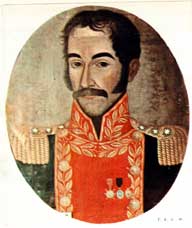
Una entrevista con el historiador venezolano ELIAS PINO ITURRIETA.
Poseedor de una brillante carrera académica, el nombre de este autor ha estado ligado a la investigación historiográfica venezolana desde hace décadas. Actualmente, reparte sus horas entre el trabajo como director del
Instituto de Investigaciones Históricas de la Universidad Católica Andrés Bello y la metódica labor de "esculcar" en la azarosa memoria colectiva del país. Fruto de este interés surgen exitosos libros donde vierte la poderosa
capacidad analítica de sus saberes en un lenguaje diáfano y ameno.
Entrevista de ALBINSON LINARES.
El culto al prócer necesario
¿Cuánto daño cree que ha hecho la "liturgia bolivariana"?
Ha sido terrible. Bolívar se convirtió en una cortina que nos impide ver la realidad. La sociedad frente a sus retos está miope o ciega. Siempre se le interpone la liturgia del héroe. Para los problemas internacionales está la Carta de Jamaica, para los de educación se puede mirar el Discurso de Angostura y así se usa una cantidad de anacronismos considerados como evangelios y muy pocas personas se atreven a develar la cortina de humo. Somos niños chiquitos, párvulos que dependemos del mensaje de un maestro muerto. Es de miedo la patología que eso representa.
Al exaltar a los próceres, ¿el Gobierno busca legitimarse?
Sin duda.Chávez se proclama heredero de una parte de la historia, que es la única que considera importante. Se remite a la Guerra de Independencia y niega toda la historia posterior, los avances del siglo XX, uno de los más ricos de la historia venezolana, y se propone como el hilo conductor entre ese período y el destino futuro de la sociedad Simplemente lo que hace es ignorar, a propósito, una parte de la historia de Venezuela.
Chavez quiere convertirse en el constructor de la que debiera ser la "verdadera" historia, lo que ya es una locura. El hecho es que quiere ser el hijo unigénito de Bolívar y, en consecuencia, hace una ruptura de la conciencia nacional.
¿Qué intención revisten los cambios de forma como el nuevo nombre de la República y la reforma de los símbolos patrios?
Borrar la historia. Esto se relaciona con los regímenes totalitarios que niegan el pasado o lo inventan a su manera. El pasado existió y no se puede mover, aunque este Gobierno lo altera a su gusto.
Ejemplos sobran como Stalin, Hitler, Mao y el mismo Chávez. En esos cambios hay un empeño de apropiación del poder a través de la apropiación de la memoria, más que del pensamiento. Se trata de adecuarse al proyecto de hegemonía política como lo hizo Stalin en su momento.
¿Qué efectos tiene la descalificación constante de la historia reciente que el Presidente hace en sus alocuciones?
Cuando Chávez niega estos 50 años nos está negando a nosotros mismos. Está negando la obra de nuestros padres y abuelos. Es curioso y enfermizo que a pesar de esa negación nosotros lo apoyemos. Hay una relación sumamente patológica entre Hugo Chávez y la sociedad contemporánea. El Presidente niega al siglo XX al decir que fue un siglo perdido para Venezuela, del cual somos los protagonistas, y pese a esto vamos y votamos por él. Hay una sintonía entre la prepotencia del profeta y la minusvalía de la sociedad
venezolana que acepta con beneplácito que la insulten.
Entre elecciones y juramentos
Como académico, ¿percibe una ideología clara en el discurso revolucionario?
No me atrevería a hablar de ideologías. Ahí no hay ninguna organización coordinada de pensamiento que le permita a un analista serio decir con responsabilidad que hay una plataforma ideológica o un entramado de ideas que sirven de sustrato para un proyecto político. Lo que hay es una
apropiación progresiva del poder y en función de eso, el Presidente hace estereotipos y proposiciones sueltas para justificarse en la medida que el tiempo pasa.
¿El abuso de este culto podría agotar el discurso oficialista?
Aquí hay un problema muy digno de atención, la exacerbación del culto hecha por Chávez plantea la posibilidad de su desaparición porque a los dioses no se les "chotea". No puedes sacar la eucaristía del templo y tirarla a la avenida o repartirla desde una carroza.
Cuando lo desacralizas y lo pones demasiado cerca le ves las limitaciones al héroe; ése es el riesgo de la apuesta chavista... también puede ocurrir la moderación. Es decir, la existencia de una figura ejemplar que nos inspira, pero que no nos determina la vida.
¿Cuánto influiría la desaparición física de Fidel Castro en la política venezolana?
Su fallecimiento influiría enormemente si hay una reacción digna por parte de la sociedad cubana. Eso va a depender de cómo el pueblo de Cuba sienta la muerte de Castro, si muestra repudio ante tantos años de despotismo eso
determinará nuestra vida y ayudará al debate venezolano.
Entonces se demostrará que el pueblo de Cuba no ha navegado por el mar de la felicidad como dicen algunos.
Pese a las constantes legitimaciones, ¿considera democrático este gobierno?
Para nada: es reaccionario. La trampa la hicimos nosotros al tener como único guía al Padre de la Patria desde 1830. Eso es algo que ninguna sociedad puede entender si ha pensado en un proyecto de vida sucesivo, es decir, que dependa de una evolución progresiva de las cosas que han sucedido a través del tiempo. Como marchan los tiempos, el talante obliga a tener cierta distancia con los totalitarismos tradicionales. Aquí lo más grave, que ni siquiera sucedió en la época del dictador Gómez, es la imposición del capricho de un solo hombre.
Gómez, el tirano por antonomasia, consultaba todas las noches con Vallenilla Lanz, por lo menos. Éste no; lo que piensa en la noche aparece al día siguiente en la Gaceta Oficial, ése es el problema que tenemos. El resumen de toda la sociedad y de toda la República en la persona de este teniente coronel. Por fortuna, así como hay un personalismo presente también hay una evolución republicana que ha corrido en paralelo a través del tiempo.
¿Cuán importante es la cita de los electores venezolanos el próximo 3 de diciembre?
Así como persisten el personalismo y sus seguidores vienen también del pasado un hábito de republicanismo y un compromiso de ciudadanía cada vez más crecientes. Se trata de dos fuerzas en pugna desde el comienzo del ensayo liberal de 1830 que adquiere mayor vigor después de la muerte de Gómez, en la tercera década del siglo XX. No es una fuerza histórica relativamente significativa, sino cada vez más vigorosa que le puede dar con éxito la pelea al personalismo encarnado en Chávez.
Desde mi perspectiva como historiador, un encontronazo de ese tipo, el choque de las dos locomotoras en cuyos vagones hemos viajado desde hace doscientos años, debe ocurrir en las elecciones del 3 de diciembre. De la colisión puede salir un nuevo país que se viene anunciando desde el propio
momento de su nacimiento.
¿Qué significado tendría para la oposición venezolana la reelección del presidente Chávez?
Si gana, como espero que no ocurra, se comprobará algo elemental y fundamental: que sus adversarios no somos cuatro gatos. Somos media Venezuela o un poco más y si la gente sale a votar el 3 de diciembre no estaremos lamentando la derrota sino celebrando la victoria. Algo importante es que pese a los 7 años del proyecto hegemónico hay una sociedad que se debate por el interés democrático, eso abre perspectivas muy halagüeñas a la sociedad venezolana del futuro. Creo que esto evitará la redondez de esta autocracia que Chávez ha fabricado progresivamente.
¿Cree que es mejor hablar entre nosotros los humanos que hablar con los dioses o con los héroes?
Por supuesto, ése es el epígrafe de mi libro “El Divino Bolívar”.La historia no la hacen los dioses, sino los hombres; a veces se juega con la mitología y el psicoanálisis para demostrar cómo de veras el destino depende de nosotros. No podemos dejar esto en manos de los dioses. En primer lugar porque hubo un tiempo sin dioses y en segundo porque en buena medida los dioses son criaturas que nosotros hemos hecho. En consecuencia, los podemos
deshacer y crear nuevos en casos de necesidad.
domingo, noviembre 19, 2006
Un dia en la vida de un jubilado
A day in the life of a retired
The best epoch of the life although think the contrary
Alfredo Ascanio (askain)
When I was very young I had an erroneous concept of a person of more than 60 years and besides retired. In my country retired account for 5% of the population.
With my frequent trips to Miami I have acquired a taste for the hotel of the old seated set against a boulevard without doing nothing. But today the people retired will have to make an about face in its traditional methods, if it wishes to align itself with modern trends. One changes one’s views as one gets along in years.
For example I feel youth and I try to live my life without complexes. But my wife recalls me the following thing: “you should start acting your age and stop buying those flashy dresses”.
But they are my children the ones that encourage me and they affirm: “despite 60 years of work and more work he is still alive and kicking”.
Today was born a new granddaughter. The daughter of my son Fernando (Fer). When the girl was born I was charged with announcing the glad tidings.
When that happens, all the friends want to come to greet. We expected only a few people but they came all and sundry. And they asked me for the new granddaughter Veronica and by their parents. The conversation was so interesting that it was midnight before we knew it.
We were traveling all day long to go to the clinic and to return to the house. The traffic in Caracas is frightening!!
After so an hour to travel we arrived at the clinic all in. All in all they numbered only twenty kilometers. Therefore my wife suggested to travel in a taxi. All in all is the best solution.
I was about to board the taxi when all of to sudden I realized that I had lost my key of the house. Believe it or not, the key is as old as the rest of the universe. Therefore I did not worry. Besides my wife has a new key.
“I don’t think we have enough champagne to go round”, said Fernando and immediately I answered him: "Why not go fifty-fifty on the deal?”
Everybody says that the girl has taken after his father. Fernando´s wife being such an adorable child, she takes all the good things of life for granted, as though she had a right to them, and is always discontented as a result.
In my time it was considered remove the thing to send not only flowers but to send a thank a note to person who had invited us to to know the new son or daughter.
To return to the house it was such to pleasant day that I decided to strike out for the country with my wife. To sum up, the walk was to success. Nevertheless, this Sunday I’m going to work up the lectures for next week and my reports for OhmyNews.
You can’t get something for nothing and I couldn’t go to bed before one o’clock. I’ve always been a night owl.
sábado, noviembre 18, 2006
Si queremos la libertad hay que salir a conquistarla
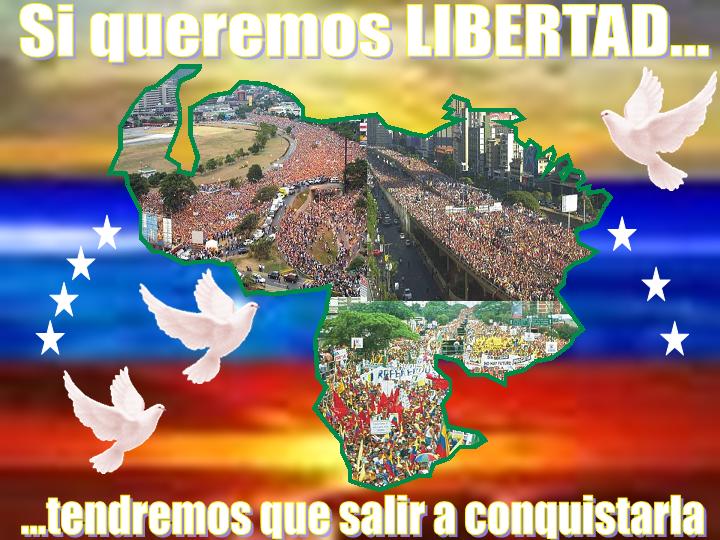
Esto es la pura verdad...hay que votar y defender el voto. El futuro está aquí...muy cerca.
Como ejemplo podemos ver la HOJA WEB del nuevo Presidente de México Felipe Calderón:
jueves, noviembre 16, 2006
New-Assignment es un proyecto nuevo
Un nuevo proyecto de periodismo ciudadano parecido a OhMyNews esta naciendo para comenzar en el primer trimestre del año 2.007. Allí estaremos participando.
A new project of civic journalism seemed to OhMyNews this being born to begin in the first quarter of the year 2.007. There I will be participating.
Las normas de estilo para periodistas cooperativos:
COOPERATIVA
El verdadero periodismo ciudadano está en:
The verdadro civic journalism is here
OHMyNews
A new project of civic journalism seemed to OhMyNews this being born to begin in the first quarter of the year 2.007. There I will be participating.
Las normas de estilo para periodistas cooperativos:
El verdadero periodismo ciudadano está en:
The verdadro civic journalism is here
martes, noviembre 14, 2006
En AMERICAN-Rhetoric encontrarán buenos discursos
AMERICAN-Rhetoric es un banco de discursos políticos de la Nación Norteamericana.Allí pueden oir y leer desde los discursos de Martin Luther King hasta el más actual de Nancy Pelosi.O los discursos del Presidente George W. Bush o Ronald Reagan. Los 100 discursos más importantes.
lunes, noviembre 13, 2006
The war of the surveys
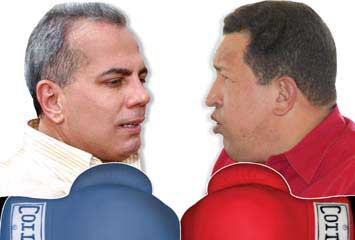
Venezuela: The War of the Surveys
In the quest for power, uncertainty appears
Alfredo Ascanio (askain)
Published 2006-11-16 14:49 (KST)
A recent Evans/McDonough poll shows that only 65 percent of Venezuelans are confident about next month's elections. But answers to a majority of the questions in this survey indicate that the country is politically polarized. This phenomenon creates uncertainty for the elections.
Forty percent of the voters think the vote will be conducted with fraud. In other words, a full 4 out of 10 Venezuelans doubt the integrity of their own electronic voting machines.
The other issue is "the war of the surveys." On Nov. 7, as unknown Venezuelan business -- Consultants 30.11 -- announced that President Hugo Chavez had the support of 57 percent of the people. His challenger, Manuel Rosales, had 35 percent. But it should be noted that Petroleum of Venezuela (PDVSA) paid that poll.
On Wednesday, the University Complutense of Madrid and the Venezuelan business Veneopsa said that with a sample of more than 3,000 polled, Chavez had 57.8 percent of the votes, Rosales 26.9 percent.
Investigative journalist Alfred Keller found that almost 6 million votes came from Rosales's group and another 6 million came from Chavez's group; in other words, a full tie between Chavez and Rosales (both at 40 percent).
Chavez's reelection campaign has been less aggressive. He has said that to gain votes he needs new support and another strategy. The new support consisted of inviting Brazilian President Luiz Inacio Lula da Silva to inaugurate a second bridge on the Orinoco River, which was built by companies run by both governments.
Lula's visit was very important because he spoke with passion about the work of Chavez and he recognized that he had faced the same problems in his reelection campaign. A director of the National Electoral Counsel protested the presence of Lula and his endorsement on TV for Chavez.
Elections in Venezuela will be held on Dec. 3. The two candidates are very different leaders. Chavez has the advantage of political power but Rosales has the example of his work as governor of Zulia state.
According to another survey, it is possible that Rosales will obtain 48 percent of the votes and Chavez 40 percent. But in the current political climate, there is a dangerous possibility that the votes will be very close. We could see a crisis as happened in Mexico recently. Another possibility: Chavez, 57.4 percent, Rosales, 30.9 percent. These averages are the most recent data.
In countries with little political culture, it is not acceptable for a contender to win a presidential election with a few votes more than his opponent. Always protests arise.
I have interviewed some local people about the presidential election. Some of the inhabitants of poor neighborhoods complain that the government has promised them dwellings but have failed to deliver. Others say that the fault for these failures lie not with Chavez but with his ministers.
The middle class complains about unemployment, currently at 15 percent, and inflation, 12 percent per year. Members of this social class are more conscious that the government is populist and autocratic and believe that it espouses the same communist ideology as Cuba.
Come Dec. 3, we expect that uncertainty will be high because the Venezuelan political campaign will be watched not only by Venezuelans but also by all Latin Americans and even by the United States and European.
©2006 OhmyNews
Other articles by reporter Alfredo Ascanio
2006/11/14 오전 6:20
Today 15 November the University Complutence of Madrid and the business Venezuelan Veneopsa said that with a sample of more than three thousand polled people Hugo Chavez has the 57,8% of the votes and Roales the 26,9%.
Hoy en GLOVISION se presentó Douglas Shoen, director ejecutivo de la famosa empresa de encuestas PENN SHOEN AND BERLAND y señaló que el trabajo que ellos realizaron con una muestra representativa del universo y con 3% de margen de error de todos los inscritos en el Registro Electoral, indica que la elección será muy cerrada pues casi existe para hoy 16 de noviembre un empate técnico entre Chávez y Rosales y que los resultados de ellos coiciden con los de Alfredo Keller. Aunque no se puede predecir quién ganaría la contienda, lo que se puede decir es que la tendencia favorece a Rosales y que lo más probable es que los indecisos decidan el ganador.
Esta apreciación se confirma en este enlace:
Los enlaces para ser un buen periodista
Voy a colocar dos enlaces para que un periodista perefeccione su trabajo. El primer enlace aparece arriba y se trata Polynter Org. Y en segundo enlace aparece de inmediato:
JOURNALISM
domingo, noviembre 12, 2006
Un reportaje importante

En el Diario Venezolano QUINTO DIA del 10 al 17 de noviembre aparece un reportaje escrito por Lorenzo Glusty sobre el aporte en dólares que ha hecho el Presidente Chávez a otros países. La suma total es mayor de 17 mil millones de dólares, pero de esa asombrosa cantidad que represnta casi el 57% de la deuda externa venezolana, los países más favorecidos por esa manejo autoritario y personal de los recursos del país, son: CUBA con casi 7 mil millones de dólares (el 41% del total), ARGENTINA con un poco más de 4 mil millones de dólares (24% del total) y una cantidad también de casi 4 mil millones de dólares para BRAZIL (24% del total). El 11% del total, o sea casi 2 mil millones de dólares se donaron para el Caribe Insular y otros países como: Ecuador, Bolivia,Paraguay, Uruguay, Indonesia, Niger,Burkina Faso,Mauritania, Mali y un aporte al Canal Oficial de TV llamado TELE-SUR.
En cuanto al intercambio recurriendo al sistema feudal del TRUEQUE se supone que el país debería haber recibido una buena cantidad de vacas preñadas y otros productos agropecuarios. Pero como no se ha hecho una auditoria para saber dónde se encuentran esos bienes, existe la duda de que realmente existan o en caso de existir en que finca se encuentran esas cabezas de ganado.
Además el Presidente ha realizado más de 100 viajes con fines políticos a un coste medio de 2 millones de dólares cada viaje en un avión con un valor de 80 millones de dólares que compró el gobierno para esa finalidad.Estas dos partidas suman 280 millones de dólares.
Es la segunda vez que un gobierno venezolano distribuye dinero con fines proselitistas. La primera vez fue cuando se llevó a Juicio al Presidente Carlos Andrés Pérez por aportar 250 mil dólares a los Contras de Nicaragua.
In the FIFTH DAY Venezuelan Newspaper, of the 10 al 17 of November, appears a report written by Lorenzo Glusty about the contribute in dolares that has done the President Chévez to other countries.
The grand total is over 17 thousand million dollars, but of that amazing quantity that represnta almost the 57% of the Venezuelan external debt.
The most favored countries by that authoritarian management and personnel one of the resources of the country, they are: CUBA with almost 7 thousand million dollars (the 41% of the total) , ARGENTINA with a little more than 4 thousand million dollars (24% of the total) and a quantity also of almost 4 thousand million dollars for BRAZIL (24% of the total). The 11% of the total, that is to say almost 2 thousand million dollars were donated for the Insular Caribbean and other countries.
As soon as commutation through al feudal system of the EXCHANGE 0il by other goods, It is supposed that the country should have received a goods quantity of pregnant cows and other farm products. But as themselves not an control has done to know where those goods are found, the doubt exists that really they exist or in case to exist in which farm those heads of cattle are found.
Besides the President has carried out more than 100 trips with political end to a medium price of 2 million dollars each trip in an airplane with a value of 80 million dollars that bought the government for that purpose.These two departures they add 280 million dollars.
It is the second time that a Venezuelan government distributes money with end procelitistas. The first time was when was carried to Judgment al President Carlos Andrés Pérez by contributing 250 thousand dollars to the Contras of Nicaragua.
viernes, noviembre 03, 2006
El analisis de un experto en Campañas Presidenciales
Las cuatro (4) conclusions de un experto:
Conclusion 1: the 10 million votes slogan for Chavez is dead. At most around 10 million people will bother to vote on election day, and even if we assume the polls most favorable to Chavez, at least 30% will not vote for him. In other words Chavez will be lucky if he even gets close to 7 million votes if all goes his way until December, no matter that Ameliach already conceded it would not pass the 8 million mark.
Conclusion 2: there are very anomalous shifts in voting patterns between states. The way in which these shifts happened allow to suspect that any normalization of the voting pattern is more likely to favor Rosales than Chavez. That is, it will be very difficult for Chavez to get back his 2004 60% high. Unless of course the CNE helps along as it does already by being shamelessly lenient on all the campaign abuses committed by chavismo.
Conclusion 3: Chavismo has a top vote, a “plafond”, which should not be more than 6 million if we consider the electoral history of the elections since 1998. It is very, very unlikely that chavismo will pass that 6 million mark. And this assuming that the past CNE results are real results. If we think that something is amiss (look at Aragua for example, something that cannot be explained with normal and historical voting patterns) then Chavez might not even reach 5 million.
Conclusion 4: The best scenario so far is Chavez winning with 55% of votes cast but only 35% of the electorate. This would be a good victory if we were in a democratic regime where no major changes are planned. However this result is woefully insufficient for the massive socialization plans and constitutional changes that Chavez has announced. An opposition renewed with 40% or more of the vote will not simplify the political life of the country in the way that Chavez hopes. In other words, far from bringing peace to Venezuela, the result of December 3 might in fact bring back instability for a long, long time. Chavez set himself the trap in which he is falling. By aiming for 10 million, and then 8 and then getting 6 at most, he will turn his victory into a defeat, a self inflicted political wound which will make him a lameduck president from day one of his new term.
There is one month left before the election. We will see.
Un video que es una aberración política.
Arriba apare un video que alguien gravó en una reunión del Ministro de Energía y Presidente de Petróleo de Venezuela (PDVSA) donde vulnerando muchas reglas de la República e incluso vulnerando la Constitución Nacional señala que PDVSA es roja, rojísima y que el funcionario que no esté de acuerdo con la revolución es mejor que no trabaje en esa empresa. O sea, un simple funcionario público, empleado del pueblo de Venezuela, sirviendo de operador político para hacer el más vil de los chantajes: "si ud, no está con nosotros, pues lo tenemos que votar". Incluso en las leyes venezolanas ese comportamiento es penado con 2 años de carcel. Pero de inmediato el Presidente señaló que no importa lo que digan,que el que no sea revolucionario pues no puede estar trabajando con el gobierno. Un chantaje para crear miedo y para que el funcionario público vote por Chávez.
En la época del General Pérez Jimenez también se dijo que todos los funcionarios tenían que votar por él, cuando se realizó un referendo, y aunque Pérez Jimenez perdió y se supo que eñ Partdido Unión Republicana Democratica (URD) había ganado, se hizo un fraude para que continuara en el poder el dictador. Es decir que toda autocracia bien sea de derecha o de izquierda utiliza los mismos procediientos de chantaje. Esto realmente es una aberración política.
Más o menos dijo:
I am indignant as you, because still in this business exist Light peoples, peoples that say that here we are in some processes that should be transparent; not mister, here all of us are in the middle of a revolution and the one that itself be resisted we are going to recall it with force and with courage, this business is red and has to be faithful to our President, and that not accept that objective has to renounce so that the true revolutionary come.
Es que en los gobiernos dictatoriales y autocráticos las leyes no valen nada . Las leyes es un PARAPETO para aparentar que se está en democracia, hasta que al surgir los hechos como el que relatamos aquí, nos damos cuenta de que no les interesa el marco legal
martes, octubre 31, 2006
YOU TUBE...
Cuando se dicen mentiras...son para no destapar lo que vendría luego. Antes de ser presidente se dicen muchas mentiras y medias verdades. En este caso a una pregunta del periodista entrevistador se asegura "Yo no soy socialista" y después de muchos años se descubre que no era comunista sino peor aún : fachista.
When are told with lies. .. for not uncover what would come then. Before being president many lies are told. In this case to a question of the journalist interviewer : "I am not a socialist" and after many years is discovered that only could not be communist but worse still: fachista.
When are told with lies. .. for not uncover what would come then. Before being president many lies are told. In this case to a question of the journalist interviewer : "I am not a socialist" and after many years is discovered that only could not be communist but worse still: fachista.
lunes, octubre 30, 2006
Hopes for Lula's New Term
Hopes for Lula's New Term
Brazil's growth depends on economic reforms
Antonio Carlos Rix (carlosrix)
Published 2006-10-31
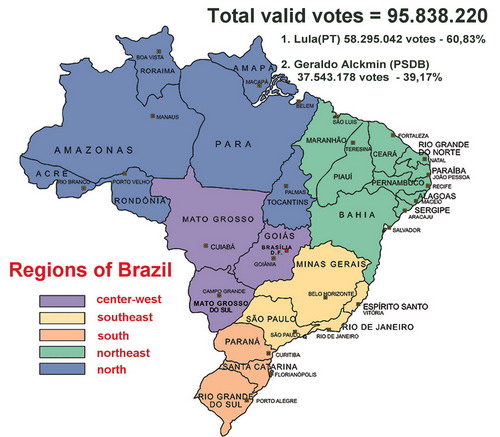
Luis Inacio Lula da Silva has practically repeated his voting success of 2002 when he was elected president of Brazil for the first time. Now he has four more years to make his name good in the history of Brazilian presidents.
President Lula got 61.27 percent of the valid votes (with 52.8 million votes) four years ago. Now, with 58.3 million votes that represent 60.83 percent of the valid votes he has done even better.
Proportionally, it was in Brasilia Federal District that the voting for Lula grew most. It jumped from 499,407 votes to 765,008, 53 percent in the second turn. Alckmin lost votes in 23 units of the federation in relation to his first turn, he had a weak performance.
Different sectors of the economy have evaluated as positive the re-election of President Lula, but they want reforms so that the country can grow in the next four years.
For Armando Monteiro Neto, president of the Nacional Confederation of Industry, the priority of the new government must be fiscal reformation. "It is necessary to grow more and better. It is necessary to complete the cycle of reforms and, over all, to prioritize the pro-growth agenda," he said.
Marcio Cypriano, president of the Febraban (Brazilian Federacy of Banks) and of the Bradesco (private bank) said that "it is necessary to insist on a new cast of reforms, starting with tax. It is necessary for the economy to reduce its costs to produce more and to extend the base of the fiscal collection. Work reform also is vital so that the companies produce new job vacancies."
Abram Szajman, president of the Fecomercio-SP (Federacy of the Commerce of the State of Sao Paulo), says that the challenge for the president will be to promote economic growth more efficiently, in accordance with a new insertion of Brazil in the world market. "To reach out next to the modern economies of the world is the task necessary to fight the delay and to improve our conditions of life," said Szajman.
Once again the Brazilian people give their vote of trust to Lula.
The hope of many is that the president uses to his advantage this chance, yes, a chance to clean a government still spotted by many scandals. The most recent of them: illicit money used to try to purchase a false dossier against rival presidential candidate Geraldo Alckmin. The case resulted directly in the change of the direction of Lula's PT party, and punishment of the militants involved just weeks before the voting of this last Sunday. This was the main reason Alckmin actually came second.
President Lula and his allies have evidently been able to revert the unfavorable picture in time for the polls. Now it remains to discover if the federal prosecutors and federal police will take these cases to their conclusion point: punish the ones involved. The fact is, the case of the dossier by itself could be enough reason for the impeachment of President Lula.
Brazilians want to see justice done. Will it happen?! Not likely I think, only time will tell.
©2006 OhmyNews
Total valid votes: 95.838.220
Lula (PT) 58.295.042 votes. 60,83%
Alckmin (PSDB) 37.543.178 votes. 39,17%
Periodismo Brasileño
En el enlace de arriba aparece el No. 7 de la revista PJ:BR, sobre el periodismo en Brasil.
Revista PJ:Br - Jornalismo Brasileiro (ISSN 1806-2776), which is an academic electronic publication produced by the "Pensamento Jornalístico Brasileiro" Study Group (ECA/USP), announces the launching of its 7th issue – The Borders of Journalism -, relative to the second semester of 2006. The current issue presents a diversified manifold of investigative approaches to the field of journalism, divulging a set of works that are in constant dialogue with other areas of knowledge and open to multiple methodological tendencies.
Revista PJ:Br - Jornalismo Brasileiro (ISSN 1806-2776), which is an academic electronic publication produced by the "Pensamento Jornalístico Brasileiro" Study Group (ECA/USP), announces the launching of its 7th issue – The Borders of Journalism -, relative to the second semester of 2006. The current issue presents a diversified manifold of investigative approaches to the field of journalism, divulging a set of works that are in constant dialogue with other areas of knowledge and open to multiple methodological tendencies.
Returns the Dirty War
Returns the Dirty War
A dangerous presidential campaign
Today has occurred somewhat unusual in Venezuela. The government has intercepted 12.000 e-mail and its passwords of people for them suspicious.
The authors of this illegal fact are the Cuban specialists (G2 Cuban) that work the the Situational Room of the offices of the government.
The hakers of this work are some Indian specialists that were brought to Venezuela to do this "dirty war".
This explains that the present government has distrust of many so much people of its own groups as of the groups that the adversan.
This fact is linked with the news that the candidate of the opposition will cross the linea percentage of the intention of the vote (40% Chavez and 40% Rosales), according to the last surveys.
The groups that support to Chavez they are not sure that they will gain the presidential elections.
The Radio Nexx, located in Miami and conducted by Bernando Sworn, reported that a disicente of the G2 Cuban (intelligence service) them supply the CD with the complete information.
This notified source to be sure of the fidelity of these e-mails has asked some people that aparecenen the list if is certain that that is their e-mail and their password and the people coonfirmaron that was certain and they remained surprised.
This fact is alarming the country because is a first step to deteriorate the democracy. Only in the epoch of the dictatorship of the General Marcos Pérez Jimenez, in the decade of the years 50, procedures seemed were used al to intercept the private telephones.
The story of this event appears in a link of the Radio Nexx and trasmitido in Spanish language.
HAGA CLICK AQUI
A dangerous presidential campaign
Today has occurred somewhat unusual in Venezuela. The government has intercepted 12.000 e-mail and its passwords of people for them suspicious.
The authors of this illegal fact are the Cuban specialists (G2 Cuban) that work the the Situational Room of the offices of the government.
The hakers of this work are some Indian specialists that were brought to Venezuela to do this "dirty war".
This explains that the present government has distrust of many so much people of its own groups as of the groups that the adversan.
This fact is linked with the news that the candidate of the opposition will cross the linea percentage of the intention of the vote (40% Chavez and 40% Rosales), according to the last surveys.
The groups that support to Chavez they are not sure that they will gain the presidential elections.
The Radio Nexx, located in Miami and conducted by Bernando Sworn, reported that a disicente of the G2 Cuban (intelligence service) them supply the CD with the complete information.
This notified source to be sure of the fidelity of these e-mails has asked some people that aparecenen the list if is certain that that is their e-mail and their password and the people coonfirmaron that was certain and they remained surprised.
This fact is alarming the country because is a first step to deteriorate the democracy. Only in the epoch of the dictatorship of the General Marcos Pérez Jimenez, in the decade of the years 50, procedures seemed were used al to intercept the private telephones.
The story of this event appears in a link of the Radio Nexx and trasmitido in Spanish language.
domingo, octubre 29, 2006
Las Opiniones de Francisco Mires
Por Fernando Mires
Chileno, catederatico de la
Universidad de Oldenburg, Alemania.
Chávez es un gobernante que insulta a casi todo el mundo. Ni siquiera los obispos y cardenales de la Iglesia católica escapan a su desmedida procacidad. A diferencias de Castro, quien posee un excelente uso del idioma, Chávez tiene serias dificultades para articular una frase con otra, y por eso, podría pensarse, suplanta la retórica con el insulto. Sin embargo, hay en su enorme capacidad de injuria, un propósito que obedece -conciente o inconscientemente- a un cálculo muy frío.
Los de Chávez son insultos cuidadosamente programados destinados a crear una zona de hipertensión emocional e impedir así que la política se articule en torno a algo que no sea el mismo.
De este modo, él neurotiza la vida política hasta tal punto, que resulta imposible, en medio de tanta injuria -las que sus seguidores de "camisas rojas", multiplican- que los polos que se forman alrededor de su persona puedan encontrar algún medio civilizado de comunicación.
Efectivamente: lo primero que sorprende a un visitante en Venezuela, es que después de siete años de gobierno, Chávez ha conseguido partir al país político en dos pedazos.
Esos pedazos no son de izquierda o de derecha. Pues a un lado están quienes aman a Chávez. Al otro lado, los que lo odian. Entre ambos no hay ninguna conexión. Quienes eran amigos, ya no lo son. Quienes se respetaban, se desacreditan mutuamente. Nadie discute con nadie.
Chávez ha conseguido destruir la polémica, condición de la política, e introducir en su lugar dos monólogos paralelos. El mismo monologa sin limitación de tiempo (hasta siete horas) en su programa semanal, mientras las "camisas rojas" aplauden las vulgaridades más grandes que es posible oír de nadie (ni siquiera en Berlusconi, quien en materia de vulgaridades es vicecampeón mundial).
Si alguien ha leído relatos de los primeros años del fascismo en Italia no se sorprenderá si los encuentra de nuevo en Venezuela.
La comunicación política ha sido destruida radicalmente por el propio gobernante. Y la destrucción de la comunicación política es la primera condición para todo proceso de facistización. Eso es lo que está viviendo Venezuela. "Esto va a terminar muy mal", me dicen muchos venezolanos. "Que Dios no los oiga", les digo yo.
Naturalmente, también hay chavistas inteligentes. Pero cada vez que uno habla de Chávez, dicen -como avergonzados- que lo principal no es Chávez, sino el proceso del cual Chávez es sólo un símbolo. "¿Cuándo habían alcanzado los pobres más representación que durante Chávez? En eso hay que fijarse", dicen. "Chávez es secundario", afirman. Pero, ¿es que se puede hablar del proceso sin Chávez? Chávez está en todas partes, nadie realiza una "misión" (palabra militar-clerical) sin su autorización. Nadie tiene ninguna idea que no sea de Chávez.
Él, como el mismo se definió, es el coach del equipo. Eso quiere decir que él decide quién jugará o no. "Ah pero Chávez ha llevado a los pobres a la sociedad", dicen los chavistas inteligentes. ¿A cúal sociedad? - se pregunta uno, asombrado.
No importa que en Chile, Argentina, Brasil, tengan lugar políticas sociales más importantes y sobre todo más racionales que las que han tenido lugar en Venezuela.
Lo decisivo es que Chávez, a diferencia de los gobernantes de esos países, no ha integrado a los pobres a la sociedad, sino que al Estado. Sin suprimir la pobreza, Chávez la ha estatizado. Las misiones, entre otras tantas iniciativas populistas, son los cordones umbilicales que atan a los pobres con el Estado. Y el Estado es Chávez.
Los pobres son de Chávez; por eso deben seguir siendo pobres. Si, hay por cierto, algunos chavistas inteligentes. Pero no lo son tanto como para reconocer que Chávez no representa un proyecto de sociedad, como ellos imaginan, sino que, antes que nada y sobre todo, un proyecto de toma de poder.
Las misiones, los círculos bolivarianos, los comandos de "camisas rojas" son medios para tomar el poder desde abajo. La constitución (a quien él en su estilo llama: "la bicha"), el escudo, la bandera, sobre todo Bolívar, todos los poderes simbólicos de una nación, han pasado a ser propiedad de Chávez quien los modifica o interpreta según su antojo. Chávez intenta tomar el poder desde todos lados. Desde abajo, desde el medio, y por supuesto, por arriba cuando haciéndose aclamar en "foros mundiales" despotrica en nombre de la justicia universal, en contra de su ultimo descubrimiento: el "imperialismo norteamericano".
Pero Chávez no es antiimperialista. Chávez es en primera línea, antidemócrata. Por eso ha insultado, de la manera más soez, a diferentes gobernantes y políticos democráticos de América Latina. Lagos, Fox, Toledo, Uribe, Lourdes Torres, entre tantos, han debido sufrir las injurias de Chávez.
Nadie ha insultado en su vida a tantas personas decentes como ha hecho Chávez. No obstante, se equivocan aquellos que piensan que Chávez insulta por insultar. Como ha sido dicho, sus insultos, cuidadosamente calculados, forman parte de su estrategia de poder. Mediante el insulto, destruye las posibilidades del diálogo político, tanto hacia el interior como hacia el exterior del país.
Y donde no hay política, comienza el terror. La creciente ocupación de la administración pública por personeros militares, es el ejemplo más visual de la corrosión de la política que tiene lugar en Venezuela. Mientras en el pasado los militares latinoamericanos tomaban el poder de golpe, en Venezuela lo toman en "cámara lenta". El segundo paso, será la militarización de la nación, y es desde ese objetivo que hay que entender los llamados del Presidente a defender al país de una invasión norteamericana.
El objetivo de Chávez es, evidentemente, provocar un clima de alta tensión con los EEUU. Sus injurias a Bush han ido aumentando en cantidad y en volumen. Exasperado tal vez porque el gobierno de EE UU no pisa (todavía) la trampa, ha agredido en los términos más repugnantes que es posible imaginar, a Condolezza Rice, algo que nunca habría hecho un Fidel Castro (dictador, pero educado).
La verdad es que Venezuela no tiene ningún problema real con los EE UU: ni económico, ni territorial, ni de ninguna índole. A diferencias de Castro quien siempre arremete verbalmente en contra de USA sobre la base de problemas concretos, Chávez arremete gratuitamente, con el objetivo más que evidente, de provocar un conflicto internacional.
Ahora bien, en una situación de alta tensión internacional, Chávez intentará dividir al país entre "patriotas antiimperialistas", y "esbirros al servicio del imperialismo". De este modo, estar en contra de Chávez significará "traicionar a la patria". Los ataques a EE UU son, evidentemente, una pieza clave en su proyecto de toma total del poder.
Va ser muy difícil para la oposición democrática de Venezuela terminar con el chavismo. El régimen no sólo controla el Estado (y el petróleo) sino que se ha infiltrado hacia el interior de la sociedad civil. Los comandos chavistas actúan en las provincias, pueblos y barrios, y la violencia crece "hacia dentro". El chavismo controla, además, los medios de recuento electoral. Y desde el exterior, los Ramonet y los Chomsky (y la izquierda festiva que les sirve de coro) están dispuestos a legitimar cualquiera monstruosidad siempre que sea antinorteamericana.
Es cierto que Chávez llegó al poder como consecuencia de la corrosión de la democracia venezolana, y esa es la deuda histórica que tienen los dos principales partidos con su nación. Pero siete años ya es suficiente castigo.
Es cierto también que en Abril del 2002, una fracción enloquecida de la oposición, siguiendo el juego a Chávez, se embarcó en una aventura golpista. Gracias a esa aventura, realizada a espaldas de la mayoría de la oposición (justo en el momento cuando Chávez estaba políticamente cercado) Chávez obtuvo como regalo una legitimación democrática que, el menos que nadie, puede ostentar.
Pero poco a poco, la oposición ha ido ordenando sus filas. Chávez intentará destruirla al crear una línea divisoria "o Venezuela o los EEUU". Si la oposición estará en condiciones de imponer la verdadera línea divisoria que atraviesa a Venezuela, que es la de "chavismo o democracia" (o incluso, "fascismo o democracia") es algo que está por verse. Pero si la oposición triunfa -y un día, más temprano que tarde triunfará- puede que ese no sea un triunfo de "la izquierda". En cualquier caso, será un triunfo de la democracia. Pero, antes que nada, será, un triunfo de la decencia.
sábado, octubre 28, 2006
The Chávez play - Venezuela and Argentina
The Chávez play - Venezuela and Argentina
Why did Hugo Chávez buy Argentina's debt? Venezuela's president tries his hand at financial
arbitrage.
Just as Venezuela is known for its exports of crude, Argentina is famous for its exports of IOUs. Less than two years after it handed its creditors a world-record loss in a sovereign
debt-exchange, Argentina's government has found an eager new patron in its oil-rich ally. Over the last year, the government in Caracas has bought some $3.1 billion in Argentine bonds. Is this a case of Hugo Chávez, Venezuela's tub-thumping president, putting political solidarity ahead of fiscal prudence? Look
closer.
The roots of the deal lie in the currency controls Mr Chávez imposed on his country during the economic meltdown of 2003. To halt capital flight, he pegged the bolívar, Venezuela's currency, to the dollar (the official rate is now 2,150 to 1), and sharply curtailed opportunities to
buy dollars at that price. As a result, a black market in foreign exchange soon opened up. The
bolívar could not hold its value at the kerbside—a dollar has traded for anything from 2,400 to 2,900 bolívars in the past year—adding to inflationary pressures.
However, unlike most of his countrymen, Mr Chávez can help himself to dollars from the state oil company, PDVSA, or from his own central bank at the official rate. This he did to acquire the $3.1 billion he needed to buy the dollar bonds from Argentina's government, which started
issuing debt with indecent haste after completing its huge bond restructuring in mid-2005.
Argentina's president, Néstor Kirchner, was more than pleased to borrow directly from Venezuela. Doing business with a fellow Latin American leftist is more palatable than asking for money
from the private international lenders he repeatedly bashes. Moreover, Mr Chávez was, in effect, offering to underwrite his debt issue. Venezuela's big purchases meant that Mr Kirchner did not need to test the market's appetite for his government's bonds too deeply.
But almost as soon as he got the Argentine paper, Mr Chávez began to sell it to local Venezuelan banks, at the rate of 2,400 bolívars to the dollar. All told, his government off-loaded $2.4 billion-worth of bonds, pocketing a tidy profit. How tidy? His finance team eagerly announced a
gain of $309m to the press last month; though the true figure may be a bit different.
The banks too were happy. They were free to sell the bonds abroad for dollars, which they promptly did for a handsome profit. Some of them converted the greenbacks back into bolívars at black-market rates, others hung on to them. Either way, this new source of foreign exchange
has relieved pressure on the black market; the bolívar has stabilised and one source of inflationary pressure has eased.
Within Venezuela, critics have complained not about the deal itself, but about who was in on it, and who wasn't. The government has still not revealed its method of choosing which banks would be eligible for a chunk of the massive return Mr Chávez was offering. “Any operation that
hands out $300m discretionally, regardless of the mechanism, is a clear incentive forcorruption,” says Alejandro Grisanti of the Caracas consultancy Ecoanalítica. In the absence of an open bidding process, government officials were free to route the Argentine bonds to banks
already supportive of Mr Chávez, to tie the sale to future support, or to receive payments or favours in exchange for offering them.
But despite this carping, can the two presidents not congratulate themselves on a clever financial manoeuvre that had something for everybody who was party to it? Argentina's government found a reliable customer for its debt; Mr Chávez achieved lower inflation and a $309m
profit for the Venezuelan exchequer; and the local banks divvied up a further gain of $250m-300m.
Unfortunately, there are no free lunches, and there is one big, hidden loser in this transaction: the Venezuelan central bank. Mr Chávez, in effect, plundered its reserves for about $580m, both by forcing it to sell him dollars at the official exchange rate, and by taking dollars
from the state oil company that traditionally went to the central bank. That is a heavy loss to the country, which might need its reserves in a pinch. “But no one's going to complain,” says Walter Molano of BCP Securities, “because nobody owns that money.”
miércoles, octubre 25, 2006
Vietnam: el nuevo fenómeno capitalista
Vietnam’s Roaring Economy Is Set for World Stage
Chau Doan for The New York Times
By KEITH BRADSHER
Published: October 25, 2006
HO CHI MINH CITY, Vietnam — Nearly four decades ago, South Vietnamese leaders mapped out their battle plans inside the presidential palace here. When they lost the war, the palace became the base for the Ho Chi Minh City People’s Committee, which worked to impose tight Communist
control.
But in September it was the scene of a very different gathering: a board meeting of the Hongkong and Shanghai Bank.
In the three decades since Vietnam has gone from communism to a form of capitalism, it has begun surpassing many neighbors. It has Asia’s second-fastest-growing economy, with 8.4 percent growth last year, trailing only China’s, and the pace of exports to the United States is rising faster than even China’s.
American companies like Intel and Nike, and investors across the region,are pouring billions of dollars into the country; overseas Vietnamese are returning to run the ventures.
In the latest sign of Vietnam’s economic vitality, trade negotiators from around the world are preparing, after more than a decade of talks, to put the finishing touches on an agreement, possibly by Oct. 26, for Vietnam to join the World Trade Organization. President Bush, President
Hu Jintao of China, President Vladimir V. Putin of Russia and other heads of state plan to come to Hanoi in mid-November for an Asia-Pacific
Economic Cooperation summit meeting.
For Vietnam, the meeting will be a coming-out party, critical to its pride in much the way the 2008 Olympics in Beijing are for China.
“I think they are the next China,” said Michael R. P. Smith, chief executive of the Hongkong and Shanghai Banking Corporation. “It’s not the scale of China, but it’s a significant economy.”
Through the end of last year; Vietnam’s growth rate exceeded that of Thailand, Malaysia, Taiwan, South Korea and even India, its closest rival.
The latest Asian economic tiger, Vietnam now produces and uses more cement than France, its former colonial ruler. The main index for the Ho Chi Minh City stock market and a smaller exchange in Hanoi have nearly doubled in value this year. Vietnam has become the talk of investment bankers and investors across Asia.
But with such growth has come controversy, here and in the United States. Republicans in Congress are divided over a coming vote soon after the midterm elections: Should the United States grant permanent, full trade relations to Vietnam, given the two countries’ history and Vietnam’s current position, where it sells almost nine times as much to Americans as it buys?
Corporate America is divided, too, over a Bush administration initiative to win votes for full trade status by throwing a bone late in September to Southern senators representing states where textiles are made. Vietnamese officials are furious with Washington over what they see as a
last-minute protectionist attempt to limit the exports of their country’s booming garment industry.
In Vietnam, nearly double-digit growth is starting to produce the same shortages of skilled labor as in India and China. Executives at multinationals like Groupe Lafarge of France and Prudential of Britain say that local accountants, human relations managers and other professionals are so scarce that salaries are soaring 30 percent to 50 percent a year.
Many educated Vietnamese now are like Ha Nguyen, 34, a chemical engineer who is working at his third job in three years, having received big raises each time he changed companies. “Right now, it’s easy in Vietnam to find a job,” he said, pausing while doing a chemical analysis of
cement quality at a corporate laboratory here.
Roads and ports in this country are increasingly choked with cars and ships, the congestion worse than China’s but not yet as bad as India’s. Yet deep-seated corruption has slowed construction; the government has put the brakes on highway building across northern Vietnam this year after uncovering a graft scandal that led to resignations and detentions all the way to the top of the Transport Ministry.
Balanced against these problems is a government that, like China’s, has embraced capitalism after becoming disillusioned with the widespread poverty and sometimes hunger that accompanied tight
state control of the
economy.
Economic liberalization policies have been pursued in earnest since the early 90’s, after poor harvests and economic mismanagement left millions facing malnutrition in 1990.
Among the architects of this change are a handful of bright economists like Le Dang Doanh, a top adviser to the government and the Communist Party who studied in the old Soviet Union and East Germany but became deeply disillusioned with the corruption and inefficiency of state-owned
industries.
“The reform is definitely irreversible,” Mr. Doanh said. “Any attempt to come back to a centrally planned economy, to overplay the state sector, is economically irrational, inefficient and psychologically is counterproductive.”
If anything, Vietnam has leaned in the other direction. The Finance Ministry has just produced a draft personal-taxation law, expected to be approved by January, that offers more tax breaks for the wealthy than the United States does. Inheritances among immediate family members will
be entirely exempt from taxation. So will interest on all but the largest bank accounts, and a fierce debate is under way over whether capital gains should be taxed.
And in some ways, Vietnam is more pro-business than China. Reluctant to anger city dwellers, state-owned power companies in China minimize blackouts in residential areas but cut off power to factories as much as three days a week, forcing them to run on costly diesel generators.
Vietnam takes the opposite course. Takashima Masayuki, general director of a Japanese-owned factory that makes shirts and jackets in Bien Hoa city, said the factory did not even have a generator because the authorities never allowed power to be cut off in the industrial zone
where it is situated. By contrast, Ho Chi Minh City residents say they have brief power interruptions as often as twice a day.
Like China and India, Vietnam has benefited enormously from the return of a diaspora — people who had fled the country. Thousands of overseas Vietnamese have come home after learning English, gaining entrepreneurial experience and acquiring technical skills.
Phu Than, Intel’s country manager for Vietnam and Indochina, was 14 when he was evacuated in the last days before the fall of Saigon, leaving by helicopter with his mother, an employee of the old American Consulate in Danang.
He earned an electrical engineering degree from the University of California, Davis, then joined Intel and now oversees the largest foreign investment in Vietnam, the construction of a semiconductor assembly and test factory that will cost $300 million for the first phase and another $300 million for a likely expansion later.
American businesses are catching on to Vietnam’s attractions, but they still lag behind Taiwan companies, which are the biggest foreign investors in Vietnam, followed by Singapore.
Vietnam’s appeal to foreign companies rests on its young labor pool. Three-fifths of its 84 million people are under 27. And with a policy of limiting families to two children, as distinct from China’s one, Vietnam will continue for many years to have a large proportion of hard-working
low-skill employees.
Typical is Nguyen Thi Hong, 30, who rides each morning on her rusty bicycle to stand outside factories and look for work in Bien Hoa, 15 miles northeast of Ho Chi Minh City; in China, factories advertise far and wide even for unskilled workers.
A brightly patterned kerchief protecting her from air pollution, Mrs. Hong said she and her husband, a mechanic who has found work here, have left their year-old son with his parents in their hometown in the central part of the country.
Vietnam has reduced the percentage of its people living in abject poverty — less than $1 a day — to 8 percent from 51 percent in 1990, a greater advance than either China or India.
But incomes are still far short of Western levels. Few of these Vietnamese can afford to eat American beef or fly in Boeing jets. The country’s trade surplus with the United States has soared — it exported $5.56 billion worth of goods to the American market in the first eight
months of this year while importing $625.9 million.
That imbalance, much of it in the garment industry, has complicated the Bush administration’s effort to persuade lawmakers to approve normal trade relations with Vietnam. The administration tried to shore up support by sending a letter on Sept. 28 to two Republican senators, Elizabeth Dole of North Carolina and Lindsey Graham of South Carolina, saying that the Commerce Department may file its own antidumping cases against low-price shipments of Vietnamese clothing without waiting for American companies to do so.
But the letter has upset retailers and other importers, who worry that they may end up paying any punitive duties that are imposed.
“The retail industry is really split on this,” said Brad Figel, the government affairs director at Nike, which remains in favor of the bill and is seeking clarification of administration
policy.
Antidumping duties are an emotional issue in Vietnam, after the United States imposed them on catfish exports three years ago and the European Union recently imposed them on Vietnamese and Chinese shoe exports.
Vietnamese officials warn that dumping cases could hurt the regulatory environment for American businesses and cause layoffs at garment factories, where most workers are low-income women.
“These people suffered from the war a lot already, and we would not want them to suffer again,” said Nguyen Anh Tuan, vice director of Vietnam’s Foreign Investment Agency. “American investors should not lose their foothold in Vietnam.”
Talk to garment-factory workers in Vietnam these days, though, and they are looking forward to a future where their children live far better than they do. “My parents were very poor,” said Nguyen Thu Hoai, 28, said as she folded green Nike jackets in a state-owned factory in Ho Chi
Minh City.
“But I will be able to give my son a good education,” she said, describing a modest Prudential life insurance policy she bought for her 2-year-old son that includes a savings fund for educational expenses. “He will have more opportunities.”
(Que Havez se vea en ese espejo...)
MI WEB de Noticias en Yahoo
Yahoo nos otorga la oportunidad de mantener en MYWEB las mejores noticias internacionales y nacionales, por eso yo utilizo esa herramienta.
lunes, octubre 23, 2006
El Discurso de Cantinflas (México)
Lean esta joya ... por su contenido social y como parte de la época "de oro" del cine mexicano. Por mi parte pienso que es un excelente homenaje, a un hombre honesto,sensible, y lleno de sano humor que nos legó MEXICO,
a todos sus hermanos Latinoamericanos...
¡GRACIAS MARIO MORENO
POR TODO LO QUE NOS DISTE !
El discurso tiene cuarenta años pero, sin quitarle una coma, podría repetirse en cualquier foro político con absoluta y vigente pertinencia.
Este fue el mismo filósofo de aquella célebre y crucial pregunta, formulada justo antes de sentarse a jugar dominó
"¿Vamos a jugar como caballeros ó como lo que somos?"
disfrútenlo.
A alguien se le ocurrió rescatar este discurso, pronunciado hace 40 años por Cantinflas, supuestamente ante la Organización de Naciones Unidas, en una película en la cual él hacía el papel de embajador.
Esta es la pieza oratoria:
"Me ha tocado en suerte ser último orador, cosa que me alegra mucho porque, como quien dice, así me los agarro cansados.
Sin embargo, sé que a pesar de la insignificancia de mi país que no tiene poderío militar, ni político, ni económico ni mucho menos atómico, todos ustedes esperan con interés mis palabras ya que de mi voto depende el triunfo de los Verdes o de los Colorados.
Señores Representantes:
Estamos pasando un momento crucial en que la humanidad se enfrenta a la misma humanidad.
Estamos viviendo un momento histórico en que el hombre científica e intelectualmente es un gigante, pero moralmente es un pigmeo.
La opinión mundial está tan profundamente dividida en dos bandos aparentemente irreconciliables, que dado el singular caso, que queda en sólo un voto.
El voto de un país débil y pequeño pueda hacer que la balanza se cargue de un lado o se cargue de otro lado.
Estamos, como quien dice, ante una gran báscula: por un platillo ocupado por los Verdes y con otro platillo ocupado por los Colorados.
Y ahora llego yo, que soy de peso pluma como quien dice, y según donde yo me coloque, de ese lado seguirá la balanza.
¡Háganme el favor!...
¿No creen ustedes que es mucha responsabilidad para un solo
ciudadano? No considero justo que la mitad de la humanidad, sea la que fuere, quede condenada a vivir bajo un régimen político y económico que no es de su agrado, solamente porque un frívolo embajador haya votado, o lo hayan hecho votar, en un sentido o en otro.
El que les habla, su amigo... yo... no votaré por ninguno de los dos bandos (voces de protesta).
Y yo no votaré por ninguno de los dos bandos debido a tres razones: Primera, porque, repito que no se sería justo que el sólo voto de un representante, que a lo mejor está enfermo del hígado, decidiera el destino
de cien naciones; Segunda, estoy convencido de que los procedimientos, repito, recalco, los procedimientos de los Colorados son desastrosos (voces de protesta de parte de los Colorados);
¡y Tercera!... porque los procedimientos de los Verdes tampoco son de lo más bondadoso que digamos (ahora protestan los Verdes).
Y si no se callan ya yo no sigo, y se van a quedar con la sensación de saber lo que tenía que decirles.
Insisto que hablo de procedimientos y no de ideas ni de doctrinas.
Para mí todas las ideas son respetables aunque sean "ideítas" o "ideotas" aunque no esté de acuerdo con ellas.
Lo que piense ese señor, o ese otro señor, o ese señor (señala), o ese de allá de bigotico que no piensa nada porque ya se nos durmió, eso no impide que todos nosotros seamos muy buenos amigos.
Todos creemos que nuestra manera de ser, nuestra manera de vivir, nuestra manera de pensar y hasta nuestro modito de andar son los mejores; y el chaleco se lo tratamos de imponérselo a los demás y si no lo aceptan decimos que son unos tales y unos cuales y al ratito andamos a la greña.
¿Ustedes creen que eso está bien?
Tan fácil que sería la existencia si tan sólo respetásemos el modo de vivir de cada quien.
Hace cien años ya lo dijo una de las figuras más humildes pero más grandes de nuestro continente: "El respeto al derecho ajeno es la paz" (aplausos).
Así me gusta... no que me aplaudan, pero sí que reconozcan la sinceridad de mis palabras.
Yo estoy de acuerdo con todo lo que dijo el representante de Salchichonia (alusión a Alemania) con humildad, con humildad de albañiles no agremiados debemos de luchar por derribar la barda que nos separa, la barda de la incomprensión, la barda de la mutua desconfianza, la barda del odio, el día que lo logremos podemos decir que nos volamos la barda (risas).
Pero no la barda de las ideas, ¡eso no!, ¡nunca!, el día que pensemos igual y actuemos igual dejaremos de ser hombres para convertirnos en máquinas, en
autómatas.
Este es el grave error de los Colorados, el querer imponer por la fuerza sus ideas y su sistema político y económico, hablan de libertades humanas, pero yo les pregunto: ¿existen esas libertades en sus propios países?
Dicen defender los Derechos del Proletariado pero sus propios obreros no tienen siquiera el derecho elemental de la huelga, hablan de la cultura universal al alcance de las masas pero encarcelan a sus escritores porque se atreven a decir la verdad, hablan de la libre determinación de los pueblos y sin embargo hace años que oprimen una serie de naciones sin permitirle que se den la forma de gobierno que más les convenga.
¿Cómo podemos votar por un sistema que habla de dignidad y acto seguido atropella lo más sagrado de la dignidad humana que es la libertad de conciencia eliminando o pretendiendo eliminar a Dios por decreto?
No, señores representantes, yo no puedo estar con los Colorados, o mejor dicho con su modo de actuar; respeto su modo de pensar, allá ellos, pero no puedo dar mi voto para que su sistema se implante por la fuerza en todos los países de la tierra (voces de protesta).
¡El que quiera ser Colorado que lo sea, pero que no pretenda teñir a los demás!- los Colorados se levantan para salir de la Asamblea-.
¡Un momento jóvenes!, ¿pero por qué tan sensitivos?
Pero si no aguantan nada, no, pero si no he terminado, tomen asiento.
Ya sé que es costumbre de ustedes abandonar estas reuniones en cuanto oyen algo que no es de su agrado; pero no he terminado, tomen asiento, no sean precipitosos... todavía tengo que decir algo de los Verdes, ¿no les es gustaría escucharlo?
Siéntese (va y toma agua y hace gárgaras, pero se da cuenta que es Vodka).
Y ahora, mis queridos colegas Verdes,¿ustedes qué dijeron?:
"Ya votó por nosotros", ¿no?, pues no, jóvenes, y no votaré por ustedes porque ustedes también tienen mucha culpa de lo que pasa en el mundo, ustedes también son medio soberbios, como que si el mundo fueran ustedes y los demás tienen una importancia muy relativa, y aunque hablan de paz, de democracia y de cosas muy bonitas, a veces también pretenden imponer su voluntad por la fuerza, por la fuerza del dinero.
Yo estoy de acuerdo con ustedes en que debemos luchar por el bien colectivo e individual, en combatir la miseria y resolver los tremendos problemas de la vivienda, del vestido y del sustento.
Pero en lo que no estoy de acuerdo con ustedes es la forma que ustedes pretenden resolver esos problemas, ustedes también han sucumbido ante el materialismo, se han olvidado de los más bellos valores del espíritu pensando sólo en el negocio, poco a poco se han ido convirtiendo en los acreedores de la humanidad y por eso la humanidad los ve con desconfianza.
El día de la inauguración de la Asamblea, el señor embajador de Lobaronia dijo que el remedio para todos nuestros males estaba en tener automóviles, refrigeradores, aparatos de televisión; ju... y yo me pregunto: ¿para qué
queremos automóviles si todavía andamos descalzos?, ¿para qué queremos refrigeradores si no tenemos alimentos que meter dentro de ellos?, ¿para qué queremos tanques y armamentos si no tenemos suficientes escuelas para
nuestros hijos? (aplausos).
Debemos de pugnar para que el hombre piense en la paz, pero no solamente impulsado por su instinto de conservación, sino fundamentalmente por el deber que tiene de superarse y de hacer del mundo una morada de paz y de
tranquilidad cada vez más digna de la especie humana y de sus altos destinos.
Pero esta aspiración no será posible sino hay abundancia para todos, bienestar común, felicidad colectiva y justicia social.
Es verdad que está en manos de ustedes, de los países poderosos de la tierra, ¡Verdes y Colorados!, el ayudarnos a nosotros los débiles, pero no con dádivas ni con préstamos, ni con alianzas militares.
Ayúdennos pagando un precio más justo, más equitativo por nuestras materias primas, ayúdennos compartiendo con nosotros sus notables adelantos en la ciencia, en la técnica... pero no para fabricar bombas sino para acabar con el hambre y con la miseria (aplausos).
Ayúdennos respetando nuestras costumbres, nuestras costumbres, nuestra dignidad como seres humanos y nuestra personalidad como naciones por pequeños y débiles que seamos; practiquen la tolerancia y la verdadera fraternidad que nosotros sabremos corresponderles, pero dejen ya de tratarnos como simples peones de ajedrez en el tablero de la política internacional.
Reconózcannos como lo que somos, no solamente como clientes o como ratones de laboratorios, sino como seres humanos que sentimos, que sufrimos, que lloramos.
Señores representantes, hay otra razón más por la que no puedo dar mi voto: hace exactamente veinticuatro horas que presenté mi renuncia como embajador de mi país, espero me sea aceptada.
Consecuentemente no les he hablado a ustedes como Excelencia sino como un simple ciudadano, como un hombre libre, como un hombre cualquiera pero que, sin embargo, cree interpretar el máximo anhelo de todos los hombres de la tierra, el anhelo de vivir en paz, el anhelo de ser libre, el anhelo delegar a nuestros hijos y a los hijos de nuestros hijos un mundo mejor en el que reine la buena voluntad y la concordia.
Y qué fácil sería, señores, lograr ese mundo mejor en que todos los hombres blancos, negros, amarillos y cobrizos, ricos y pobres pudiésemos vivir como hermanos.
Si no fuéramos tan ciegos, tan obcecados, tan orgullosos, si tan sólo rigiéramos nuestras vidas por las sublimes palabras, que hace dos mil años, dijo aquel humilde carpintero de Galilea, sencillo, descalzo, sin frac ni condecoraciones: "Amaos... amaos los unos a los otros", pero desgraciadamente ustedes entendieron mal, confundieron los términos, ¿y qué es lo que han hecho?, ¿qué es lo que hacen?: "Armaos los unos contra los otros"....
He dicho...".
Cantinflas 1966, México
Suscribirse a:
Entradas (Atom)