O senhor Skype
O chefão do mais bem-sucedido serviço de telefonia pela internet diz que o novo alvo do tsunami digital é a televisão
Tania Menai
Brasil
O sueco Niklas Zennström, 40 anos, casado, engenheiro com especialização em administração de empresas, não tem telefone em casa. Nem precisa. Ele é o co-fundador e CEO da Skype, empresa que permite fazer ligações e videoconferências gratuitamente entre computadores de qualquer parte do mundo – desde que se tenha conexão de banda larga para acesso à internet. Criados em 2003, os serviços da Skype estão disponíveis em 28 idiomas para um crescente número de 171 milhões de usuários globais.
A Skype responde por quase 5% das ligações no mundo, mas cresce mais do que qualquer outra empresa de telecomunicações. Só nos últimos três meses do ano passado, o Skype alistou 35 milhões de adeptos. Em outubro de 2005 a empresa foi comprada pelo eBay, o líder americano de leilões on-line, que pagou 2,6 bilhões de dólares. Zennström continuou no posto de CEO. Está em testes agora a nova investida de Zennström e sua turma: o Joost, serviço de transmissão de programas de televisão pela internet. Ele conversou com VEJA em uma videoconferência de seu escritório de Londres.
Veja – Se o senhor e eu estamos falando de graça neste momento, como o Skype ganha dinheiro?
Zennström – Usar o Skype é de graça quando em ligações como a que estamos tendo agora, de computador para computador. Mais de 171 milhões de pessoas em todo o mundo já têm como hábito conversar gratuitamente usando seus computadores ligados em nossos serviços. Isso é o básico. Um bom número de pessoas opta por serviços como SkypeOut – que permite fazer ligações de computadores para telefones tradicionais. Muitos usam também o SkypeIn, que oferece a operação inversa. Ou seja, oferecemos um número de telefone fixo ao usuário e quando alguém liga para esse número a pessoa atende no computador em casa ou no laptop que estiver usando. É aí que ganhamos dinheiro.
Veja – No Brasil, os custos de telefonia celular e fixa ainda são altos se comparados aos dos Estados Unidos. Além disso, o Brasil tem quase 6 milhões de conexões em banda larga. Esse é um cenário atraente para serviços como o Skype, não?
Zennström – O Brasil é um dos nossos cinco maiores mercados em número de usuários. Uma das razões é mesmo o alto custo da telefonia no país. Nos Estados Unidos ou em alguns países europeus, onde é bem mais barato fazer ligações, há também um grande número de pessoas conectadas à internet em banda larga, mas os custos atuais certamente fazem do Brasil um mercado ideal. Os brasileiros que dispõem de banda larga podem telefonar a custo quase zero. Em meados de março iniciaremos no Brasil os serviços de SkypeIn e SkypeOut, que poderão ser comprados com cartões de crédito locais. Até então, os brasileiros tinham dificuldade de usar esses serviços, que só aceitavam cartões internacionais.
Veja – O Skype representa uma ameaça séria à sobrevivência das empresas de telefonia?
Zennström – Sem dúvida, somos um obstáculo ao aumento do faturamento das empresas de telecomunicações, em especial no campo da telefonia. Por outro lado, nosso sucesso as ajuda a vender mais conexões com a internet. Então elas perdem de um lado e ganham de outro.
Veja – Em janeiro passado o senhor esteve no Fórum Econômico Mundial, em Davos, na Suíça. O que se falou sobre telecomunicações lá?
Zennström – Estive com vários presidentes de empresas como a Cisco (que domina o mercado de infra-estrutura de transmissão pela internet) e a Motorola (fabricante de equipamentos de conexão e telefonia). Os líderes da indústria de qualquer setor não perdem de vista as mudanças trazidas pela comunicação de voz via internet. Um ponto pacífico entre os participantes é que em breve não apenas a voz mas as teleconferências, os vídeos domésticos e comerciais, os programas de televisão e os filmes de Hollywood chegarão à casa das pessoas também pela internet.
Veja – O impacto no mundo dos negócios foi o esperado pelo senhor?
Zennström – Sabemos que 30% dos nossos usuários são pequenas empresas. Empresas internacionais do ramo de importação e exportação são as que mais vantagens podem tirar desses serviços. Um famoso escritório de arquitetura aqui em Londres passou a usar o Skype e fez enorme publicidade da economia obtida com telefonia. A vantagem não é apenas econômica, porém, pois o Skype permite que várias pessoas conversem simultaneamente se vendo com o uso de câmeras de vídeo, as webcams.
Veja – Um novo serviço ainda experimental, o Joost, se propõe a oferecer programas de televisão pela internet e ainda permitir que as pessoas possam trocar impressões sobre o que estão vendo. O senhor aposta que em breve o Joost será tão familiar quanto são hoje Google, Skype, Wikipedia e YouTube?
Zennström – O Joost tem potencial para mudar a maneira como assistimos televisão. Ele une o melhor da televisão com o melhor da internet. Em outras palavras, a televisão sabe como produzir conteúdo, e a internet é a melhor maneira de distribuí-lo. A televisão continua produzindo novos e sensacionais programas, mas não renova em nada sua forma de distribuição. O Joost permite aos telespectadores assistir a seus programas prediletos na hora em que desejarem. O fato de estarem conectados com outras pessoas que assistem aos mesmos programas também tem seu potencial de atração. A proposta é diferente da do YouTube, com seus clipes profissionais e amadores. O Joost oferece programas completos, de longa duração, produzidos pelas emissoras de televisão com as quais temos acordos.
Veja– Na opinião do senhor, o que mais está mudando na televisão?
Zennström – Vai ter formidável impacto a proliferação de câmeras digitais de alta qualidade e custo razoável, em torno de 1.000 euros, nas mãos de milhares de pessoas. Qualquer um hoje pode, teoricamente, produzir conteúdo de qualidade ou que chame atenção. Do outro lado da linha as modificações também são previsíveis. Qualquer tela de computador novo atualmente tem resolução suficiente para reproduzir imagens de televisão. Está superada a idéia de que é preciso um televisor para ver televisão.
Veja – Os dormitórios das universidades americanas são a ponta de lança dessas tendências. As pesquisas mostram que o número de computadores já supera o de televisores...
Zennström – Certamente as programações de televisão serão cada vez mais vistas em computadores, assim como já estamos usando o computador como telefone. Quem não tem muito dinheiro pode gastá-lo bem em um laptop de qualidade. De algum modo ele substitui o estéreo, a televisão e o telefone. Desde, é claro, que se tenha uma conexão com a internet de banda larga.
Veja – Muita gente começa a ver mais desvantagens do que vantagens nessa concentração de funções em um aparelho só, não?
Zennström – Há várias armadilhas. As mais comuns são essas convergências, em que você tem tudo em um só aparelho. O clássico exemplo é o minúsculo telefone com câmera digital em que você pode também escutar música. Por outro lado você tem peças limpas como o iPod, aparelho feito apenas para escutar música ou assistir a vídeos. Acho que a maioria dos aparelhos que se propuseram a oferecer inúmeras funções em uma mesma peça acabou comprometendo a qualidade de cada uma delas. Acho melhor ter um aparelho para cada função.
Veja – Quem usa o Skype a partir de um browser de telefone celular com capacidade de entrar na internet está telefonando ou "skypeando"?
Zennström – Essa situação a que você se refere já é possível. Ela mostra que o telefone pode perder sua razão de existir em breve. Já lançamos na Europa parcerias com companhias de telefonia móvel em que oferecemos Skype instalados em aparelhos celulares. Muitas pessoas já usam os "skypephones", que lhes permitem fazer ligações em qualquer ambiente onde funcionar uma rede sem fio pública ou privada. A meu ver, cada vez mais as pessoas usarão o Skype em "skypephones" e celulares e menos nos computadores.
Veja – Os europeus sempre foram retardatários na corrida pela inovação criada pela internet. Isso está mudando?
Zennström – Empresas e empreendedores estão cada vez menos preocupados com nacionalidades e mais focados em fazer negócios em países interessantes. A Europa está muito voltada para a inovação e há cada vez mais coisas brotando de cabeças européias. Os americanos, no entanto, têm uma vantagem óbvia: eles são "o" mercado consumidor de produtos e também os mais ávidos compradores de empresas. Hoje procuro enxergar o mundo como um mercado – é vital estar de olhos abertos para aqueles que crescem com rapidez. O Brasil é um desses mercados. Temos de observar países como a Índia e a China, e não apenas ter olhos para a Europa e os Estados Unidos.
Veja – Poucas empresas ocidentais conseguem fazer sucesso inequívoco na Ásia. Qual a estratégia da Skype?
Zennström – Uma das chaves para atuar naquela região é perceber cada país separadamente. O Japão é diferente da China, que é diferente da Coréia do Sul. É muito importante ter parceiros locais que entendam bem a realidade de cada um dos mercados.
Veja – Como é fazer negócio na China, onde o governo ainda tenta banir o acesso a sites da internet e controlar a imprensa?
Zennström – Nossa missão é permitir conversas que nunca aconteceriam em outras circunstâncias. Mas nós, como empresa, não olhamos para a China de forma diferente – atuamos lá como em qualquer outro país. E temos tido bastante sucesso, sem nenhum problema com o governo local.
Veja – Como o sucesso do Skype afetou a vida das companhias telefônicas tradicionais?
Zennström – Muitas dessas companhias passaram a oferecer pacotes muito mais interessantes aos consumidores, aumentando seu leque de escolhas. No fim das contas, é o consumidor que se beneficia com um mercado mais rico e competitivo.
Veja – Todo dia há um visionário e até dono de jornal – como foi o caso de Arthur Ochs Sulzberger Jr., do The New York Times – prevendo o fim da imprensa em papel. Qual a opinião do senhor sobre isso?
Zennström – Recebo informações vindas de uma variedade de fontes, incluindo jornais, comunidades de blogueiros, sites de notícias, revistas... Isso é vital se quero ter uma perspectiva ampla do que está se passando no mercado e no mundo. Preciso ter uma visão abrangente do que os consumidores estão pensando, falando, fazendo... Quanto mais escolhas eu tiver, melhor... É assim que vejo.
Veja – A Skype conta com 150 programadores, e a maior parte deles tem menos de 28 anos. Será que o sucesso no mundo digital é privativo dos jovens?
Zennström – A juventude tem um entusiasmo especial, sim. Mas a maior vantagem é deixar as pessoas fazer o que gostam. Quem trabalha na Skype usa o serviço e gosta. Usamos nosso próprio produto para trabalhar. Esses jovens se orgulham de criar um produto que atinge a vida de milhões de pessoas – e sentem-se gratificados com isso. Reter o capital humano dessa maneira, focar na realização do trabalho e dar liberdade funciona para nós melhor do que as hierarquias tradicionais.
Veja – O que significou para o senhor fundar uma empresa cujo nome já virou verbo – pelo menos em inglês –, "to skype", ou "skypear", em português?
Zennström – Há um ano o verbo entrou também para um dicionário na Áustria. Isso é algo para dar orgulho. É fantástico. Primeiro criamos o nome "skyper", com "r" – mas tiramos o "r" porque sem ele a palavra ficaria mais limpa, mais sonora. O nome não significa nada em nenhum idioma. É apenas um nome pequeno e funciona bem em várias línguas.
Veja – Os Jetsons era um desenho animado que se passava no futuro. Nele uma família espacial comunicava-se via videoconferência. Veio daí sua inspiração?
Zennström – Eu não via muito televisão quando pequeno. Eu preferia ouvir os Rolling Stones, os Ramones e Mozart. A música tem sido uma grande fonte de inspiração para mim.
Veja – Quantas linhas de telefone fixo o senhor tem em casa?
Zennström – Nenhuma. Uso Skype no computador e nos telefones celulares. E é só.
Veja – Uma última curiosidade: por que os usuários do Skype não podem ligar para números de emergência?
Zennström – Por uma série de razões, mas a principal delas é que no Skype o usuário é identificado apenas pelo nome, e não pelo endereço onde se encontra. Isso não serviria para os bombeiros ou a polícia, que têm de saber imediatamente onde você está.
sábado, marzo 03, 2007


Mr Bush goes south

Mr Bush goes south
Por Rubens Vaz da Costa
IF YOU are George Bush, the prospect of spending a week in Latin America must be appealing just at the moment. How better to escape an unappreciative Congress and ungrateful Middle East? And if during the Latin American tour he starts on March 8th Mr Bush bumps into the odd demonstration, so what? That can happen anywhere nowadays.
Mr Bush cannot be completely relaxed in Latin America. The United States is locked in a regional battle for influence with Venezuela's oil-intoxicated autocrat, Hugo Chávez. Yet the worst thing for Mr Bush to do if he wants to win that battle is to talk too much about Venezuela on this trip: that would only puff Mr Chávez up further, and attract the usual Latin grumbles about yanqui bullying. So it is excellent that Mr Bush intends to spend most of his time in the region's three most populous countries, Brazil, Mexico and Colombia.
Mr Bush has serious business to do at each stop (see article). Brazil is one of many countries in Latin America that could supply the world with cheap ethanol if only the United States scrapped the tariffs and subsidies that protect its own less efficient maize and sugar farmers. Colombia needs continued American help against the cocaine gangs and the violence they spawn. In Mexico Mr Bush will have to talk about immigration. Tighter security has made it much harder for Mexican workers to cross illegally into the United States, but their labour is still needed and Mexico is still waiting for America to come up with a way to let more enter legally.
If he offered more help on these fronts, Mr Bush could give Latin Americans the sense of partnership with the United States that is missing at present. But to do so he will have to take some work home. For on immigration and trade it is now Congress rather than the White House that holds the key to progress. And although immigration reform still looks possible, the trade outlook is bleaker. The Democrats who control Congress may in the coming months approve free-trade deals with Peru and Panama, but look set to block one with Colombia because they are angry about revelations linking Álvaro Uribe's government to right-wing paramilitary groups. Mr Bush needs to persuade Congress that that would be a mistake. The revelations have come to the surface because of the growing vigour of democracy in the less violent Colombia Mr Uribe has delivered. He deserves continued support.
Respect sovereignty, but speak up for democracy too
As for Venezuela, Mr Chávez is no friend of the United States (he calls it simply "the empire") and seems to enjoy the company of other anti-American demagogues, from Iran's President Mahmoud Ahmadinejad to London's publicity-hungry mayor, Ken Livingstone. But if he poses a danger, it is to the rest of Latin America, where his simplistic ideas are sometimes popular, rather than to the United States, which even after the mid-term elections does not seem to be lusting for a "Bolivarian revolution". By the same token, it is the other governments of Latin America, rather than the United States, that are best placed to counter his influence.
They have no right to interfere with his programme of nationalisation, however wrongheaded it may be, or the rest of his economic policy: those things are the sovereign business of Venezuela. And it is a mere three months since Venezuelans gave Mr Chávez a strong mandate in a pretty fair election. Yet his neighbours should not allow the money and cheap oil Mr Chávez splashes around their region to stop them from speaking out when he appears to be hollowing out democracy in a part of the world where it is still fragile. Mr Chávez is promising to silence the main opposition television station. He has given himself powers to rule by decree for the next 18 months and proposes to scrap the term limits in the constitution so that he could stand for re-election indefinitely.
Brazil's Lula says that he quietly urges moderation on his Venezuelan counterpart, but there is no evidence that this is changing Mr Chávez's direction of travel. If he continues on the same path, Latin America's democrats will soon have to consider whether he belongs in their clubs. Mr Bush should meanwhile concentrate less on what he would like the rest of Latin America to do to Mr Chávez and more on what the United States can do for the rest of Latin America.
Stop helping Fidel
One of the biggest gestures Mr Bush could make would be to support moves to scrap the United States' unfair and counter-productive trade embargo against Cuba, a country that no longer poses any threat to the United States and whose people are now daring to contemplate what a post-Castro future might look like. Slamming the door on closer economic co-operation in the Americas, whether inspired by protectionism or ideology, is a gift to Mr Chávez and his supporters in other countries. If the United States wants a hemisphere led by pro-market democrats, it should give the region's people every help they need to work and trade their way to prosperity .
Hedonismo:exaltação do desfrute
Hedonismo (Dicionário Houaiss): "doutrina filosófica que encara o prazer e a felicidade como bem supremo. Dedicação ao prazer como estilo de vida."
Eu li em um dos livros do Ruy Castro que, ainda mais legal do que unir o útil ao agradável, é unir o agradável ao agradável. A exaltação do desfrute.
Há tempos venho ruminando sobre isso.
Conheço muitas pessoas que vão ao cinema, a boates e restaurantes e parecem eternamente insatisfeitas. Até que li uma matéria com a escritora Chantal Thomas na revista República e ela elucidou minhas indagações internas com a seguinte frase: "Na sociedade moderna há muito lazer e pouco prazer".
Lazer e prazer são palavras que rimam e se assemelham no significado, mas não se substituem. É muito mais fácil conquistar o lazer do que o prazer.
Lazer é assistir a um show, cuidar de um jardim, ouvir um disco, namorar, bater papo. Lazer é tudo o que não é dever. É uma desopilação.
Automaticamente, associamos isso com o prazer: se não estamos trabalhando, estamos nos divertindo. Simplista demais.
Em primeiro lugar, podemos ter muito prazer trabalhando, é só redefinir o que é prazer. O prazer não está em dedicar um tempo programado para o ócio. O prazer é residente. Está dentro de nós, na maneira como a gente se relaciona com o mundo.
Chantal Thomas aborda a idéia de que o turismo, hoje, tem sido mais uma imposição cultural do que um prazer. As pessoas aglomeram-se em filas de museus e fazem reservas com meses de antecedência para ir comer no lugar da moda, pouco desfrutando disso tudo.
Como ela diz, temos solicitações culturais em demasia. É quase uma obrigação você consumir o que está em evidência. E se é uma obrigação, ainda que ligeiramente inconsciente, não é um prazer.
Complemento dizendo que as pessoas estão fazendo turismo inclusive pelos sentimentos, passando rápido demais pelas experiências amorosas, entre elas o casamento. Queremos provar um pouquinho de tudo, queremos ser felizes mediante
uma novidade.
O ritmo é determinado pelas tendências de comportamento, que exigem uma apreensão veloz do universo. Calma. O prazer é mais baiano. O prazer não está em ler uma revista, mas na sensação de estar aprendendo algo. Não está em ver o filme que ganhou o Oscar, mas na emoção que ele pode lhe trazer. Não está em faturar uma garota, mas no encontro das almas.
Está em tudo o que fazemos sem estar atendendo a pedidos. Está no silêncio, no espírito, está menos na mão única e mais na contramão. O prazer está em sentir. Uma obviedade que merece ser resgatada antes que a gente comece a unir o útil com o útil, deixando o agradável pra lá.
Rita Amaral - anthropologist, PhD - Brazil
Agua Forte :AGUAFORTE
Revista OS URBANITAS:OS-URBANITAS
Núcleo de Antropologia Urbana da USP :NAU
Do Afro ao Brasileiro:AFRO-BRASILEIRO
Eu li em um dos livros do Ruy Castro que, ainda mais legal do que unir o útil ao agradável, é unir o agradável ao agradável. A exaltação do desfrute.
Há tempos venho ruminando sobre isso.
Conheço muitas pessoas que vão ao cinema, a boates e restaurantes e parecem eternamente insatisfeitas. Até que li uma matéria com a escritora Chantal Thomas na revista República e ela elucidou minhas indagações internas com a seguinte frase: "Na sociedade moderna há muito lazer e pouco prazer".
Lazer e prazer são palavras que rimam e se assemelham no significado, mas não se substituem. É muito mais fácil conquistar o lazer do que o prazer.
Lazer é assistir a um show, cuidar de um jardim, ouvir um disco, namorar, bater papo. Lazer é tudo o que não é dever. É uma desopilação.
Automaticamente, associamos isso com o prazer: se não estamos trabalhando, estamos nos divertindo. Simplista demais.
Em primeiro lugar, podemos ter muito prazer trabalhando, é só redefinir o que é prazer. O prazer não está em dedicar um tempo programado para o ócio. O prazer é residente. Está dentro de nós, na maneira como a gente se relaciona com o mundo.
Chantal Thomas aborda a idéia de que o turismo, hoje, tem sido mais uma imposição cultural do que um prazer. As pessoas aglomeram-se em filas de museus e fazem reservas com meses de antecedência para ir comer no lugar da moda, pouco desfrutando disso tudo.
Como ela diz, temos solicitações culturais em demasia. É quase uma obrigação você consumir o que está em evidência. E se é uma obrigação, ainda que ligeiramente inconsciente, não é um prazer.
Complemento dizendo que as pessoas estão fazendo turismo inclusive pelos sentimentos, passando rápido demais pelas experiências amorosas, entre elas o casamento. Queremos provar um pouquinho de tudo, queremos ser felizes mediante
uma novidade.
O ritmo é determinado pelas tendências de comportamento, que exigem uma apreensão veloz do universo. Calma. O prazer é mais baiano. O prazer não está em ler uma revista, mas na sensação de estar aprendendo algo. Não está em ver o filme que ganhou o Oscar, mas na emoção que ele pode lhe trazer. Não está em faturar uma garota, mas no encontro das almas.
Está em tudo o que fazemos sem estar atendendo a pedidos. Está no silêncio, no espírito, está menos na mão única e mais na contramão. O prazer está em sentir. Uma obviedade que merece ser resgatada antes que a gente comece a unir o útil com o útil, deixando o agradável pra lá.
Rita Amaral - anthropologist, PhD - Brazil
Agua Forte :
Revista OS URBANITAS:
Núcleo de Antropologia Urbana da USP :
Do Afro ao Brasileiro:
miércoles, febrero 28, 2007
Como hacer una Tesis de Grado ?
La respuesta a la pregunta de arriba aparece en el Portal de Intercontacto de la Universidad Simón Bolívar ubiacada en la ciudad de Caracas-Venezuela. Es un portal en español y muy útil para los estudiantes que tienen que preparar su trabajo de grado, bien sea de pre-grado, de maestría o de doctorado.
También el libro de Sabino:
HACER CLICK AQUI
También el libro de Sabino:
El diario GNN y TV
En este diario en Inglés ud. puede leer noticias políticas, ver videos y los mejores links. Además un lugar dedicado a combatir la guerra en Iraq aparece en seguida;
IMPEACH-For-PEACE
Jodin Morey de Impeach for Peace tiene una secuencia de la guerra de irag en 4 partes:
PARTE 1
PARTE 2
PARTE 3
PARTE 4
Jodin Morey de Impeach for Peace tiene una secuencia de la guerra de irag en 4 partes:
domingo, febrero 25, 2007
La musica italiana de siempre...
Quieres oir buena música italiana ? Pues entonces haz click arriba y selecciona el tema musical de siempre...
Por que decimos lo que decimos ?
Al hacer click arriba van a leer los interesantes análisis de Arturo Ortega Morán. Por ejemplo, por qué decimos que "nos metimos en camisa de once varas", o por qué decimos eso es una "verdad de perogrullo", o la expresión mexicana "ya me cayó el veinte" que ellos dicen cuando por fin logran entender algo. O también : ¡Ahí viene la julia!. Vamos a ver este análisis que hace Ortega:
CAMISA DE ONCE VARAS
Por Arturo Ortega Morán
www.yamecayoelveinte.com
¿Por qué cuando nos complicamos la vida sin necesidad, solemos decir que nosmetimos en camisa de once varas? Hurgar en el pasado de esta expresión, es remontarse a la España medieval y descubrir interesantes rasgos culturales,-ya desaparecidos-, de aquel lugar y de aquellos años.
Antiguamente, los lienzos con que se manufacturaba la ropa, se medían en varas (vara=0.835 mts). Los había de diferentes longitudes y de los mas largos eran los de once varas. Evidencia de esto, la encontramos en un texto de Juan de Alcega que en 1580 escribió " Libro de geometría y traza" y en una parte dice:
"...Para cortar esta saya de seda, es necessario doblar la seda a lo ancho, poniendo la mitad de las baras sobre la otra mitad a pelo y labor; y onze baras se cortará la falda y de la seda que sobra se cortará la cuera".
Un lienzo de once varas (poco más de 9 metros), se percibía como "muy largo". Por similitud, el término "once varas" lo usaron antiguamente en España para referirse en forma exagerada, a una gran longitud. De hecho la expresión la encontramos en otras locuciones ya desaparecidas. Por ejemplo podemos citar las recogidas por Gonzalo Correas en Vocabulario de refranes y frases proverbiales 1627 :
" Piko de onze varas o tiene lengua de onze varas. Para dezir ke una es mui pikuda i parlera".
Entonces una camisa de once varas era una forma de referirse, metafóricamente, a una camisa bastante holgada. Por otro lado, la ceremonia de adopción tal y como se celebraba en Castilla en la Edad Media, consistía en simular el parto metiendo el adoptante la cabeza del adoptado por una manga muy ancha de su camisa y, sacándole por el cuello (para esto se
necesitaba una camisa de once varas), le daba un beso tras lo cual éste quedaba adoptado como hijo.
Como una referencia, se cuenta que esta ceremonia la realizó Dª Sancha Velázquez para adoptar a Mudarra González, que sería posteriormente el vengador de sus hermanos, los siete infantes de Lara.
Derivados de esta ceremonia que simulaba un parto y legitimaba la adopción, se derivaron las expresiones coloquiales:
"Éntrale por la manga y salírseos ha por el cabezón"; " te parí por la manga de la camisa" y "meterse en camisa de once varas ".
Meterse en camisa de once varas era entonces adoptar a alguien, tomando los problemas que esto implicaba por decisión propia y no por necesidad. Por extensión, el término se empezó a usar para referirse a cualquier situación en la que uno se complica la vida innecesariamente, y con este significado prevalece hasta nuestros días.
Espero que les guste. Saludos cordiales.
_______________________________________________
Lista de correo Usb-prof@usb.ve
http://listas.usb.ve/mailman/listinfo/usb-prof
sábado, febrero 24, 2007
La educacion comunista en Cuba
Al hacer click arriba veran el video...observen las caras de los muchachos: unos que realizan las tareas con desgano y como si los estuvieran forzando. Debe ser muy fastidioso estar varias horas sometido a contestar lo que la profesora quiere que le contesten. Observen también la rudeza del militar para que una jóven ordene su pies como a él le gusta y después que le pone en alto la cara a la muchachita, ella se fastidia de esa disciplina absurda y vuelve a colocar su cabeza como le plazca.Además, porqué pedir semejanzas con el Ché Guevara si lo lógico es utilizar la moral de MARTI.
Si quieren guardar videos pueden hacerlo en:
KEEP-VID
Si quieren guardar videos pueden hacerlo en:
El MIT nos habla del Ethanol
En el Blog que se llama LIFE, THE UNIVERSE.. y que trata sobre ciencia, tecnología y políticas gubernamentales se peued leer un artículo en ingles que proviene del MIT y que toca el tema controversial de su posible producción y uso. Hacre click arriba en el enlace.
Weighing Up the Benefits of Ethanol
Weighing Up the Benefits of Ethanol
Brazil's experience with biofuels
Alfredo Ascanio (askain)
Published 2007-02-24 16:28 (KST)
As some countries are encouraging the production of biofuels from vegetable feedstock, what will be the policy of Brazil in this important area?
Many years ago Brazil began the production of ethanol from sugar cane as a mode of import substitution, deciding that it would be mixed with gasoline.
At times of low crude oil prices, the state would subsidize ethanol, but as oil prices rose, its use was good business. In the United States the initial motivation to produce ethanol from maize was as an aid to agribusiness.
The United States has announced that, for strategic reasons, it will increase the production and importation of ethanol to reduce dependency on foreign oil producers who cannot guarantee the security of their exports.
Biofuels are by no means the optimal solution to the pollution problem, especially if not a by product of the normal cultivation of other crops, e.g., sugar cane, maize, etc.
Attendant environmental damage owing to deforestation and decline in soil fertility could threaten the putative gains. There would be a requirement for more mechanization, the increased use of fertilizers, herbicides, insecticides and fungicides, and more irrigation, this last competing with the needs of domestic and industrial users.
Brazil went from being a great sugar exporter to a producer of ethanol, but to produce ethanol means the loss of more forests and cultivating more of the Earth, to the detriment of food production for human consumption, although agribusiness could see a net gain in income. The contradictions between farm pollution and environmental pollution are obvious.
In order to produce ethanol, petroleum-based fertilizers are required, rather more if the cleared land is in a rainforest area like the Amazon basin, whose fertility declines drastically after the second or third year.
The processing of cane for ethanol consumes a lot of electricity that has to come either from hydropower or the burning of fossil fuels.
Ethanol has two carbon atoms, which means that two molecules of carbon dioxide are produced during the fermentation of one molecule of glucose (sugar). This fermentation and the burning of ethanol release large amounts of carbon dioxide, but this would be more than offset by the fixing of carbon dioxide during photosynthesis if conversion were to be implemented on a world-wide scale.
Two things have been borne out in Brazil's experience. Firstly, it did not prove to be cheaper to produce alcohol than to buy petroleum. Secondly, alcohol did not produce a net energy gain.
Ethanol alcohol production for Brazil has had a positive social impact, because the ethanol industry has spun off a large number of ancillary enterprises as well as other collateral benefits, e.g., in helping to mitigate the polarization of wealth and income.
What we must be clear about is that we will continue to require energy, but that we will not be able to continue introducing carbon dioxide into the biosphere at the rates that have prevailed since the Industrial Revolution.
There are many challenges ahead and much research to be done, but the only really clean source of energy is what comes from the sun and the wind.
©2007 OhmyNews
Other articles by reporter Alfredo Ascanio
viernes, febrero 23, 2007
Nature: la revista internacional sobre la ciencia
La revista NATURE que se puede ver haciendo click arriba trata varios temas interesantes para todos los universitarios.
miércoles, febrero 21, 2007
Y seguimos observando...

El Gusano de la Luz dice:
Después de la fiesta de carnaval: el cansancio; después de la fantasía: la realidad. Venezuela con sus vacaciones de siempre demuestra lo poco que se cambia en estas cosas. Colas, retrasos y muertos. La carne volvió a los mercados, pero a otros costos y de contado. El azúcar sigue su vida clandestina.
Venezuela vivió un carnaval de playas, embotellamientos, alcohol, alta velocidad y más accidentes y muertos que nunca. Sin duda para mitigar la angustia. El retorno es algo más que volver a casa, es enfrentar lo cotidiano de nuevo… y no es nada bonito.
Mientras el presidente, viajaba por el Caribe, con su camisa roja, con su encendido discurso anti norteamericano, que su auditorio se abstiene de aplaudir. Los antillanos quieren la energía barata del venezolano, pero no perder el turismo y la ayuda del norte. A fin de cuentas el mundial de Críquet, se llevaba a cabo en paralelo y sus sentimientos como parte de la comunidad británica les deja algo de orgullo y pertenencia. A su regreso el presidente Chávez se encuentro con el presidente Kirchner, que viene a cambiar el menudo por la morocota.
Para más información ver la prensa local:
sábado, febrero 17, 2007
XL-SEMANAL: LA REVISTA
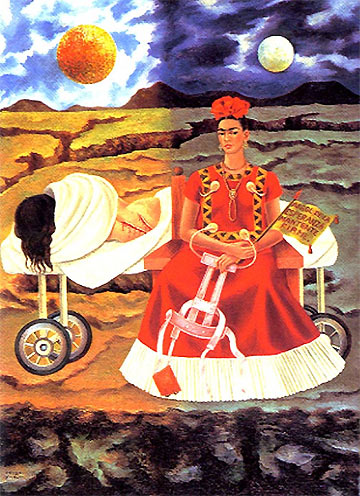
Una revista digital interesante. Allí puede ver la mejor pintura que realizó la mexicana Frida Kahlo en su mejor época.
Mirando hacia CHINA...

The Poverty and development are two always open issues for mankind. In today’s world these two have surpass all other developed subjects into their folds because gap between developed and developing are increasing day by days. The brighter side of our story will tell Science and technologies’ ultra advance applications for all. Here ethical question arise that How and when all, where more than 1.6 billion global citizens are living under extreme poverty.
In Asian front India and China had major Share of Below poverty line population in world. In Early Seventies Both nations had started its fights against poverty. India Is still has 300 million People who could not able to earn US $ 1/day where as China since the end of the 1970s; the rural poverty reduction work in China has made achievements of world interest. Measured by the line of mainland China, the number of the absolute poor in rural areas whose living standard is under the subsistence level has dropped from 250 million in 1978 to 23.65 million in 2005, and the incidence of poverty dropped from 30.7% to 2.5% during the same period of time; according to the evaluation by the World Bank, in the 10 years during 1991 and 2000, the number of poor living below 1 US dollar per day has declined by 274 million globally, of which, 151 million in China, which represents making up 55% of the total, and 75% of the total poverty reduced population in the developing world. At the same time as the number of poor declined significantly, the infrastructure and social utility levels in poor regions, and the basic working and living conditions of the poor have all improved sharply.
While China is experiencing the transition from the planned economy to the market-based one, furthering the modernization process, both economic growth and poverty reduction have been achieved.
Developing Societies in general and India in Special can take lesson from China and share their experiences with extreme poverty to do some thing for human kind.
(Fuente:Un artículo de Dev Mishra escrito en Citizen Express.com )
Un nuevo periodismo citadino

No hay duda que se está imponiendo en el periodismo dugital lo que se denomina CITIZEN Journalism. Un periodismo elaborado por ciudadanos reporteros muchos de ellos con vocación para escribir y contar historias o noticias pero no necesariamente son periodistas profesionales. El enlace que he colocado arriba proviene de la INDIA y se llama CITIZEN EXPRESS. Vamo a ver de que se trata...
A community news portal www.citizenxpress.com has been laucnhed in india by group of young indian research Journalists in december 2006.
The community new portal Citizenxpress.com is research work of ABC Media Research and Development Center, Run and Managed by These youngs Research journos .This portal is fully dedicated to the cause of citizen involved journalism popularly called CITIZEN JOURNALISM. All news and information have their sources in citizens. They create news and information or witness the news but they have no relevance in news gathering, processing and publishing system of contempory media. The citizen journalism is the voices of all those citizens who are creating or witnessing news and information around them, the citizenxpress is an open platform for all those citizens.
Now a day’s fascinating proverb is being engineered i.e. for all (4 all).like education for all, health for all, justice for all etc but participation by all is no where in their agenda. This gives impressions that all who want to do some thing for all still not willing to relinquish their position of givers. Which always reflect in their actions vice versa. So there is urgent need of a platform, where all will act as givers as well as takers. Flow of knowledge can be from either sides depending on the need and requirements of situation.
En Corea del Sur existe también el periodismo de ciudadanos. Puede verlo ahora:
viernes, febrero 16, 2007
Quieres oir el concierto de Queen en TOKIO 1985
Si quieres oir el concierto de QUEEN en TOKIO y en el año de 1985 y otros conciertos famosos tienes que hacer click arriba. Que los difrutes,
jueves, febrero 15, 2007
El Archivo de asunto de Seguridad
La Universidad George Washington ha desarrollado un archivo de los documentos desclasificados, la mayoría sobre actos terroristas. Es interesante hacer click arriba para ver este aporte.
martes, febrero 13, 2007
La Biblioteca de POESIAS ALMIAR
Al entrar por favor búsquen los Poemas Publicados en el No. 19 y hagan click allí para leer al menos dos poesías de Alfredo Ascanio (un canto a Macchupichu y un Canto a Chile).
Y en la revista Venezolana Letralia también fui favorecido con la publicación de tres poesías mios:
LETRALIA
Y en la revista Venezolana Letralia también fui favorecido con la publicación de tres poesías mios:
La revista digital Cubana
Ustedes saben que en Cuba existe una única información; es decir que la revista Granma tiene el "monopolio de la sabiduria", es decir una comunicación "monocolor" como la que existe en Korea del Norte. Menos mal que ya China y Vietnam comienzan a realizar cambios civilizados.No obstante, es interesante leer lo que dice Granma para poder ponderar las verdades, las madias verdades y lo que no es cierto desde otros puntos de vista.En seguida voy a colocar la prensa mundial digitalizada donde aparece el periódico de Korea del Norte para poder comparar los estilos. O también en : CUBAWEB
HACER CLICK AQUI
lunes, febrero 12, 2007
Para editar Fotos
Ud. puede editar sus fotos antes de enviarlas a un determinado lugar. Para ello existen 4 sitios free (de gratis) , o sea:
PIXER
PICNIK
SNIPSHOT
FAUXTO
La herramienta que más me gusta por su simplicidad es PIXER.
You can edit photos before you upload them using these four
free sites. I like Pixer.us very much.
La herramienta que más me gusta por su simplicidad es PIXER.
You can edit photos before you upload them using these four
free sites. I like Pixer.us very much.
sábado, febrero 10, 2007
Korea: A Less Selfish Way to Live
Korea: A Less Selfish Way to Live
Adapting to the culture was a challenge, but also beneficial
Claire George (aeogae)
Published 2007-02-02 00:05 (KST)
In England my imagination went as far east as Russia and stopped just short of Lake Baikal. China was just a story in a book, and as for Korea, I couldn't even locate it on the map.
I never expected to find myself living in Seoul, 75 miles south of Pyongyang. For me, foreign adventure was Italy, France or Spain, not the other side of the world.
When I arrived in South Korea in August 2005 I was possibly one of the least enthusiastic tourists the country had ever seen. But I had a compelling reason to come: my partner is Korean. I would rather have gone to Paris or Madrid, but to cancel the trip and not see my boyfriend was unthinkable.
It was meant to be a visit of a year, and no more. Then the inevitable happened, I liked being in the same country as my boyfriend and wanted to stay longer.
Going to live in a foreign culture for personal, or practical, reasons is perhaps more difficult than making the leap because you're motivated by curiosity and wanderlust.
I read blogs written by young Americans who came to Seoul fascinated by Korea's history and language. I couldn't feel the same. Instead I felt intensely homesick and was unable to stop thinking about the muddy rain-swept streets of rural England.
In England they told me that I would never adapt to Korean life, it would be too alien for me. I thought so too, but now I realize that what was once strange and unacceptable has become comfortable and familiar.
The well-being of the group has much greater importance in Korea than it does in England, where individualism and personal privacy are highly valued.
"Intrusive" was the word I first used when I saw how the Korean workplace comes into significant areas of what we English people think of as private life.
Koreans are expected to invite all their colleagues to their weddings, their funerals and their children's first birthday parties.
At Korean weddings it is not unusual for the boss of the bride or groom to give a little speech immediately before the couple make their vows. This is a very odd thing from an English point of view.
During the day colleagues eat lunch together (no skulking off to read a novel) and everyone eats and drinks exactly the same thing.
After work, in order to maintain group solidarity, colleagues go out to eat (identical food) and drink (identical alcohol) together once or twice a week.
"In Korea, co-workers are like friends and neighbors," says a colleague of my boyfriend.
I once thought of these practices as bizarre and suffocating. In England we also socialize with our work colleagues; indeed many people find marriage and friendship in their factories and offices. But England is not a Confucian society like Korea, there is no social obligation to treat workmates as something close to family.
When I began working for OhmyNews in 2006 it was this aspect of Korean office life that worried me the most. Fortunately, a sympathetic boss allowed me to work from home like my colleagues in the U.S.A., so I was able to do my job unhindered by cultural anxieties.
That would have been it for me, I wouldn't have learnt anything good about Korean work culture if the very thing I was afraid of hadn't come to rescue me.
I often take my computer to my boyfriend's office and work there. It is only possible to do that because Koreans have a more sociable attitude towards their colleagues. In England if somebody proposed bringing their Korean girlfriend to work they would receive some very funny looks and harsh comments.
I've been watching the people in the office interact with each other, and I have slowly come to recognize the good things about Korean office life.
Nobody is given a chance to feel lonely at work. I'm sure it is possible to feel alone, but never lonely. Every wedding and child's first birthday party has enough guests to make it a noisy, happy occasion.
In England where colleagues sometimes don't know each other very well, bereavements can be kept hidden, causing all kinds of emotional difficulties. In Korea it is a little harder to do that when your officemates have been to the funeral.
I do not think it is necessary to go out drinking twice a week to feel a sense of loyalty towards your colleagues, or to develop team spirit. However, when I watch the members of my boyfriend's company I see that it does really work for them.
I came to Korea with a closed mind, convinced that individualism was superior to communalism. This country has taught me in many more ways than I have expressed here, that valuing the well-being of the group has some very definite advantages and is often the less selfish way to live.
I am nearly 30 years old, and I doubt that I will ever give up my English love of personal space, privacy and making my own meal choices, but I think I can come to a compromise.
©2007 OhmyNews
Other articles by reporter Claire George
viernes, febrero 09, 2007
Ha nacido un dictador
En un diario de Escandinavia, ha sido publicado un titular dedicado a Hugo Chavez que se muestra a continuación: (Cabe resaltar, que los países de Escandinavos , aparte de ser primer mundo son los primeros países socialistas del mundo, nadie sabe de socialismo mejor que ellos, ellos inventaron practicamente el socialismo y son ellos, los socialistas quienes dicen que Chavez es un dictador... si los socialistas lo reconocen.. que quedará para el que vive aquí adentro)
El diario refiere lo siguiente:
HA NACIDO UN DICTADOR
Ahora Chavez cerró la última puerta hacia la democracia .
Así él arrastró a la democracia hasta su último suspiro. La Asamblea Nacional de ese país, votó ayer una ley que le da al presidente Hugo Chávez el derecho de manejar al país a través de decretos por los próximos 18 meses.
La historia del Comunismo se repite; según se ve en el conocidísimo esquema comunista.
Hugo Chávez ha seducido considerablemente la actividad izquierdista dentro y fuera de Venezuela. Sus calientes críticas hacia los Estados Unidos y sobretodo hacia George Bush diciéndole que se vaya a su casa.
Para Chávez y compañía, Bush es el diablo reencarnado. Muchos piensan que tiene una opinión democrática y sentir de derechos humanos los cuales son mas criticados en la gestión de Bush en USA que de Chávez en Venezuela.
Eso realmente son tonterías. Y ahora Hugo Chávez parece cada vez mas instalado a seguir las mismas huellas de todos los dictadores de izquierda que han existido antes que él.
El dice que está del lado de la gente, Que él sabe mejor acerda de donde deben ser invertidos las ventajosas riquezas del país. Que el necesita poder para ejecutar todo eso.
Una vez a eso se le llamó: "la dictadura de los proletariados" y ya nosotros sabemos como termina eso.
Tan lejos no ha llegado Chávez aún, pero definitivamente ya tiene un trazo corrido hacia esa vía. La Asamblea le es fiel un 100% leal desde que la oposición les boicoteó la pasada elección; los tribunales también los domina él.
A través de decisiones tomadas en los patios, ya no necesita voltearse hacia la Asamblea para fundar leyes. Ya lo hace por propia mano en las 11 ramas mas importantes del país: desde economía hasta seguridad nacional.
Chávez ya ha dejado claro que piensa nacionalizar la telecomunicación y electricidad del país. Después de su gran triunfo de las elecciones el año pasado piensa él dirigirse hacia una "nueva era" pintada con el color rojo socialismo.
Hay mucho que criticar a George Bush por lo que ha hecho, y algunas veces Chavez ha tenido razón (un tanto humorística) en sus teatros de que expide olor de azufre.
Pero no hay nada de agradable con su hambre de poder. En 2 años Bush abandonará la Casa Blanca.
Algo me dice que va a tomar muchísimo mas tiempo, muchísimo mas para que Chavez abandone el poder.
LÖRDAG 3 FEBRUARI 2007
Fuente:
EXPRESSEN
Allt fler fruktar att Hugo Chavez är på väg att förvandla Venezuela till ett nytt Kuba. Fidel Castro är också Chavez stora förebild.
Mats Larsson: Nu har Chavez stängt den sista dörren till demokratin
Så drog då demokratin i Venezuela sin kanske sista suck. Landets parlament röstade i går igenom en lag som ger president Hugo Chávez rätten att styra landet med dekret i 18 månader framåt.

Kommunisthistorien upprepar sig alltså. Enligt ett bara alltför välbekant schema.
Hugo Chávez har de senaste åren charmat åtskilliga vänsteraktivister både i och utanför Venezuela. Hans svidande kritik mot USA och framför allt George W Bush går hem där.
För Chavez & Co är Bush djävulen inkarnerad. Många tycks ha uppfattningen att demokratin och de mänskliga rättigheterna är mer hotade i Bushs USA än i Chavez Venezuela.
Det är nonsens. Och Hugo Chávez verkar nu alltmer inställd på att följa i samma fotspår som så många vänsterdiktatorer före honom.
Han står på folkets sida, säger han. Han vet bäst hur omfördelningen av landets rikedomar ska gå till. Han behöver makten för att genomföra det.
Det kallades proletariatets diktatur en gång. Och vi vet hur illa det brukade sluta.
Så långt har inte Chavez kommit, men en bit på väg är han nu. Parlamentet är honom 100-procentigt lojalt sedan oppositionen bojkottade förra valet, domstolarna lyder honom också.
Och genom gårdagens beslut behöver han inte ens vända sig till parlamentet längre för att stifta lagar. Det klarar han av på egen hand på elva viktiga områden, från ekonomi till nationell säkerhet.
Chavez har redan gjort klart att han tänker förstatliga landets telekommunikationer och elindustri. Efter den stora valsegern i presidentvalet i fjol tänker han nu gå vidare och införa en "ny era" målad med socialismens röda färger.
Det finns mycket att kritisera George W Bush för. Och Chavez kan vara rätt underhållande ibland med sin svavelosande tirader.
Men det är inget lustigt med hans makthunger. Om två år har Bush flyttat ut ur Vita huset. Något säger mig att det kommer att ta betydligt längre tid att bli av med Hugo Chávez.
MATS LARSSON
mats.larsson@expressen.se

El diario refiere lo siguiente:
HA NACIDO UN DICTADOR
Ahora Chavez cerró la última puerta hacia la democracia .
Así él arrastró a la democracia hasta su último suspiro. La Asamblea Nacional de ese país, votó ayer una ley que le da al presidente Hugo Chávez el derecho de manejar al país a través de decretos por los próximos 18 meses.
La historia del Comunismo se repite; según se ve en el conocidísimo esquema comunista.
Hugo Chávez ha seducido considerablemente la actividad izquierdista dentro y fuera de Venezuela. Sus calientes críticas hacia los Estados Unidos y sobretodo hacia George Bush diciéndole que se vaya a su casa.
Para Chávez y compañía, Bush es el diablo reencarnado. Muchos piensan que tiene una opinión democrática y sentir de derechos humanos los cuales son mas criticados en la gestión de Bush en USA que de Chávez en Venezuela.
Eso realmente son tonterías. Y ahora Hugo Chávez parece cada vez mas instalado a seguir las mismas huellas de todos los dictadores de izquierda que han existido antes que él.
El dice que está del lado de la gente, Que él sabe mejor acerda de donde deben ser invertidos las ventajosas riquezas del país. Que el necesita poder para ejecutar todo eso.
Una vez a eso se le llamó: "la dictadura de los proletariados" y ya nosotros sabemos como termina eso.
Tan lejos no ha llegado Chávez aún, pero definitivamente ya tiene un trazo corrido hacia esa vía. La Asamblea le es fiel un 100% leal desde que la oposición les boicoteó la pasada elección; los tribunales también los domina él.
A través de decisiones tomadas en los patios, ya no necesita voltearse hacia la Asamblea para fundar leyes. Ya lo hace por propia mano en las 11 ramas mas importantes del país: desde economía hasta seguridad nacional.
Chávez ya ha dejado claro que piensa nacionalizar la telecomunicación y electricidad del país. Después de su gran triunfo de las elecciones el año pasado piensa él dirigirse hacia una "nueva era" pintada con el color rojo socialismo.
Hay mucho que criticar a George Bush por lo que ha hecho, y algunas veces Chavez ha tenido razón (un tanto humorística) en sus teatros de que expide olor de azufre.
Pero no hay nada de agradable con su hambre de poder. En 2 años Bush abandonará la Casa Blanca.
Algo me dice que va a tomar muchísimo mas tiempo, muchísimo mas para que Chavez abandone el poder.
LÖRDAG 3 FEBRUARI 2007
Fuente:
Allt fler fruktar att Hugo Chavez är på väg att förvandla Venezuela till ett nytt Kuba. Fidel Castro är också Chavez stora förebild.
Mats Larsson: Nu har Chavez stängt den sista dörren till demokratin
Så drog då demokratin i Venezuela sin kanske sista suck. Landets parlament röstade i går igenom en lag som ger president Hugo Chávez rätten att styra landet med dekret i 18 månader framåt.

Kommunisthistorien upprepar sig alltså. Enligt ett bara alltför välbekant schema.
Hugo Chávez har de senaste åren charmat åtskilliga vänsteraktivister både i och utanför Venezuela. Hans svidande kritik mot USA och framför allt George W Bush går hem där.
För Chavez & Co är Bush djävulen inkarnerad. Många tycks ha uppfattningen att demokratin och de mänskliga rättigheterna är mer hotade i Bushs USA än i Chavez Venezuela.
Det är nonsens. Och Hugo Chávez verkar nu alltmer inställd på att följa i samma fotspår som så många vänsterdiktatorer före honom.
Han står på folkets sida, säger han. Han vet bäst hur omfördelningen av landets rikedomar ska gå till. Han behöver makten för att genomföra det.
Det kallades proletariatets diktatur en gång. Och vi vet hur illa det brukade sluta.
Så långt har inte Chavez kommit, men en bit på väg är han nu. Parlamentet är honom 100-procentigt lojalt sedan oppositionen bojkottade förra valet, domstolarna lyder honom också.
Och genom gårdagens beslut behöver han inte ens vända sig till parlamentet längre för att stifta lagar. Det klarar han av på egen hand på elva viktiga områden, från ekonomi till nationell säkerhet.
Chavez har redan gjort klart att han tänker förstatliga landets telekommunikationer och elindustri. Efter den stora valsegern i presidentvalet i fjol tänker han nu gå vidare och införa en "ny era" målad med socialismens röda färger.
Det finns mycket att kritisera George W Bush för. Och Chavez kan vara rätt underhållande ibland med sin svavelosande tirader.
Men det är inget lustigt med hans makthunger. Om två år har Bush flyttat ut ur Vita huset. Något säger mig att det kommer att ta betydligt längre tid att bli av med Hugo Chávez.
MATS LARSSON
mats.larsson@expressen.se

La autonomía universitaria
Viceministro anuncia revisión al concepto de autonomía universitaria
29/01/2007
Tomado de El Tiempo.com.ve
Periódico Oriental
Henry Gómez ayer en Cumaná, expuso que las casas de estudios deben dejar de ser cotos cerrados a la realidad. Sopesó necesario reformular una noción que cree sirve para eternizar a una élite en las altas esferas académicas. Sector estudiantil objeta aspecto de ley de universidades que forja el gobierno
El Ministerio de Educación Superior iniciará un debate en torno al concepto de autonomía universitaria, tal como lo confirmó ayer en un acto realizado en Cumaná, el recién nombrado viceministro de Políticas Estudiantiles de ese despacho ministerial, Henry Gómez Mayz.
Las opiniones del alto funcionario y académico universitario fueron emitidas en el marco de la inauguración del Centro de Formación Socialista Venezolano (Cfsv) de la avenida del Bolivariano, al sureste de la capital sucrense.
Cree Mayz que la transformación de la autonomía de las universidades es necesaria, porque en su concepto muchas de estas instituciones siguen como cotos cerrados con respecto al resto del país.
"La autonomía, que si bien es académica y administrativa, también parece que las convirtió en un país aparte, algo que no se corresponde con lo que ocurre en la sociedad de hoy en día".
Dijo que más que eliminar la independencia de las casas de estudios superiores, se debería transitar hacia un nuevo concepto en el cual sean parte todos los actores del sector.
Señaló que habrá que revisar este principio desde los planes académicos de estudio, la autonomía administrativa, los recursos que envía el Estado, "y fijar una posición sobre el rumbo estratégico hacia el cual debe ir la educación superior en este país".
Incluso fue más allá. "La autonomía sirve para que una élite se eternice en el poder, en el manejo de las universidades. Ni siquiera ceden espacio a los actores principales, que es el estudiantado, a cuyas espaldas se toman muchas decisiones".
El ministro Luis Acuña Cedeño planteó que se debe transformar a las universidades. Ratificó que se hacen esfuerzos en el Núcleo de Sucre de la Universidad de Oriente (UDO), en función de establecer allí los consejos comunales.
Reserva ética
Milena Bravo de Romero, rectora de la UDO, manifestó compartir algunos conceptos emitidos por Mayz, pero no el que puedan existir factores que pretendan "eternizarse" en el poder en los ámbitos de la educación
superior pública de Venezuela.
"Una prueba de ello es la UDO, donde por 47 oportunidades sus autoridades han sido electas en los respectivos procesos".
Apuntó que la universidad es la reserva ética de este país. "Allí está el talento que contribuye con creces a la Venezuela proactiva, más profesional y educada. Contrario a esto vemos a muchos seudo universitarios que se enriquecen con recursos del Estado. Creo que el ministro y el viceministro deberían ver eso y confrontarlo".
Agregó que afrontan mermas con el personal docente, ya que suelen tener problemas para suplir a los jubilados y el gobierno no quiere percatarse de ello.
Dijo que abarrotar la institución de educandos sin contar con lo necesario para su formación es una mala política.
"Pensamos en el estudiante, nuestro primer objetivo y sin el cual no existe el hecho académico. Es nuestro norte y me preocupo por atenderlo".
Thaís Pico, vicerrectora administrativa de la UDO, piensa que la autonomía es el respeto mutuo de todos los entes imbuidos en el ámbito universitario y los que son externos.
"Los planes académicos responden a necesidades en cuanto a carreras que tenemos y adaptándonos a las disposiciones que el Ejecutivo nacional ha dispuesto en el cambio de materias académicas hasta el momento".
Ley escondida Geris Guerra, vocero del Movimiento 100% Udistas, dijo que esta se mana tendrán una reunión donde sopesará su posición sobre la nueva ley que propone el ministro de Educación Superior, Luis Acuña C.
"Está confinada en un maletín y no la han puesto para la discusión de la comunidad universitaria". Desmintió que los universitarios vivan aislados en su mundo.
("Dos cosas son infinitas: el universo y la estupidez humana; y
yo no estoy seguro sobre el universo"
Albert Einstein )
jueves, febrero 08, 2007
Lula cercado de populistas
Es el título de un reportaje firmado por Diogo Schelp en la revista brasileña VEJA. El reportaje se refiere a la reciente reunión del Mercosur donde, según este reportero, Brasil tuvo una agenda más moderna que sus vecinos. Señala que Brasil está asediado por caudillos beligerantes.
Lula defendió la posición regional, pero dejó ver a los ojos del mundo que Brasil estaba en un estadio más estable y moderno que sus vecinos. Si bien es cierto que al llegar a Brasil el Presidente Chávez lo primero que señaló fue que se debería "desontaminar al Mercosur del Neoliberalismo", una prupuesta coherente con su "socialismo y muerte"
La región está dividida en dos grupos : 1) los países modernizantes como Brasil, Chile, Colombia y en cierta medida Uruguay, y 2) los países populistas orientados al socialismo autoritario como Venezuela, Ecuador, Bolivia y Argentina.
Chávez es un perturbador-dice el reportaje de VEJA - de las relaciones entre los países de Sur América y un fantasma aguafiesta en la región para la futura inversión de empresas extranjeras.
El reportaje señala también que Argentina se ha aproximado a Chávez debido a un interés económico por la venta de deuda a Venezuela y otros negocios ecómicos y financieros.
De modo imprudente Venezuela fue aceptado como país miembro pleno de Mercosur y también Bolivia y Ecuador desean ser aceptados por el grupo. El problema para Brasil es que la presencia de esos países enemigos de la blobalización y del libre-comercio, puede perjudicar las negociaciones del bloque con la Unión Europea. Mientras ya México ha logrado tratados comerciales con 45 países y Chile con 52 países, el Mercosur y por lo tanto Brasil también, ha encontrado dificultades en ese proceso de beneficiarse de la economía global a través de tratados comerciales.
(fuente: VEJA: pag. 56 del 24 de nero del año 2.007).
Remitido de Carlos Andres Perez
Carlos Andres Pérez y el 4 de Febrero 92
El Ex Presidente Carlos Andrés Pérez señaló que : celebrar la muerte es el signo del chavismo. Hugo Chávez es incapaz de dar un discurso sin hablar de muertes de violencia y de amenazar tanto a venezolanos como a extranjeros.
Los cientos de venezolanos que murieron en el intento de golpe del 1992 son los precursores de una ola de asesinatos de venezolanos por venezolanos que han signado estos infames años de su gestión.
Chávez, que tiene las manos ensangrentadas por la muerte de tantos inocentes ocurrida ese día-como también por las víctimas del 11 de abril- tiene el descaro y la desvergüenza de celebrar las muertes de inocentes venezolanos calificando el 4 de febrero como el Día de la Dignidad cuando precisamente ese fue el día de la traición de la emboscada y de la cobardía.
El cuatro de febrero de 1992 el hoy presidente de Venezuela en unión de otros militares que deshonraron su juramento, empuñaron las armas que le habían confiado sus compatriotas, para irrumpir contra un gobierno que había sido electo en elecciones limpias.
Ese fue el día que Chávez y sus cómplices intentaron asesinarme en Miraflores y de asesinar a mi familia en La Casona - atacada por morteros y ametralladoras.
Es el día de la cobardía, liderizado por el teniente coronel Chávez, que refugiado en el Museo Militar se entregó llorosamente pensando que lo iban a matar, como el pretendía hacer conmigo y muchos de mis colaboradores y de mi propia familia.
Que la marcha que hacen hoy, los cómplices de tantas muertes, la inicien precisamente desde el Museo Militar hace aun más patética y desvergonzada semejante celebración.
Encerrado y escondido en el Museo Militar, Chávez pudo presenciar a la distancia como efectivos militares, bajo sus ordenes, morían innecesariamente mientras que él, que nunca participó en el combate, temblaba al contemplar como las Fuerzas Armadas lo hicieron rendir sin ninguna resistencia de su parte.
Pero lo que en cualquier comunidad civilizada sería motivo de bochorno, en el régimen del señor Chávez se califica como fecha patria. Tal es la inversión de valores, la tergiversación de los principios elementales de civilidad, que hoy azota a mi querida Venezuela. Pero más allá de la apología, de la felonía, de la exaltación de la barbarie, patentizada en un hecho que ocurrió hace quince años y que me tocó en lo personal, porque entonces era el titular de la jefatura de Estado, lo que más preocupa son las perspectivas. Ahora Chávez habla de "socialismo o muerte". Tal es su manera de hacer política.
Ayer pretendió alzarse contra las instituciones democráticas, con el saldo de civiles y gente inocente acribillada, y hoy, no concibe la concreción de su pretendido político a través del diálogo, la persuasión y el reconocimiento del adversario, sino a través del dilema primitivo de morir o asesinar.
Por eso quiere remover el principio de alternabilidad, básico en toda democracia. Por eso ha subrogado al parlamento en la función de sancionar leyes, a través de una habilitación legislativa espuria ad initio porque es fruto de una Asamblea Nacional Constituyente en cuya conformación se irrespetaron la más elemental hermenéutica electoral, el principio de representación proporcional, principalmente. Por eso, el Tribunal Supremo de Justicia ha hecho dejación de su más elementa autonomía, al extremo que su presidente ha emplazado a los jueces de la República a salir a defender la Revolución y figurar uno de sus magistrados más prominentes como secretaria ejecutivo del propio señor Chávez.
Como venezolano, y como Jefe de Estado, no puedo menos que sumarme a la repulsa nacional a esta infausta celebración de la muerte de compatriotas llevados a tal final por un grupito de conspiradores que traicionaron a su institución y que violaron la constitución. Ese día Chávez quedó consagrado como el único golpista en más de cuarenta años de la fenecida democracia venezolana.
Que se celebre tan triste fecha con la participación de efectivos de las fuerzas armadas nacionales, no es solo motivo de
vergüenza, sino de consternación. Como pueden los guardianes de la institucionalidad sumarse a celebrar la violación y el atropello de la institucionalidad es la pregunta que deben estarse haciendo todos aquellos integrantes de la fuerzas armadas que no están dispuestos a rendir su dignidad ni a violar sus compromisos con la patria. La procalama del General Euclides
Campos en la marcha de hoy de "Socialismo, patria o muerte, venceremos" deben llamarnos a la reflexión a todos al ver en manos de quienes está la protección de los derechos ciudadanos en nuestro país .
El 4 de febrero no fue más ni menos que el anticipo de lo que hoy sufre el país y sus instituciones, secuestradas por un líder
fascistoide que se comporta como un jefe de pandilla de barrio –envalentonado cuando tiene todo el poder- y acobardado y llorón cuando es enfrentado. Ya los venezolanos le hemos visto llorar e implorar ante situaciones adversas, sólo nos faltaba ver como es capaz de celebrar la muerte de los pobres venezolanos muertos por su cobarde actuación del 4 de febrero. No
importa cuanto obligue a compatriotas a desfilar. Ese día de muertes es el signo imborrable de lo que Chávez y su acción representan.
El 4 de febrero conmemora realmente que nuestro país desgraciadamente está asociado y comprometido con las peores causas de la humanidad. Donde quiera que se atropellen los derechos humanos o se amenace la paz y la seguridad internacional, allí está Chávez, con el dinero del pueblo venezolano.
Todo, mientras la depauperación campea fueros en Venezuela. Mientras validos del régimen exhiben de la manera más impúdica el producto de su latrocinio, sin que haya autoridad que le ponga coto a sus depredaciones.
En este momento parecen vanos los esfuerzos por remover al gobierno forajido. Pero los pueblos siempre terminan por sobreponerse a sus dramas. Ojalá que en tal propósito los venezolanos podamos contar con el respaldo moral de la comunidad internacional, en particular la latinoamericana, y que, de esta manera, se le retribuya a mi país el entusiasta apoyo que alguna vez, ofreció a los principios democráticos.
Carlos Andrés Pérez
Miami 4 de febrero de 2007
Latin America: America's Stepping Stone
Latin America: America's Stepping Stone
[Interview] Professor Greg Grandin on the historical legacy of U.S. in the region
Michael Werbowski (minou)
Published 2007-02-06 03:54 (KST)
Professor Greg Grandin lectures on Latin American History at New York University and authored most recently "Empire's Workshop: Latin America, the United States, and the rise of the new Imperialism." He has also previously written "The Last Colonial Massacre" and the award-winning "The Blood of Guatemala." Grandin is a 2004 recipient of the Guggenheim fellowship. He served on the United Nations truth commission investigating the Guatemalan civil war. Grandin's articles have appeared in Harper's, The Nation and The New York Times. He lives in New York.
How does Washington in your view, see the recent reelection of the Nicaraguan leader Daniel Ortega and former Sandinista? What does his return to power mean for U.S. Central American relations?
Obviously it is a challenge, both because of the history between the U.S. and Nicaragua, and because of Latin America's current politics, which has included the election of leftists and nationalists sharply critical, or at least politically independent, of Washington. In terms of the first, in the 1980s, the U.S. spent millions of dollars and patronized anti-communist mercenaries who killed tens of thousands of Nicaraguans in order to destabilize the Sandinista government and make its attempt at creating a more humane society untenable.
The U.S. promised Nicaragua -- and indeed all of Central America -- that life within its sphere of influence, both in terms of politics and economics, would be better than the policy of non-alignment and social-democratic economics that the Sandinistas offered. But here we are 16 years after the Sandinistas were voted out of power -- worn down and exhausted by fighting a war against the most powerful nation in the history of the world -- and Nicaragua is a basket case, the second poorest country in the hemisphere after Haiti.
That Nicaraguans withstood intense pressure and re-elected Ortega demonstrates the absolute failure of U.S. foreign policy to provide a decent life to even a small country of a few million people -- so what are the chances the U.S. would be able to do so in a region like the Middle East? That the Sandinistas remain the single most popular party in Nicaragua is evidence of the limits of U.S. power, especially when it is exercised purely in military terms, which is, after all, the favorite exercise of the neocons. A country as poor as Nicaragua, in a region long locked into the United States' sphere of influence, bucking Washington's diktats is an intolerable embarrassment.
Hundreds of thousands of Central Americans killed in the 1980s, tens of thousands of them disappeared, another hundred thousand tortured, and millions more driven into exile, and Nicaragua still refuses to genuflect to Washington's commands.
In terms of contemporary politics, Ortega's victory is the closest to the U.S. border of Latin America's so-called "pink tide," and Ortega has made no secret of his alliance with Venezuela's Hugo Chavez. If you think about it in geographic terms, the countries of Southern South America have recently demonstrated a remarkable degree of political and economic independence -- even a country like Chile, considered to be a model of responsible reformism allied with Washington, has refused to support the invasion of Iraq and refused to isolate Chavez. Further north, in the Andes, the region is up for grabs, with Venezuela, Bolivia, Ecuador led by leftists, and Peru and Colombia remaining in the U.S. camp. But Mesoamerica -- Mexico and Central America -- have remained secure, so far, bound to the U.S. by free-trade agreements.
Ortega's election could begin the thawing of this glacial hold the U.S. has on the region.
What are the chances that the former Guatemalan President and strongman Rios Montt who oversaw the military’s brutal campaign in the 1970s and 80s against Guatemala's indigenous population might one day be held accountable for his crimes?
I would say that question would best be answered by an insurance agent's actuarial table -- like Pinochet before his recent death, Rios Montt is of advanced age. I don’t know what the odds are of his surviving long enough to hold him accountable. While there has been some strengthening of the judicial process in Guatemala, there has not been the political will to bring him to justice.
Will the recent releases from prison of the deposed Panamanian President Manuel Noriega heal the wounds created by the U.S. invasion of Panama in 1990?
For wounds to heal, they have to be identified and exposed to air and light. That has yet to happen in the case of Panama, where the U.S. committed atrocities on a mass scale ? namely the brutal bombing of the poor neighborhoods of Corillo and San Miguelito, which were described by Panamanians as indiscriminate. The U.S. still claims only a few hundreds civilians died, but human rights organizations on the ground reported the killing of thousands, along with the creation of over 10,000 homeless. No white or rich neighborhoods in Panama City were bombed.
What is the significance of the rising tide of popularity of the "21st century Socialism" in Latin America? Is this an ideology or a real socio-political phenomenon with "grass roots" support or simply a populist ploy to consolidate power?
What you are seeing in Latin America, particularly in Venezuela, but elsewhere as well, is the return of the developmentalist state but now linked not so much to affiliated unions or peasant organizations but to the myriad "civil society" organizations that emerged in the 1990s to turn Latin America into the vanguard of the world’s anti-corporate social justice movement. There is a real synergy between, say, Evo Morales in Bolivia, or Chavez in Venezuela, and these diverse grassroots groups. I wouldn't describe it as a ploy at all -- and that Chavez notably refuses comparisons with someone like Juan Peron in Argentina is a good sign. In fact, whenever there has been a conflict between the official party and social-movement groups in Venezuela, Chavez has consistently sided with the latter.
Please briefly explain what role policy makers in Washington who masterminded the "Iran contra affair" in the 1980s under President Reagan played in orchestrating the military offensive against and occupation in Iraq?
There have been an untold number of books published on U.S. "regime change" in Latin America, and I didn't want "Empire's Workshop"--the book where I make this argument -- to be yet another.
I instead intended to examine the importance of Latin America in the formation of America's two great twentieth-century political coalitions, the New Deal and the New Right. The first chapter looks at how the ideas and institutions that came to define American multilateral "soft power" were first worked out in Latin America, largely as a result of local resistance to U.S. militarism. The rest of
the book focuses on the New Right's assault on these ideas and institutions in the wake of Vietnam.
And this is where Central America--and Iran-Contra -- comes in: Reagan's policy there served as the crucible where the alliances, ideas, and tactics that make up the modern New Right first fully took shape. I want to be clear that I am not saying Central America was more important to U.S. interests than, for instance, the Persian Gulf, Afghanistan, or Western Europe. On the contrary, its very unimportance allowed Reagan, even as he moved with moderation, even vacillation, in other parts of the world, to give the region as a cheap gift to movement conservatives. Their hard-line there was a form of wish fulfillment, how they hoped Washington would act against the USSR and other third-world hot spots.
In turn, a bellicose stance in Central America helped smooth over a number of potentially debilitating differences among the diverse groups that made up the gathering New Right, between, say, secular neocons and evangelical Christians.
Reagan's patronage of anticommunist insurgents in Nicaragua and death-squad states in El Salvador and Guatemala did more than just rehabilitate American "hard power"--it justified that power in evermore idealistic terms. This corresponded to the New Right's attempt to reclaim the diplomatic moral high ground, in response to both Kissinger's realpolitik and Carter's human rights diplomacy. It was in Central America where the Republican Party first fully embraced the language of human rights and democratization.
An instructive comparison is to Vietnam. There, as the war dragged on and atrocities were revealed, Washington gave up any pretense of idealism to justify its involvement. In Central America, the exact opposite occurred. Even after the press reported on Salvadoran and Contra carnage, even after the Iran-Contra story broke, Reagan upped the rhetorical ante, casting support for Contras as keeping faith with America's revolutionary heritage. This, I believe, is the most immediate antecedent to what some neocons like to call "hard Wilsonianism," or, as I put it in the book, Bush's "punitive idealism."
The role of neocons in this "remoralization" of American diplomacy has been widely noted. But Empire’s Workshop sheds light on the Christian Right's contribution as well. Again, Central America proved key. Republicans mobilized their fundamentalist base to check the anti-interventionist movement and to provide crucial "private" aid to anticommunist allies. This mobilization, in turn, both increased evangelical involvement in foreign policy and helped fuse the religious and secular branches of the New Right. Evangelicals shared with neocons a sense that America had grown dangerously weak, and that only a rebirth of political will, or spiritual renewal, would save it.
Their understanding of themselves as a persecuted people engaged in an end-time struggle between good and evil mapped easily onto the millennialism of anti-communist militarists, particularly those involved in Central America, many of whom, such as William Casey and Oliver North, were themselves ultraconservative Christians. One aspect of the Central American wars largely overlooked is the importance of Liberation Theology, along with the Christian humanism of the domestic solidarity movement, in united the New Right. Well before radical Islam, Liberation Theology was the "political religion" the Reagan Revolution squared off against. It provided a powerful ethical challenge to both mainstream conservative theologians and fundamentalists, who responded by reestablishing the link between free markets and morality and reaffirming America as a "redeemer nation."
So when Jeane Kirkpatrick remarked that the three U.S. nuns raped, mutilated and murdered by Salvadoran security forces in 1980 were "not just nuns, they were political activists," she was being more than cruel. She was signaling her disapproval of a particular kind of peace Christianity.
There's no space to go into it here, but "Empire's Workshop" also details how Central America provided the New Right an opportunity to rehearse the tactics that has led to today's restoration of the imperial presidency -- this is what the Iran-Contra scandal was really about, figuring out ways to bypass Congress to wage an aggressive, unaccountable war. The inter-agency war party built by the first generation of neocons in the 1980s set the stage for today's Office of
Special Plans in the Pentagon. Likewise, there is a direct line connecting Otto Reich's Office of Public Diplomacy -- which brought together PR experts with "grassroots" conservative organizations to manipulate media, congressional, scholarly, and public opinion -- to this administration's use of firms like the Rendon Group to sell the war on terror and the invasion of Iraq.
Now that it is out, Empire's Workshop could be read as a compliment to studies that look at the domestic roots of the modern conservative movement, such as Thomas Frank's "What's the Matter With Kansas?" some of which suggest that if "value" issues could just be neutralized, evangelicals would support a return to New Deal economics. This, I argue in the book, misses the role conservative Christian intellectuals played in laying the groundwork for today's embrace of
free-market empire as America's national purpose. "Empire's Workshop" can also be read as a missing link connecting books that focus on one or another conservative group to explain Bush's foreign policy -- Fukuyama on the neocons, for example, or Kevin Phillips on the fundamentalists -- but overlook the deeper history of the Salvadorization of American diplomacy.
Is the rise of Chavez's popular brand of socialism somewhat linked to or a backlash against the neo liberal policies in Latin America which originated with Milton Friedman and the other economist know as the "Chicago boys"?
Yes, you can't understand the rise of the New Latin American Left, unless you understand the absolute failure of radical free-market policies in Latin America over the last two decades. Between 1980 and 2000, the region grew cumulatively by only 9 percent in per capita terms. Compare that with the 82 percent expansion of the previous two decades, and add to it the financial crises that have rolled across Mexico, Brazil, Venezuela, Bolivia, Ecuador and Argentina over the past 15 years, sweeping away accumulated savings, destroying the middle class, and wrecking the agricultural sector, and you will get a sense of why voters have turned left.
Please explain to us what the "Buenos Aires Consensus" is and how it may impact U.S Latin American relations?
The BAC is the term that the leaders of those countries have used to contrast their policies to those of the Washington Consensus -- the euphemism for the punishing mix of financial austerity, privatizations, and free-trade that has been imposed on Latin America. There are many policy differences among Latin America's new reformers, but they all share a commitment to diversify sources of investment and integrate Latin American markets (as a way of weakening their dependence on the U.S.) and of making the lessening of inequality -- as opposed to the generation of economic growth -- the primary goal of development.
Is America losing its hegemonic dominance in Latin America to China?
Not just China -- China does serve as an important source of capital investment, thus giving Latin American economies other options besides U.S. banks and the IMF to capitalize investment. But significant stores of capital has been built up throughout Asia, along with Russia and the Middle East, that has allowed leaders like Morales and Chavez, along with Kirchner in Argentina and now Rafael Correa in Ecuador, to have more leverage in their dealings with U.S. corporations.
Mexico: a spectacular trip

A Trip to Mexico
A journey to one of the most beautful countries in the Americas
Alfredo Ascanio (askain)
Published 2007-02-10 17:17 (KST)
One Saturday morning in May my daughter Marisela went to my wife Judith's room on the second floor of our house in Venezuela. The sunlight pooled and dropped through the narrow slats in the window shutters.
"It'll be a devil of a job to persuade Dad to go on this trip," she said, addressing Judith.
"Everyone should go to Mexico once a year," replied my wife. She is Mexican and an ardent nationalist.
They went to speak to me about it, and I thought a while as I sat in a wicker chair on the porch. The light had slowly come some distance before I decided on an answer.
"It would be wiser to save for a rainy day," I said, after some thought.
Judith insisted.
"Don't fool around any more Alfredo and come to Mexico. It's a long time since we have seen our family there."
No one is as persuasive as my wife, so it was easier to give in than to quarrel.
"OK, your wish is my command, with a month in Mexico City and Cuernavaca you'll regain peace of mind," I affirmed, glad to finish the controversy.
We were very tired because we had worked hard all year round, so we decided to take a rest for one whole month.
Planning the trip was a family affair. We discussed the day we could leave, the clothes we would wear to cope with the heat, whether we would stay in my wife's sister's apartment or the house of the cousins in Cuernavaca, and how long we would remain there.
After we had thoroughly discussed the matter we decided to leave on Monday morning at 9 a.m. It was a very beautiful morning and the weather in Caracas was fine.
We had a very pleasant five-hour flight with the Mexican state airline, arriving in Mexico in the late afternoon. The further we went from Venezuela the more we entered into the holiday spirit.
Mexico is one of the most beautiful countries in the Americas. If you want to live there you can choose whichever climate suits you best. If you like hot weather you can live near the sea, if you want something different you can stay in Cuernavaca, in the heart of the country. In that city it is neither too cold nor too hot. That is why they call it the city of the eternal spring.
There are only two seasons in Mexico. A rainy season lasting from June to September and a dry one going from October to May. The rains are very heavy but of very short duration and after they stop the sun shines again.
Mexican towns are very agreeable. Cuernavaca is full of sunshine and there are lovely flowers everywhere. They sell all kinds of craftsmanship in their markets once a week.
Tourists are treated to a rich cultural heritage. There is a 16th-century fort that once belonged to the conquistador Hernan Cortes, and a morning's car ride away there is the ancient archaeological site of Xochicalco. It was built by the indigenous people of the area many centuries before the arrival of the Europeans.
Mexico City, 85 kilometers to the north, is different to Cuernavaca. It has long wide avenues with grand names like "La Reforma", "Insurgentes" and "La Alameda." There are many modern and tall buildings, but also beautiful well-conserved constructions preserved from its historical patrimony. There has been a city here since the first half of the 14th century, before the arrival of Hernan Cortes.
The streets are always hustling and bustling with people. The crowds of eager tourists add numbers to a city that already has well over 8 million inhabitants.
If you visit Mexico City you should be prepared for some transportation frustration. It's very difficult to find and get a taxi, simply because there are too many people and very few taxis! The best way for tourists to get around is for them to use special double-decker buses.
There are many beautiful parks in the city but "Chapultetepec" is just wonderful, with its special museum of anthropology and history. Everything there is pleasant to your eyes. I enjoyed the old and tall trees and the big multicolored flowers.
Mexican food is delicious. They prepare many different dishes: "tortillas," "tacos," "enchiladas," "mole poblano," "guacamole," and "tamales." Some people do not like these dishes because they are heavily seasoned and hot. "Tamales" is the main dish and "tequila" the main drink.
A very special place in Mexico City that pleases us is "the Pink Zone" (Zona Rosa in Spanish).
It is a captivating place, iridescent with many lights. Shoppers love the intoxicating displays in shop window after shop window, and the multicolored dazzle of the finest craft objects gathered from every corner of the nation. It is a center of cosmopolitan gaiety, filled with conversations in many languages.
As night falls the area's neon signs tempt the passerby with a diversity of pleasures. There are open-air cafes, fine restaurants offering the cuisines of many nationalities of the East and West, discotheques, art galleries, hotels, movie theaters, boutiques, and bookstores. It is truly a delightful and colorful experience.
I was glad that Judith persuaded me to go. Sometimes I think:
"Everybody who visits Mexico City and Cuernavaca for the first time wishes to go for a second time because Mexicans are very nice people and are also great singers. They always sing when they are glad, sad or angry. The music of the 'Mariachis' is something you never forget."
©2007 OhmyNews
miércoles, febrero 07, 2007
MAGIAS y TRUCOS
A ustedes que les gusta la magia y los buenos trucos se van a sorprender con este trabajo de Criss Angel.
Busca en Artículos más leídos: Criss Angel enseña cómo levitar.
Mercosur: discusion con los antropologos
Si hacen Clik arriba encontrarán la información para participar en el foro de Mercosur que organizan los antropólogos.
martes, febrero 06, 2007
China to Pass Landmark Property Law
China to Pass Landmark Property Law
[Interview] Zhang Weiying,
Dean of Peking University's Management School
Sunny Lee (sunnylee)
Published 2007-01-27 07:21 (KST)
China's parliament is set to discuss a landmark property law when it meets in March. Beijing is thus one step closer to approving the newest draft version of the legislation, which has been reworked seven times because of its apparent capitalistic penchant which conflicts with China's socialist orientation.
The law to protect private property has been a political hot potato in China where state ownership still dominates key parts of the economy.
Zhang Weiying, dean of Guanghua School of Management at Peking University, said he believes the bill would pass the parliament.
"The parliament will pass the law. That will be a very important signal," he said in a recent interview.
Zhang said passing the bill will "give more confidence" to China's rising entrepreneurs, who are "crucial" for China's economic development.
"When people have security, they will know what they will get. They will be more motivated to work, make more money and invest," he said.
Zhang said a well-adopted property law can be a tool for a value creation and wealth redistribution.
"But the danger is some people are very anti-business," and there is ideological resistance, Zhang said, adding there may be "some important changes" likely to be made in the 17th Communist Party Congress in September.
"The leadership...can do something, which they couldn't do before... The top leaders may become braver in implementing reform policies," Zhang said without elaborating.
Zhang said recently Chinese economy has become easier to predict, with the economy has been less dominated by the government.
"That is a much nicer system. Unlike the government, when the private sector makes an investment, they look at it with a relatively long-term perspective...That was the reason the economy has become more stable. So, it is easy to predict this year's economy," he said.
Zhang said he is "confident" the economy this year will grow similar to last year's level, citing stable labor supply and improved productivity that he expects to last for a few years to come.
Zhang said he disagrees with some China watchers who think China's economy will start sliding after the 2008 Olympic Games as the high-expectation bubble up to the world event will go burst once it ends.
Instead, Zhang said China's economy will still be able to grow between 8 and 10 percent after the 2008 Olympic Games, buoyed by strong demands in both domestic and global markets.
"We do not expect any big change even after the Olympic games. (There will be) still a strong demand and supply," Zhang said.
China Has A Long Way To Go
Meanwhile, Zhang said China has "a lot of things to do" before to be really a market economy. "I don't think it's a market economy yet in a strict sense." He said, for example, the capital market and land market are still highly controlled by the government.
When asked when he expects China to get a market economy status from the U.S., he said, "China doesn't need to worry about that. America will eventually recognize China as a market economy. Now it is too much political."
Zhang said there is no good solution for the trade dispute between China and America because essentially "this is a political game. Each government thinks and raises voices strategically. Politics needs confrontation."
"I think the confrontation will continue," Zhang said.
In 2006, China's trade surplus jumped 74 percent from 2005 to hit a record US$177.47 billion, which will likely encourage further American pressures on Beijing to let the yuan appreciate at a faster pace.
China's Commerce Minister Bo Xilai said reducing China's trade surplus will be a key task for 2007.
China is making its own effort to gradually move toward a more open economy, Zhang said. "The government now cannot fully control the (economy's) brake any more," which he said reflects a "fundamental" change.
"We're becoming better students of Adam Smith," Zhang said.
©2007 OhmyNew
lunes, febrero 05, 2007
Cambio climático: lo que ya sabíamos
Cambio climático: lo que ya sabíamos
ESTEBAN ARLUCEA
PROFESOR DE DERECHO CONSTITUCIONAL DE LA UPV
El Informe del cambio climático
Un día después del anecdótico apagón eléctrico de cinco minutos se ha presentado en la sede de la Unesco en París un avance del último informe (el cuarto) del llamado Panel Intergubernamental sobre el Cambio Climático de la ONU (IPCC en su acrónimo inglés).
En honor a la verdad, he de reconocer que todos los medios de comunicación se hicieron eco de la noticia que colmó los arranques de todos los noticiarios de ayer. De suyo, un buen acontecimiento si no fuera por lo que el contenido del
avance de este estudio -realizado, entre redacción y revisiones, por más de 1.200 científicos- pone de relieve: que aun siendo una parte insignificante de este planeta redondo, cerrado y finito, como muy literariamente nos ha recordado Muñoz Molina en su reciente 'El viento de la Luna', somos los responsables cuasi en exclusiva (90%) de lo que acaece en él.
Retroceso de la civilización
Claro que esto para un racionalista antropocentrismo no es un dato que deba llevarnos a reflexión alguna, pero para quienes
sostenemos el valor éticamente intrínseco de todo cuanto nos rodea, no es sino la confirmación de sospechas y sensaciones que nos hablan del paulatino retroceso de nuestra moderna civilización. Término que, derivado del latino 'civis' (ciudadano, persona en definitiva), mal habla de que continuemos conduciéndonos en el único espacio físico que conocemos y podemos (la Tierra) de una manera que nos lleva a nuestra propia destrucción o, en el mejor de los escenarios, a un notabilísimo
incremento de perjuicios.
Y llegados a este punto de denunciada difícil vuelta atrás, cuando menos por los efectos a largo plazo sobre la naturaleza, las declaraciones de nuestros responsables políticos se tiñen de una insolente inocencia:
Todavía tenemos pesimismo
Necesitábamos la confirmación global y objetiva de la ciencia para, ahora sí, actuar plenamente en consecuencia, aunque ya hayamos ido dando pasos en tales sentidos', es lo que, en resumidas cuentas, vienen a decir. Sin embargo, albergo la sospecha de que en modo alguno ello va a suceder así, principalmente porque pensar hoy en día en el poder político como uno autónomo es una mezcolanza de desconocimiento e ingenuidad a partes iguales.
El poder político (donde lo hay) está sumisamente supeditado al económico. Los dictados del G-8, OMC, Banco Mundial y otras organizaciones menos nombradas penetran más, y más rápidamente, en nuestras vidas que la ley para el fomento de la cultura de la paz, por poner un ejemplo. Es cierto que para quien ha querido ver los datos, ahí estaban. Este panel de expertos simplemente se ha limitado a ordenarlos y presentarlos (como otros muchos antes) en sociedad. Y el cuadro que esbozan es desolador: cambio climático, incremento de desastres naturales, deshielo, aumento de temperaturas, y todo ello y más, relacionado con la especie humana. Esto es lo que el 2 de febrero ha saltado a la palestra, que no es poco.
Desde el año 1972 y no ha pasado nada
Nada nuevo, como digo, al menos desde 1972, fecha de la celebración de la Cumbre de Estocolmo precedida por cierta carta que dirigió Mansholt al presidente de la Comisión de la CEE (Malfatti), advirtiéndole de la incompatibilidad de nuestro modo de producir y la supervivencia del ser humano en el planeta. Evento que inaugura una forma internacional de intentar afrontar ciertos problemas, asimismo, internacionales. Sin embargo, para esa fecha la estructuralidad de la forma de producción y consumo occidental, origen fundamental de estas consecuencias, no admitía más rivales que el decadente socialismo soviético, y el planteamiento originario de esta cumbre parecía suponerlo, de modo que no se le negó el tutelar auxilio de la Secretaría del Acuerdo General sobre Aranceles Aduaneros y Comercio (GATT) en su preparación. No es
casualidad, pues, que su declaración final no cuestionara para nada los modelos industrial y económico imperantes. Sus repeticiones en 1992 y 2002 no han concluido sino con meros eufemismos sobre la salud del planeta, perdiéndose lo que ya el organizador de la Cumbre de Río hace quince años llamó la última oportunidad para salvarlo.
Se ignoran los impactos
Contrariamente, desde otros sectores alternativos se han ido emitiendo propuestas, pero, desgraciadamente, han resultado ignoradas o reconvertidas a la lógica del sistema, perdiéndose con ello toda su fuerza transformadora. Es lo que ha sucedido con el Protocolo de Kioto de 1997 sobre limitación de emisiones de gases de efecto invernadero, que tanta responsabilidad ostentan en el denominado cambio climático: la bondad de la idea ha sido pervertida al traducirse a un sistema exclusivamente economicista de compraventa de derechos de contaminación, cuyo resultado -no podría ser otro- es un incremento de las emisiones y de los beneficios económicos globales asociados (sin ir más lejos, es el caso de España, que ha visto incrementado su porcentaje de emisiones de CO2 en un 15% respecto a los valores de 1990, aunque, de seguir su
política como hasta el momento, podrían ser superiores en un 60% a finales de 2012).
Un desarrollo erróneo
El avance de este cuarto informe pone de manifiesto, pues, lo erróneo del camino recorrido a base de una interesada transformación del concepto de desarrollo sostenible en sólo desarrollo limitado cuantitativamente. La socialización del uso de los combustibles fósiles y su asunción como algo imprescindible para nuestro modus vivendi acarrean un precio impagable como planeta -vienen a decir sus conclusiones- y toda apuesta por los mismos desprecia la realidad en la
que desde hace unas décadas nos hallamos inmersos, que la modificación de sus efectos ya sólo se encuentra en parte en nuestras manos.
Así que hoy más que nunca cobra especial sentido la constatación de Desmond Morris cuando atribuía a nuestro proceso descivilizatorio el que continuáramos siendo ese sencillo animal tribal de hace varios miles de años, recriado al calor de su feroz industrialismo esquilmador, que se considera aparte, por encima y propietario del planeta.
China y los cambios climaticos
Los medios chinos silencian los efectos del cambio climático
PABLO M. DÍEZ.
CORRESPONSAL
PEKÍN.
En medio de humeantes chimeneas y bajo un cielo gris y cubierto por una neblina que oculta permanentemente el sol, los chinos continuaban trabajando ayer completamente ajenos a las serias advertencias lanzadas durante los últimos días por el Panel Intergubernamental del Cambio Climático (IPCC), que han relacionado de manera directa e inequívoca el calentamiento global con la mano del hombre.
Silencio en los medios de comunicación
A pesar de que el gigante asiático es uno de los países que más nota debería tomar del aviso efectuado por los expertos internacionales reunidos en París, los principales medios de comunicación chinos han silenciado sus conclusiones, que no han sido difundidas por la televisión estatal ni por los grandes rotativos y sólo han sido
recogidas brevemente por un par de periódicos.
Se trata de un ejemplo más del control que ejerce el régimen comunista de Pekín sobre los medios de comunicación, en los que sólo aparecen las noticias que el gobierno quiere airear. Y, evidentemente, la responsabilidad del ser humano en la alteración del clima no es una de ellas.
Primer contaminante
No en vano, China se convirtió durante el año 2005 en el primer país emisor de sustancias contaminantes al liberar a la atmósfera 25,49 millones de toneladas de dióxido de azufre, motivo por lo que es uno de los países que más contribuye a generar gases de efecto invernadero junto a Estados Unidos, Japón, la India, Australia y Corea del Sur, todos ellos críticos con el informe del IPCC y sus principales conclusiones.
Se ignora el Protocolo de Kioto
Pero, aunque China ha firmado y ratificado el Protocolo de Kioto para reducir dichos gases, sus fábricas y centrales térmicas -que queman carbón para suministrar el 80 por ciento de la electricidad que requiere su desenfrenado crecimiento económico- seguirán contaminando como hasta ahora. El motivo es que, al ser todavía un país en vías de desarrollo,
el coloso oriental se ve eximido de recortar sus emisiones porque esta tarea compete sólo a las naciones plenamente industrializadas.
Una peligrosa excepción que, establecida para facilitar el progreso de potencias emergentes como China, la India o Brasil, puede acabar pasándole factura al planeta Tierra porque Pekín ya ha reconocido su fracaso en la protección del medioambiente. Y es que, tras un cuarto de siglo de «milagro» económico, la "fábrica global» se encuentra tan contaminada que la lluvia ácida ya riega un tercio de su superficie y el 27% de sus 341 mayores urbes padecen unos niveles de polución en el aire :«muy peligrosos», al tiempo que el 70% de sus ríos y lagos están seriamente degradados y 300 millones de habitantes no tienen agua potable.
Los Impactos
Además de causar la muerte de 400.000 personas al año por enfermedades pulmonares y cardiovasculares, la contaminación amenaza con hipotecar los gastos sanitarios en el futuro y colapsar el altísimo crecimiento económico de China, puesto que los costes medioambientales ya suponen el 10 por ciento de su Producto Interior Bruto (PIB).
Suscribirse a:
Entradas (Atom)