Cuba está en una encrucijada
¿Socialismo o Democracia Social ?
Sacerdote Jesuita
Luis Ugalde
UCAB
Para Marx el socialismo es abundancia y prosperidad y se construye sobre el capitalismo más desarrollado. Lenín, por el contrario, lo implantó en uno de los países más atrasado de Europa.
Al comienzo de los años treinta cuando el mundo capitalista experimentó su gran depresión, parecía darle la razón a Lenín si se comparaba el desarrollo de la Unión Soviética con los problemas que presentaba el capitalismo al comienzo del año de 1929.
Lo mismo pensaron Mao apoyado en su partido comunista y muchos de otros partidos similares en África, Asia y América Latina. Pero todo esto ya ha pasado, pues ni Rusia y sus satélites, ni China, aun con su fuerte partido comunista, no son economías socialitas, ni las añoran.
En Cuba con medio siglo de poder absoluto de Castro y su partido comunista no han producido un aceptable desarrollo y bienestar económico; incluso, hay graves retrocesos en los últimos 15 años. Sin estímulos a la productividad y a la iniciativa empresarial, sin libertades básicas, la economía cubana es un fracaso estrepitoso que sobrevivió por el subsidio soviético y recientemente por la inversión en turismo de las grandes trasnacionales europeas y ahora por la ayuda proselitista de los petrodólares venezolanos.
En Cuba no existe un modelo económico para salir de la pobreza. Hace 25 años un funcionario cubano había confesado con sinceridad que : “ el gobierno supo poner el primer piso de la revolución, pero no sabe cómo construir el segundo piso.”. Luego de 25 años en el poder no podían dejar los espantosos racionamientos de comida, ni la penuria ni la pobreza.
El primer piso de la revolución fue elevar la moral del pueblo frente al bloqueo económico de USA y la construcción de un sistema de educación, salud ,deporte y seguridad para el país. Pero el segundo piso que hubiese sido promover una pujante economía de mercado con incentivos a la inversión pública y privada, acompañada de una libertad para buscar opciones de elevad productividad y tecnología nunca llegó en Cuba.
Al fracasar la economía colectivista en la Unión Soviética y en China, estos países hicieron su “perestroyca”, al darle importancia al capitalismo de la economía mixta, aunque el partido gubernamental mantenga el poder y el control político. Este enfoque también ha sido aceptado por la República Socialista de Viet Nam.
Ni en Unión Soviética ni en China, después de 50 años de adoctrinamiento, no apareció “ el hombre nuevo” libre del comportamiento natural de todo ser humano, que sólo existe en el mito comunista.
Cuba está en una encrucijada. Hoy la pobreza material es grande y los controles son absolutos. La gente está vigilada por lo que eufemísticamente se llama “el control social” del único partido. El régimen censura lo que pueda dañar la imagen de su acción de gobierno; por esto controla el uso del Internet y sólo se permite leer el periódico del partido comunista. Estos controles van en contra de la naturaleza humana.
Por ejemplo, la economía tiene su propio motor que mueve el instinto humano para buscar su propio bienestar combinado con la creatividad. El peligro del “capitalismo salvaje” es convertir a los seres humanos en simples factores de la producción e imponer como suprema ley el interés de los más fuertes. Por eso, la democracia social se basa en una autoridad pública con moral, con instituciones, con solidaridad, combinando el logro personal con el interés común.
Las grandes revoluciones tuvieron sus etapas de grandes utopías y de heroísmos, pero luego descubren sus limitaciones y sus miserias (sus locuras). De la Revolución Francesa se apoderó un emperador que agotó a su país hasta llevarlo a la guerra, pero luego vino la restauración y así pasó con otras revoluciones. Entrar en esa trampa mortal es simplemente un capricho reaccionario de no aprender de la historia.
Cuba y todos los países de América Latina necesitan de un cambio profundo para toda su población y en la búsqueda de un desarrollo humano superior que comience a combatir la pobreza.Tenemos la necesidad de buscar otro modelo que no sea el comunismo.
Cuba is in a crossroads.
Socialism or social democracy?
For Marx the socialism is abundance and prosperity as long as it is built on the capitalism most developed one. Lenín, on the contrary, established it in one of the most backward countries of Europe.
At early thirties when the capitalist world experienced its great depression, seemed to give the reason to Lenín if was compared the development of the Soviet Union with the problems that presented the capitalism one al beginning of the year of 1929.
The same thing thought Mao supported in its communist party and many of other similar parties in Africa, Asia and Latin America. But all this already has passed, therefore neither Russia and their satellites, neither Chinese, even with their strong communist party, are not economies socialitas, neither they yearn or miss for them.
In Cuba with 50 years of absolute power this country have not produced an acceptable development and economic welfare; even, there are serious backward movements in the last 15 years. Without stimuli to the productivity and to the business initiative, without basic liberties, the Cuban economy is a spectacular failure that survived for the Soviet subsidy and recently by the investment in tourism of the large transnational European and now by the propaganda aid of the Venezuelan petrodollars.
In Cuba there is not an economic model to leave the poverty. 25 years ago a Cuban official had confessed with sincerity that: "The government knew to put the first flat of the revolution, but does not know how to build the second flat.". After 25 years in the power the government has not been able to leave the frightful rationings of food, neither has been able to stop the poverty.
The first flat of the revolution was to elevate the morale of the population to fight the economic blockade of USA and the construction of a system of education, health, sport and security for the country. But the second flat that had been to promote a booming market economy with incentives to the private and public investment, accompanied by a liberty to seek options and elevate productivity and technology never arrived in Cuba.
The state economy in the Soviet Union and in China fails, then those countries did its "migratory", and those countries give a lot of importance al capitalism of the mixed economy, although the governmental party maintain the power and the political control. This focus has also been accepted for the Socialist Republic of Viet Nam.
Neither in Soviet Union neither in China, after 50 years of indoctrination, did not appear "the new man", free of the natural behavior of every human being, that only exists in the communist myth.
Cuba is in a crossroads.Today the material poverty is large and the controls are absolute. The people is watched for which euphemistically is called "the social control" of the only party. The state reproof what can damage the image of its action of government; by this controls the use of the Internet and only is permitted to read the newspaper of the communist party. These controls go against the human nature.
For example, the economy has its own motor that moves the human instinct to seek its own welfare combined with the creativity. The danger of the " wild capitalism" is to convert the human beings in simple factors of the production and to impose as supreme law the interest of the strongest. Therefore, the social democracy is based on a public authority with morale, with institutions, with solidarity, combining the personal achievement with the common interest.
The large revolutions had their phases of big utopias and of heroisms, but then they discover their limitations and their miseries (their follys). For example, the French Revolution was empowered an emperor that exhausted to their country to carrying it to the war, but then he came the restoration and thus he passed with other revolutions. Taking the road of that mortal trap is simply a reactionary whim of learn not of the history.
Cuba and all the countries of Latin America need a deep change for all their population and in the search of an upper human development that comience to fight the poverty.have the need to seek another model that do not be the communism.
lunes, septiembre 25, 2006


viernes, septiembre 22, 2006
Thailand: the coup d'etat.
Thailand: the coup d'etat.
Again the country in the eye of the political Hurricane
Alfredo Ascanio (askain)
To day Thailand besides suffering the natural onslaughts as the Tsunami and the flu Aviar, returns to its very united same old political crisis to the problems of corruption and of political personnel’s decisions of many of its military political leaders. But the person that always seeks the balance of these complex powers is the King Bhumiboi Adulyadej and the fact is that the tradition of Thailand was always to be wrapped in political crisis owed al to be able military that has always existed in that country and also its crisis with the old Burma (today Myamar) and with the kingdom of Cambodia.
Thailand is a tropical country and with a small territorial extension (513.115 Km2 ), but with a high greater population of the 63 million inhabitants. Being a 32% of their urban population is supposed that is a really rural country, where they inhabit the 75% of the Thais, with a 14% of Chinese, 4% of Malaysians and 7% of Cambodians and other ethnic groups. This country is of young population therefore barely the 6% they are over 60 years. The expense in education that represents an average from the 4% of the GDP indicates that barely the country has a 7% of illiterate population and that probably the country yes have a problem of public health therefore this expense represents barely the 2% of the GDP.
The country has as system of government a parliamentary Monarchy, supported in the Constitution of 1997. Thailand is a multiparty country and the leader of the State is the King Bhumiboi Adulyadej, since the year of 1946. The Prime Minister of the government is Thaksin Shinawatra since the year of 2001. The legislative power is bicameral with 200 senators, chosen by in Provisional Counsel and with 500 Representatives.
This country with commercial bonds with Japan, Singapore, USA, Germany and Chinese, presents a GDP per capita of a little more than 2 thousand dollars, but with a high external debt of almost 46 million dollars, that is to say almost the 10% of its aforesaid annual GDP in dollars of more than 525 million dollars (year 2.004).
The country spends the 16% of its budget in military defense, but with an army formed by a 48% of paramilitary and the 52% remainder of a professional soldier.
Thailand was the old one Siam with an origin in the 11th century, when the town Thai is installed in the territory of the Asian southeast, al to be expelled of China.
The country adopts mostly the Buddhist religion. The Kingdom of Siam is unified in the year of 1350 but its capital is destroyed in the year of 1767 due to the war with Burma. Then a new monarchy with their capital in Bangkok arises and the country fight for is not a European colony, although the Laos and Cambodia were yielded to France and part from Malaya the United Kingdom.
In the year from 1931 the country is surprised for a first coup d'etat to place a constitutional state. In the year of 1941 is country is occupied by Japanese troops and then an anti-Japanese resistance appears.
In the decade of the years 60 and 70 the country controlled by the soldiers they experience again various coup d'etats and during the Vietnam War, USA places in the country its military bases. Then, it is from the year of 1975 and with western investments when the economy of the country is fortified and already for the year of 1988 a democratic government with the prime Minister exists Chatichai Chunjavan, but al to arise rivalries with the military dome receives the country again another coup d'etat in the year of 1991 headed by the general one Sunthom Kongsompong and a new one is named: Anand Panyarachun.
The country continues fighting for consolidating its democracy and during the year of 1992 a new government with the presence of the prime Minister is formed Narong Wongwan, ally to the groups of soldiers with being able, but al to be accused of having bonds with the drug trafficking is separated of the government and is substituted for Suchinda Krapayun, commander of the armed forces. This appointment causes many to protest liderizadas by the general opponent Chamiong Srimaung and was the massacre of May 18, the year of 1992 with more than 100 dead persons the one that does that the King Bhumibol promotes a meeting to reconcile to Chamiong with Suchinda and besides to ask the renunciation of this last one.
A provisional government under the direction is formed of Anand Panyarachun and again solidifies the opposing forces directed by Chuan Likpai as the prime Minister.
In the year from 1996 the prime Minister Chaovalit Young Chaisyudh, of the party New Aspiration, assumes the government, but already for the year from 1997 the country begins a high very united economic crisis also to the call Asian crisis. The distrust in the economy of the country is high and the country has to resort to the loans of stabilization of the International Monetary Fund for more than 17 million dollars. Almost to ends of the year from 1.997 the Prime Minister Young resigns al to be accused of the crisis and assumes Chuan Likpai, of the Democratic Party.
The economic crisis is aggravated with a budgetary deficit from the 2% of the GDP, which obliges al government to elevate the taxes. Almost to ends of the years from 1999 the country begins to be recovered of its economic crisis with a growth of the GDP of the 4,2% al year, the half of what had grown in the first years of the decade of the years 90.
The representatives of the opposition pressure al government of Likpai so that call of new elections for January of the year 2001 and then obtains the victory Thaksin Shinawatra of the Thai party they Love Thais (TRT), a leader processed by corruption but that then was acquitted by the Constitutional Court.
The problems of the economy of USA and the attack of September 11 to the Twin Towers at New York, they have impact in the world economy and again in the economy of Thailand, a country with an unprotected border and with high supported drugs traffic indices by the militias of the military government of Myanmar, the old Burma until 1997. Then arise another crisis but now between Myamar and Thailand, a fight of powers between armed groups and the crisis with Cambodia. Again the country battle with Islamic rebels in the south of the country. To ends of the year 2004 the country suffers the so much onslaughts of the call Aviar Flu as of the Tsunami in the Indian Ocean.
September 19 the country is faced again with another military coup (http://es.wikipedia.org/wiki/Golpe_de_Estado_en_Tailandia_(2006) ). Al to be absent the prime minister Thaksin Shinawatra, defendant of fraudulent management of financial type and that had traveled to the meeting of the UN in New York, the Real Army of Thailand advances at 15 of October day for the general elections and decrees the martial law. It is created immediately an Administrative Council for the Reform, and this Council assumes the executive powers with total loyalty al King.
The social division of the country and the high corruption it has been two justifications to give the coup d'etat. The coup d'etat was directed by the general one Sondhi Boonyaratklin, but the leaders of the three branches of the army they have proposed him al King a cabinet and as the prime minister al general leader Sorayud Chulanont. Nevertheless a political transition exists for now or to be able executive collegial, which has called for political meetings for 20 of September. In the meantime, a strict control exists with hardly reproofs to the national mass media and of the outside.
It is expected that for the month of October they be not carry out the general election but within a year but in the meantime the King legitimizes the Administrative Council for the Reform and the general Sondhi Boonyaratklin, leader of the military coup. It is expected that the democratic order be recovered quick and the endorsement al democracy.
Behind the causes of this coup d'etat they are the decisions of the Prime Minister Thaksin Shinawatra to dismiss al commander of the region of Bangkok and members of the Electoral Commission that tried again to support illicit at multimillionaire Shinawatra, leader of the party Thai Rak Thai.
Now there it will be that to expect a year more to know the political future of Thailand.But It seems knowing the political history of Thailand that this country needs come back its eyes to the not military politicians, therefore to seem that the political soldiers do not have the vocation for manage the democracy in a country and with they to seem that the corruption enlarges.
jueves, septiembre 21, 2006
CHAVEZ'S ANTI-U.S. FERVOR
La HOJA Web del Futuro Presidente de Venezuela
La Hoja Web de Rosales es profesionalmente elaborado como será profesionalemnte también su gobierno de inclusión.
miércoles, septiembre 20, 2006
Tailandia: un nuevo golpe de estado
El golpe de Estado en Tailandia
De nuevo el país en el ojo del Huracán político
De nuevo Tailandia además de sufrir los embates naturales como el Tsunami y la gripe Aviar, vuelve a sus crisis políticas de siempre muy unidas a los problemas de corrupción y de decisiones políticas personales de muchos de sus líderes políticos militares. La persona que siempre busca el balance de estos poderes complejos es el Rey Bhumiboí Adulyadej y es que la tradición de Tailandia siempre fue estar envuelto en crisis políticas debido al poder militar que siempre ha existido en ese país y también sus crisis con la antigua Birmania (hoy Myamar) y con el reino de Camboya.
Tailandia es un país tropical y con una extensión territorial pequeña (513.115 Km. 2), pero con una elevada población mayor de los 63 millones de habitantes .Siendo un 32% de su población urbana, se supone que es un país realmente rural, donde habitan el 75% de los tailandeses con un 14% de chinos, 4% de malasios y 7% de camboyanos y otras etnias. Es un país de población joven pues apenas el 6% son mayores de 60 años. El gasto en educación que representa una media del 4% del PIB, indica que apenas el país tiene un 7% de población analfabeta y que probablemente el país sí tenga un problema de salud pública pues este gasto representa apenas el 2% del PIB.
El país tiene como sistema de gobierno una Monarquía parlamentaria, apoyado en la Constitución de 1997. Es un país pluripartidista y el Jefe del Estado es el Rey Bhumiboí Adulyadej, desde el año de 1946. El jefe del gobierno es el primer ministro Thaksin Shinawatra desde el año de 2001. El poder legislativo es bicameral con 200 senadores, elegidos por in Consejo Provisional y con 500 Representantes.
Este país con vínculos comerciales con Japón, Singapur, USA , Alemania y China, presenta un PIB per cápita de un poco más de 2 mil dólares, pero con una deuda externa elevada de casi 46 millones de dólares, o sea casi el 10% de su PIB anual expresado en dólares de más de 525 millones de dólares (año 2.004).
El país gasta el 16% de su presupuesto en defensa militar, pero con un ejército formado por un 48% de paramilitares y el 52% restante de un ejercito profesional.
Tailandia fue el antiguo Siam con un origen en el siglo XI, cuando el pueblo Thai se instala en el territorio del sudeste asiático, al ser expulsados de China. El país adopta en su mayoría la religión Budista. El Reino de Siam se unifica en el año de 1350 pero su capital es destruida en el año de 1767 debido a la guerra con Birmania. Luego surge una nueva monarquía con su capital en Bangkok y el país lucha para no ser una colonia europea, aunque la Laos y Camboya fueron cedidos a Francia y parte de Malasia el Reino Unidos.
En el año de 1931 el país es sorprendido por un primer golpe de Estado para colocar un régimen constitucional. En el año de 1941 es país es ocupado por tropas japonesas y entonces aparece una resistencia anti-japonesa. En la década de los años 60 y 70 el país controlado por los militares vuelven a experimentar varios golpes de Estado y durante la Guerra de Vietnam USA coloca en el país su bases militares. Luego, es a partir del año de 1975 y con inversiones occidentales cunado la economía del país se fortalece y ya para el año de 1988 existe un gobierno democrático con el primer Ministro Chatichai Chunjavan, pero al surgir rivalidades con la cúpula militar recibe el país de nuevo otro golpe de Estado en el año de 1991 liderado por el general Sunthom Kongsompong y se nombra un nuevo primer ministro: Anand Panyarachun.
El país sigue luchando por consolidar su democracia y durante el año de 1992 se forma un nuevo gobierno con la presencia del Primer Ministro Narong Wongwan, aliado a los grupos de militares con poder, pero al ser acusado de tener vínculos con el narcotráfico es separado del gobierno y es sustituido por Suchinda Krapayun, comandante de las fuerzas armadas. Este nombramiento provoca muchas protestar liderizadas por el opositor general Chamiong Srimaung y fue la masacre del 18 de mayo del año de 1992 con más de 100 muertos la que hace que el Rey Bhumibol promueve una reunión para conciliar a Chamiong con Suchinda y además pedir la renuncia de este último. Se forma un gobierno provisional bajo la dirección de Anand Panyarachun y de nuevo se solidifica la fuerzas opositoras dirigida por Chuan Likpai como Primer Ministro.
En el año de 1996 el primer Ministro Chaovalit Young Chaisyudh, del partido Nueva Aspiración, asume el gobierno, pero ya para el año de 1997 el país comienza una elevada crisis económica muy unida también a la llamada crisis asiática. La desconfianza en la economía del país es elevada y el país tiene que recurrir a los préstamos de estabilización del Fondo Monetario Internacional por más de 17 millones de dólares. Casi a finales del año de 1.997 el primer ministro Young renuncia al ser acusado de la crisis y asume Chuan Likpai, del partido Demócrata.
La crisis económica se agrava con un déficit presupuestario del 2% del PIB, lo cual obliga al gobierno a elevar los impuestos. Casi a finales de los años de 1999 el país comienza a recuperarse de su crisis económica con un crecimiento del PIB del 4,2% al año, la mitad de lo que había crecido en los primeros años de la década de los años 90.
Los diputados de la oposición presionan al gobierno de Likpai para que convoque de nuevo elecciones para enero del año 2001 y entonces obtiene la victoria Thaksin Shinawatra del partido Tailandeses Aman Tailandeses (TRT), un líder procesado por corrupción pero que luego fue absuelto por el Tribunal Constitucional. Los problemas de la economía de USA y el atentado del 11 de septiembre contra las Torres Gemelas, tienen impacto en la economía mundial y de nuevo en la economía de Tailandia, un país con una frontera desprotegida y con altos índices de tráfico de drogas apoyadas por las milicias del gobierno militar de Myanmar, la antigua Birmania hasta 1997. Surja otra crisis pero ahora entre Myamar y Tailandia, una lucha de poderes entre grupos armados y la crisis con Camboya. De nuevo el país combate con insurgentes islámicos en el sur del país. A finales del año 2004 el país sufre los embates tanto de la llamada Gripe Aviar como del Tsunami en el océano índico.
El 19 de septiembre el país se enfrenta de nuevo con otro golpe militardel 2006 como se relata aquí . Al estar ausente el primer ministro Thaksin Shinawatra, acusado de manejos fraudulentos de tipo financiero y que había viajado a la reunión de la ONU en New York, el Real Ejército de Tailandia se adelanta al 15 de octubre día para las elecciones generales y decreta la ley marcial. Se crea de inmediato un Consejo Administrativo para la Reforma y este Consejo asume los poderes ejecutivos con lealtad total al Rey.
La división social del país y la elevada corrupción han sido las dos justificaciones para dar el golpe de Estado. El golpe de Estado estuvo dirigido por el general Sondhi Boonyaratklin, pero los jefes de las tres ramas del ejercito le han propuesto al Rey un gabinete y como primer ministro al líder general Sorayud Chulanont. No obstante existe, por ahora, una transición política o poder ejecutivo colegiado, el cual ha convocado para reuniones políticas para 20 de septiembre. Mientras tanto, existe un control estricto con fuertes censuras a los medios de comunicación nacionales y del exterior. Se espera que para el mes de octubre no se lleven a cabo la elección general sino dentro de un año, pero mientras tanto el Rey legitima al Consejo de Reforma Administrativa y al general Sondhi Boonyaratklin, líder del golpe militar. Se espera que el orden democrático sea recuperado pronto y el respaldo al estado de derecho.
Detrás de las causas de este golpe de estado están las decisiones del Primer Ministro Thaksin Shinawatra para destituir al comandante de la región de Bangkok y debido a que algunos miembros de la Comisión Electoral intentaron apoyar ilícitamente al multimillonario Shinawatra, líder del partido Thai Rak Thai.
Ahora habrá que esperar un año más para conocer el futuro político de Tailandia; pero mientras Tailanda no vuelva sus ojos a los políticos civiles y siga con militares políticos, siempre habrá ineficiencia de las principales decisiones y siempre habrá elevada corruptela. Zapatero a tu zapato...
De nuevo el país en el ojo del Huracán político
De nuevo Tailandia además de sufrir los embates naturales como el Tsunami y la gripe Aviar, vuelve a sus crisis políticas de siempre muy unidas a los problemas de corrupción y de decisiones políticas personales de muchos de sus líderes políticos militares. La persona que siempre busca el balance de estos poderes complejos es el Rey Bhumiboí Adulyadej y es que la tradición de Tailandia siempre fue estar envuelto en crisis políticas debido al poder militar que siempre ha existido en ese país y también sus crisis con la antigua Birmania (hoy Myamar) y con el reino de Camboya.
Tailandia es un país tropical y con una extensión territorial pequeña (513.115 Km. 2), pero con una elevada población mayor de los 63 millones de habitantes .Siendo un 32% de su población urbana, se supone que es un país realmente rural, donde habitan el 75% de los tailandeses con un 14% de chinos, 4% de malasios y 7% de camboyanos y otras etnias. Es un país de población joven pues apenas el 6% son mayores de 60 años. El gasto en educación que representa una media del 4% del PIB, indica que apenas el país tiene un 7% de población analfabeta y que probablemente el país sí tenga un problema de salud pública pues este gasto representa apenas el 2% del PIB.
El país tiene como sistema de gobierno una Monarquía parlamentaria, apoyado en la Constitución de 1997. Es un país pluripartidista y el Jefe del Estado es el Rey Bhumiboí Adulyadej, desde el año de 1946. El jefe del gobierno es el primer ministro Thaksin Shinawatra desde el año de 2001. El poder legislativo es bicameral con 200 senadores, elegidos por in Consejo Provisional y con 500 Representantes.
Este país con vínculos comerciales con Japón, Singapur, USA , Alemania y China, presenta un PIB per cápita de un poco más de 2 mil dólares, pero con una deuda externa elevada de casi 46 millones de dólares, o sea casi el 10% de su PIB anual expresado en dólares de más de 525 millones de dólares (año 2.004).
El país gasta el 16% de su presupuesto en defensa militar, pero con un ejército formado por un 48% de paramilitares y el 52% restante de un ejercito profesional.
Tailandia fue el antiguo Siam con un origen en el siglo XI, cuando el pueblo Thai se instala en el territorio del sudeste asiático, al ser expulsados de China. El país adopta en su mayoría la religión Budista. El Reino de Siam se unifica en el año de 1350 pero su capital es destruida en el año de 1767 debido a la guerra con Birmania. Luego surge una nueva monarquía con su capital en Bangkok y el país lucha para no ser una colonia europea, aunque la Laos y Camboya fueron cedidos a Francia y parte de Malasia el Reino Unidos.
En el año de 1931 el país es sorprendido por un primer golpe de Estado para colocar un régimen constitucional. En el año de 1941 es país es ocupado por tropas japonesas y entonces aparece una resistencia anti-japonesa. En la década de los años 60 y 70 el país controlado por los militares vuelven a experimentar varios golpes de Estado y durante la Guerra de Vietnam USA coloca en el país su bases militares. Luego, es a partir del año de 1975 y con inversiones occidentales cunado la economía del país se fortalece y ya para el año de 1988 existe un gobierno democrático con el primer Ministro Chatichai Chunjavan, pero al surgir rivalidades con la cúpula militar recibe el país de nuevo otro golpe de Estado en el año de 1991 liderado por el general Sunthom Kongsompong y se nombra un nuevo primer ministro: Anand Panyarachun.
El país sigue luchando por consolidar su democracia y durante el año de 1992 se forma un nuevo gobierno con la presencia del Primer Ministro Narong Wongwan, aliado a los grupos de militares con poder, pero al ser acusado de tener vínculos con el narcotráfico es separado del gobierno y es sustituido por Suchinda Krapayun, comandante de las fuerzas armadas. Este nombramiento provoca muchas protestar liderizadas por el opositor general Chamiong Srimaung y fue la masacre del 18 de mayo del año de 1992 con más de 100 muertos la que hace que el Rey Bhumibol promueve una reunión para conciliar a Chamiong con Suchinda y además pedir la renuncia de este último. Se forma un gobierno provisional bajo la dirección de Anand Panyarachun y de nuevo se solidifica la fuerzas opositoras dirigida por Chuan Likpai como Primer Ministro.
En el año de 1996 el primer Ministro Chaovalit Young Chaisyudh, del partido Nueva Aspiración, asume el gobierno, pero ya para el año de 1997 el país comienza una elevada crisis económica muy unida también a la llamada crisis asiática. La desconfianza en la economía del país es elevada y el país tiene que recurrir a los préstamos de estabilización del Fondo Monetario Internacional por más de 17 millones de dólares. Casi a finales del año de 1.997 el primer ministro Young renuncia al ser acusado de la crisis y asume Chuan Likpai, del partido Demócrata.
La crisis económica se agrava con un déficit presupuestario del 2% del PIB, lo cual obliga al gobierno a elevar los impuestos. Casi a finales de los años de 1999 el país comienza a recuperarse de su crisis económica con un crecimiento del PIB del 4,2% al año, la mitad de lo que había crecido en los primeros años de la década de los años 90.
Los diputados de la oposición presionan al gobierno de Likpai para que convoque de nuevo elecciones para enero del año 2001 y entonces obtiene la victoria Thaksin Shinawatra del partido Tailandeses Aman Tailandeses (TRT), un líder procesado por corrupción pero que luego fue absuelto por el Tribunal Constitucional. Los problemas de la economía de USA y el atentado del 11 de septiembre contra las Torres Gemelas, tienen impacto en la economía mundial y de nuevo en la economía de Tailandia, un país con una frontera desprotegida y con altos índices de tráfico de drogas apoyadas por las milicias del gobierno militar de Myanmar, la antigua Birmania hasta 1997. Surja otra crisis pero ahora entre Myamar y Tailandia, una lucha de poderes entre grupos armados y la crisis con Camboya. De nuevo el país combate con insurgentes islámicos en el sur del país. A finales del año 2004 el país sufre los embates tanto de la llamada Gripe Aviar como del Tsunami en el océano índico.
El 19 de septiembre el país se enfrenta de nuevo con otro golpe militar
La división social del país y la elevada corrupción han sido las dos justificaciones para dar el golpe de Estado. El golpe de Estado estuvo dirigido por el general Sondhi Boonyaratklin, pero los jefes de las tres ramas del ejercito le han propuesto al Rey un gabinete y como primer ministro al líder general Sorayud Chulanont. No obstante existe, por ahora, una transición política o poder ejecutivo colegiado, el cual ha convocado para reuniones políticas para 20 de septiembre. Mientras tanto, existe un control estricto con fuertes censuras a los medios de comunicación nacionales y del exterior. Se espera que para el mes de octubre no se lleven a cabo la elección general sino dentro de un año, pero mientras tanto el Rey legitima al Consejo de Reforma Administrativa y al general Sondhi Boonyaratklin, líder del golpe militar. Se espera que el orden democrático sea recuperado pronto y el respaldo al estado de derecho.
Detrás de las causas de este golpe de estado están las decisiones del Primer Ministro Thaksin Shinawatra para destituir al comandante de la región de Bangkok y debido a que algunos miembros de la Comisión Electoral intentaron apoyar ilícitamente al multimillonario Shinawatra, líder del partido Thai Rak Thai.
Ahora habrá que esperar un año más para conocer el futuro político de Tailandia; pero mientras Tailanda no vuelva sus ojos a los políticos civiles y siga con militares políticos, siempre habrá ineficiencia de las principales decisiones y siempre habrá elevada corruptela. Zapatero a tu zapato...
martes, septiembre 19, 2006
Gente del Siglo XXI repudia la visita de Iran

EL Observatorio Anti-totalitario Hannah Arendt repudia visita del presidente iraní Mahmud Ahmadinejad e invita a los amantes de la Paz y el Pluralismo a estampar su firma en este manifiesto. El manifiesto y las firmas que aparecenrán en el Dairio El Nacional también se puede ver en este blog.
China y el control de Internet
Behind the Great Firewall
Foreign companies complicit in Chinese Internet censorship
Ronald Schaefer
What is Manichaeism and who is a Bodhisattva?
Like most people these days, I am looking for the answers to these or other questions on Wikipedia, undoubtedly one of the most frequented websites of our time. But unlike most of its users, I first have to activate my browser's proxy server before the world's accumulated knowledge will appear on my computer screen. That is because I currently live in China, a country that heavily controls which websites its inhabitants can access, and which they can't. Unfortunately, Wikipedia belongs to a long list of blocked sites in China, and some of its contents remain miraculously hidden even when using a proxy server.
Wikipedia could be the most prominent victim of Chinese Internet censorship. Most foreign news organizations' websites are accessible, however, with the BBC website being a notable exception. Most Chinese users will read their news on homegrown websites anyway, making Chinese web portals more and more popular. QQ.com was recently ranked as the fifth most trafficked site in the world, and Sina.com followed closely behind at seventh place.
The enormous task of controlling the multitude of electronic information circling around the globe every day lies firmly in the hands of China's own Internet police, which reportedly employs as many as 50,000 state agents. They frequently erase critical comments on popular bulletin boards and occasionally even arrest people who publish untolerated opinions online.
The Great Firewall of China (known as the Golden Shield Project on the mainland) helps the government to block websites by preventing IP addresses from being routed through, and through selective DNS poisoning when particular sites are requested.
Ironically, some of the world's major Internet companies, normally ardent supporters of free speech, support this system of censorship. The American company Cisco Systems sold more than 200 routers to the Chinese government in the summer of 2005, thereby greatly enhancing the government's technological censoring ability. The Chinese version of the popular Skype software, a pioneer in the field of Internet telephony, is configured to automatically censor sensitive words in text chats without informing the user.
The corporate heavyweight Microsoft censors the content of its blog service MSN Spaces. They explicitly censored searches and blog titles to avoid sensitive political topics and even deleted or blocked whole blogs. Even Google cooperated with the Chinese authorities, agreeing to block websites that are illegal in China. Its Chinese search engine under www.google.cn is heavily censored, though not as much as the government-sponsored Baidu search engine.
Yahoo cooperated with the Chinese censors to the degree of releasing the identity of private users to the Chinese authorities. Four prominent Chinese government critics, Shi Tao, Li Zhi, Jiang Lijun, and Wang Xiaoning were subsequently imprisoned and received heavy sentences.
Human Rights Watch, a renowned nongovernmental organization, recently strongly criticized all companies that cooperate with the Chinese authorities in terms of censorship, urging them
"to use all legal means to resist demands for censorship of searches, blogs, and web addresses. Companies should only comply with such demands if they are made via legally binding procedures that can be documented and after the company has exhausted all reasonable legal means to resist them."
HRW also called on the United States, the European Union and other jurisdictions to prohibit companies from storing private user data on Chinese web servers. Rebecca MacKinnon, a consultant to Human Rights Watch, argued,
"Western Internet companies are complicit in actively censoring political material without telling users what's happening and why... We believe that companies could act more ethically and still operate in China. It is time for Internet companies to decide whether they want to be part of the problem or part of the solution."
The blocking of certain websites is, however, not the only way for the Chinese government to restrict access to potentially sensitive information. Very often some unwanted information is simply erased, and sometimes even replaced with the official position of the Chinese government.
Since the country's Internet police could never monitor the entire Chinese web all by themselves, Chinese leaders have been trying to mobilize the masses to help with this monumental task. An initiative named "Let the Winds of a Civilized Internet Blow" was launched through which many schools, colleges, and Web portals now police their online grounds themselves. College bulletin boards especially are thoroughly monitored, very often even by the college's own students, and almost certainly without the knowledge of their peers. These student monitors don't only delete controversial comments, but also introduce politically correct themes for discussion.
Bulletin boards in China are a main source for information, especially for the growing majority of people who don't have a lot of trust in the official press anymore. Recently, some universities have started to block off-campus users from contributing to their bulletin boards and now require students to log in with their real names.
Some Chinese have found another medium to express their criticism, anger and frustration. In recent times, there has been a growing number of amateur videos online that parody socialist Chinese movie classics. Their popularity has skyrocketed in a relatively short time. It seemed that many Chinese appreciated the opportunity to express their frustrations in a funny way.
Now the Chinese government has released new regulations requiring all Internet video clips to be registered with the State Administration of Radio, Film, and Television, an organization charged with the censoring and licensing of movies and television shows. What's more, only specially authorized web portals will be allowed to distribute the videos from now on.
So what is the solution? Of course, it would be best if China would extend the privilege of censor-free Internet access to all of its citizens, and not only to the new Chinese students of Kean University. That American College's new branch in Zhejiang received the exclusive permission from the Chinese government to directly connect all their campus computers with their uncensored U.S. servers.
All other Chinese Internet users interested in unrestricted access to all the knowledge the web has to offer will have to continue using proxy servers or special software such as Anonymizer. That San Diego-based company recently started an Anti-Censorship operation, not funded by the American government, that allows Chinese Internet users to access blocked sites using its especially developed software. Every week or so, the software will be available for download under a different Internet address (to avoid blocking by the Chinese censors) and users, once registered, will receive weekly updates by e-mail.
The problem is that these websites are so elusive that I so far have been unable to find them. So if you know where the software is currently available for download or if you even have it yourself, please do this citizen reporter a favor and reply to this article.
©2006 OhmyNews
lunes, septiembre 18, 2006
El Fraude Electoral según PRINCETON UNIVERSITY
El enlace que he colocado arriba aparece un detallado artículo en inglés que viene de la prestigiosa Universidad de Princeton sobre el fraude elctoral digitalizado. Aunque este asunto es bien conocido en Venzuela y nos ha tocado vivirlo de cerca, vale la pena analizar la manera en que se prepara el software y la máquina para cambiar el voto sagrado de los ciudadanos.
"The Clash of Civilizations?"
SAMUEL P. HUNTINGTON, "The Clash of Civilizations?" Foreign Affairs Summer 1993, 72/3.
S.P. H is the Eaton Professor of the Science of Government and Director of the John M. Olin Institute for Strategic Studies at Harvard University.
WORLD POLITICS IS entering a new phase, and intellectuals have not hesitated to proliferate visions of what it will be -- the end of history, the return of traditional rivalries between nation states, and the decline of the nation state from the conflicting pulls of tribalism and globalism, among others. Each of these visions catches aspects of the emerging reality. Yet they all miss a crucial, indeed a central, aspect of what global politics is likely to be in the coming years.
It is my hypothesis that the fundamental source of conflict in this new world will not be primarily ideological or primarily economic. The great divisions among humankind and the dominating source of conflict will be cultural. Nation states will remain the most powerful actors in world affairs, but the principal conflicts of global politics will occur between nations and groups of different civilizations. The clash of civilizations will be the battle lines of the future.
Conflict between civilizations will be the latest phase of the evolution of conflict in the modern world. For a century and a half after the emergence of the modern international system of the Peace of Westphalia, the conflicts of the Western world were largely among princes -- emperors, absolute monarchs and constitutional monarchs attempting to expand their bureaucracies, their armies, their mercantilist economic strength and, most important, the territory they ruled. In the process they created nation states, and beginning with the French Revolution the principal lines of conflict were between nations rather than princes. In 1793, as R. R. Palmer put it, "The wars of kings were over; the ward of peoples had begun." This nineteenth-century pattern lasted until the end of World War I. Then, as a result of the Russian Revolution and the reaction against it, the conflict of nations yielded to the conflict of ideologies, first among communism, fascism-Nazism and liberal democracy, and then between communism and liberal democracy. During the Cold War, this latter conflict became embodied in the struggle between the two superpowers, neither of which was a nation state in the classical European sense and each of which defined its identity in terms of ideology.
These conflicts between princes, nation states and ideologies were primarily conflicts within Western civilization, "Western civil wars," as William Lind has labeled them. This was as true of the Cold War as it was of the world wars and the earlier wars of the seventeenth, eighteenth and nineteenth centuries. With the end of the Cold War, international politics moves out of its Western phase, and its center-piece becomes the interaction between the West and non-Western civilizations and among non-Western civilizations. In the politics of civilizations, the people and governments of non-Western civilizations no longer remain the objects of history as targets of Western colonialism but join the West as movers and shapers of history.
This is not to advocate the desirability of conflicts between civilizations. It is to set forth descriptive hypotheses as to what the future may be like. If these are plausible hypotheses, however, it is necessary to consider their implications for Western policy. These implications should be divided between short-term advantage and long-term accommodation. In the short term it is clearly in the interest of the West to promote greater cooperation and unity within its own civilization, particularly between its European and North American components; to incorporate into the West societies in Eastern Europe and Latin America whose cultures are close to those of the West; to promote and maintain cooperative relations with Russia and Japan; to prevent escalation of local inter-civilization conflicts into major inter-civilization wars; to limit the expansion of the military strength of Confucian and Islamic states; to moderate the reduction of counter military capabilities and maintain military superiority in East and Southwest Asia; to exploit differences and conflicts among Confucian and Islamic states; to support in other civilizations groups sympathetic to Western values and interests; to strengthen international institutions that reflect and legitimate Western interests and values and to promote the involvement of non-Western states in those institutions.
In the longer term other measures would be called for. Western civilization is both Western and modern. Non-Western civilizations have attempted to become modern without becoming Western. To date only Japan has fully succeeded in this quest. Non-Western civilization will continue to attempt to acquire the wealth, technology, skills, machines and weapons that are part of being modern. They will also attempt to reconcile this modernity with their traditional culture and values. Their economic and military strength relative to the West will increase. Hence the West will increasingly have to accommodate these non-Western modern civilizations whose power approaches that of the West but whose values and interests differ significantly from those of the West. This will require the West to maintain the economic and military power necessary to protect its interests in relation to these civilizations. It will also, however, require the West to develop a more profound understanding of the basic religious and philosophical assumptions underlying other civilizations and the ways in which people in those civilizations see their interests. It will require an effort to identify elements of commonality between Western and other civilizations. For the relevant future, there will be no universal civilization, but instead a world of different civilizations, each of which will have to learn to coexist with the others.
lunes, septiembre 11, 2006
Venezuela: new electoral campaign
Venezuela, once again, is prepared for a new electoral campaign.
A gap between the populist speech and the reality
Alfredo Ascanio (askain)
According to The New York Times Venezuelan president Hugo Chavez spoke very badly of the capitalism and of USA, but that the commerce between these two countries grows therefore. Venezuela is the main petroleum-exporting country to USA and Venezuela is one of the main importers of products and services of USA. According to the business WorldCity, of Miami, this commerce grew in a 36% for the year 2.005. This commerce between USA and Venezuela is more or less 40.400 million dollars annual.
A gap between the populist speech exists and the reality of the commerce. The Venezuelan economy grew in a 9,6% in the first semester of this year.
This high growth is causing growing more the differences between rich and poor. The report of Simon Romero also suggested that: "New Porsches and Range Rovers crowd the streets wounds. Rents for to three-bedroom apartment in leafy districts like Altamira and Los Palos Grandes have doubled since January to $6,000 to month. But what most vividly illustrates Venezuela' s latest oil boom may be its Scotch whiskey you leave, which till soaring."
Nevertheless this year Venezuelan TV interrogated to the population of the average social class and poor then the truth appears immediately. The minimum salary of 230 dollars monthly does not reach for the purchases of the daily life. Besides the inflation of the 20% per year erodes the Venezuelan poor class purchase power, but nothing happened.
According to the last survey the 70% of the population indicates the main problems of the country:
-Unemployment
-Informal economy
-Delinquency
-Dwellings lack problems and of services of health
The base of the electoral campaign of the government will be the inauguration of physical works of projects that arose 10 years ago behind and that now they will be begun to function with the presence of the President Chavez.
Even, the social projects of Chavez, The Missions, have not been able to solve the serious problems of the social inequality.
The interviews that carry out the mass media in the poorest neighborhoods indicate that many families do not have hopes that the government of Chavez solve him its problems. That does not mean that all Venezuelan families, because some families that form the faithful group to the politics "revolutionary" (is believed that is a 20% of the total population) still have hopes in the speech of the leader and they are sure that in the future all can change.
The goal of improved this social problems in Venezuela will be reached only when a new government make a new and seek a negotiation with the voters to advance with another focus.
jueves, septiembre 07, 2006
The Truth About Castro's Health
The Truth About Castro's Health
Cuba: He is recovering. USA: He has cancer. Who is telling the truth?
Alfredo Ascanio (askain)
Published 2006-09-07
In Cuba, the Communist Party has said the worse is over for Fidel Castro. Now, he is recovering.
But an intelligence agency in the United States reports that the Cuban leader has cancer, in the stomach and in the liver, and that he probably doesn't have long to live.
Nevertheless, Castro will preside at the 14th Conference of Nonaligned Countries that is to take place in Havana the second week of September.
Castro, 18 kg lighter and still very weak, will be hard put to welcome the 50 presidents and delegations from the 116 member countries.
He will be Temporary Chief of State like Raul Castro and play the roll of main host.
The health of a president is always a state secret when the information can be used for aims not revealed to the public, especially when a country happens to be in a difficult situation, like preparing to delegate power.
The meeting of the nonaligned countries will also serve as a good time to disclose a new book, "Fidel Castro, a two-voiced biography," written by French journalist Ignacio Ramonet from a long interview Castro gave him.
It will surely serve to advance Ramonet's book before a new one appears post-mortem.
Politics, the science of control and power, does not leave anything in the open, especially in Cuba, where politics resides with an intimate circle formed by Fidel Castro, Raul Castro, Ricardo Alarcon, Carlos Lage Davila, Felipe Perez Roque, Jose Ramon Balaguer, and the ideologists of the Communist Party, Cuban Esteban Lazo and Jose Future Machado.
©2006 OhmyNews
miércoles, agosto 30, 2006
martes, agosto 29, 2006
Reporteros ciudadanos de OhmyNews
Reporteros ciudadanos de OhmyNews
La experiencia de un ciudadano que no es periodista
El leguaje periodístico ya no es visto como una herramienta para la comunicación sino como una revelación para contraer un compromiso. El pensamiento y la intuición se unen en el periodismo ciudadano. Este periodismo ciudadano es una manera de conversar , es una acción social expresada en deseos o compromisos de acción futura, de evidencias. En este periodismo se afirma, se declara. Se afirma para que lo reportado sea o no creíble, sea o no justificable, pero el que reporta se compromete a mantener su verdad basada en su propia experiencia o en su propia definición.
Los contenidos luego son editados por un profesional pues el reportero ciudadano esta interactuando con el staff de la empresa editora. Es una cadena de medios y fines: la promesa de reportar algo según determinadas reglas y estilos, es decir: compromisos articulados.
Según mi propia opinión lo que interesa principalmente es el ambiente de trabajo donde los aspectos cooperativos resulten mutuamente declarados y dominen sobre los aspectos competitivos. Los intereses totales son compartidos .En resumen, un mecanismo de comunicación que se basa en la confianza mutua y la responsabilidad según normas compartidas.
Cuando la historia la cuenta un ciudadano local lo hace en base a su propia cultura y a veces esa visión puede ser diferente a la manera en que es contada la historia por un reportero que proviene de otro contexto.
Mi historia es mi agenda cívica; es mi propia noticia para conectarme con otros utilizando la tecnología digital.
miércoles, agosto 23, 2006
Internet y el periodismo conocido
En el vínculo de arriba se puede entender la importancia de INTERNET y el nuevo periodismo. Y estos dos vínculo son importantes, porque se refieren al periodismo de ciudadano en Korea y en Japón:
Citizen Journalism
CITIZEN JOURNALISM IN JAPAN
lunes, agosto 21, 2006
La prensa arabe ALJAZEERA toma posicion
La prensa árabe ALJAZEERA toma posición con respecto a Chávez. En el enlace de arriba aparecen dos reportajes uno sobre Chávez y el mundo árabe y otro sobre Chávez y Alan García presidente del Perú.
sábado, agosto 19, 2006
Vamos a oir algo de musica...
El enlace de arriba es de Gorillaz...una hoja web premiada. Vale la pena conocerla y oir allí un poco de música.
jueves, agosto 17, 2006
Ver este diario digital V-Crisis
Arriba aparece el enlace del diario digital V-Crisis y allí aparece el video de la reciente visita de Hugo Chávez a su amigo Fidel Castro una vez que se empezaba a recuperar y el día en que cumpliía sus 80 años de edad.
Arrives appears the connection of the digital newspaper V-Crisis and there it appears the video of the recent visit of Hugo Chavez to its Fidel Castro friend once one began to recover and the day in which by fulfilled its 80 years of age.
هو يصل يظهر التوصيل من الرقميّة جريدة [ف-كريسس] وهناك يظهر هو الفيديو من الزيارة أخيرة هيقو شافيز إلى ه فيديل كاسترو صديقة ما إن واحدة بدأ أن يستردّ واليوم في أيّ جانبا أنجز ه 80 [ير وف ج] عيّن [ألفردو] @ 12:02 صباحا. 0 تعليقات
Het komt lijkt de verbinding van de digitale kranten v-Crisis aan en er het verschijnt de video van het recente bezoek van Hugo Chavez aan zijn vriend van Fidel Castro zodra één begon terug te krijgen en de dag waarin door vervulde zijn 80 jaar oud
Chega aparece a conexão da V-Crise digital do jornal e lá aparece o vídeo da visita recente de Hugo Chavez a seu amigo de Fidel Castro uma vez que um começou a recuperar e o dia em que cumpriu perto seus 80 anos
martes, agosto 15, 2006
Stellarium
Es un excelente software free para PC, MAC y Linux con el objeto de ver el cielo y sus constelaciones.
domingo, agosto 13, 2006
La Guia de Buscadores de Thomson
Thonson Foundation ha colocado un libro completo escrito por Martin Huckerby con el nombre de A PRACTICAL GUIDE TO THE INTERNET FOR JOURNALISTS IN DEVELOPING COUTRIES (Una guía prática para Internet y para periodistas en países en vías de desarrollo). La guía tiene 25 temas desarrollados y 10 tips que se han sugerido. El autor es un peridista que ha desarrollado su carrera en Londres como un reportero y editor de noticias con The Times, Foreign News Editor y The Observer y ha sido consultor en guías para periodistas en muchos países de europa central y asia.
Los 10 tips para una mejor búsqueda en Internet que este editor recomienda son:
1. Use more words in your search – try six or eight
2. Use an exact phrase (when it is likely to be in the pages you seek)
3. Use quotation marks around phrases and full names
4. Choose unusual search words
5. Choose nouns and objects, in preference to verbs, or other types of word
6. Put the most important term first among the search words
7. Check your spelling (it's the biggest problem among searchers)
8. Turn off images in your web browser, so pages load faster
9. Do not believe all you read on the net – check anything doubtful
10. You cannot find everything on the net – be ready to look elsewhere
Existen otros 10 tips que nos ofrece Spencer Crichley en su artículo10 JOURNALISM TIPS
Estos tips se refieren a los contenidos de lo escrito, desarrollar buenas ideas,eliminar adjetivos y adverbios en lo posible, edidentificar las fuentes y los hechos para diferenciarlos de las opiniones, etc...
Los editores de OHMYNEWS han publicado también un artículo que lo titularon Journalism As a Conversation. Este artículo
hacer click aquí toca el asunto sobre la técnica de reportaje.
Los 10 tips para una mejor búsqueda en Internet que este editor recomienda son:
1. Use more words in your search – try six or eight
2. Use an exact phrase (when it is likely to be in the pages you seek)
3. Use quotation marks around phrases and full names
4. Choose unusual search words
5. Choose nouns and objects, in preference to verbs, or other types of word
6. Put the most important term first among the search words
7. Check your spelling (it's the biggest problem among searchers)
8. Turn off images in your web browser, so pages load faster
9. Do not believe all you read on the net – check anything doubtful
10. You cannot find everything on the net – be ready to look elsewhere
Existen otros 10 tips que nos ofrece Spencer Crichley en su artículo
Estos tips se refieren a los contenidos de lo escrito, desarrollar buenas ideas,eliminar adjetivos y adverbios en lo posible, edidentificar las fuentes y los hechos para diferenciarlos de las opiniones, etc...
Los editores de OHMYNEWS han publicado también un artículo que lo titularon Journalism As a Conversation. Este artículo
miércoles, agosto 09, 2006
MI BLOG en idioma alemán
En el enlace de arriba aparece mi blog en idioma Alemán; una nueva manera de globalizarse.Ja..Ja.. Y si sigue en forma intensa la globalización tendré que hacer también mi Blog en Chino, como este:
EL BLOG DE OHMYNEWS
Esto fue lo que escribí en alemán en mi blog:
Der Gründer von Technorati, David Sifry, herausgegeben diese Woche in ihrem persönlichen Blog ein neuer Bericht vom Zustand des blogesfera in der Welt, das zeigt an, dass schon sie die 50 Millionen Blogs übergetroffen wurden.
Am 31. Juli war der Tag, in den die Suchmaschine durch Sifry geschaffen hat, hat gezählt diese Figur.
Und gemäß dem letzten Bericht ist der blogesfera 100 größere Zeiten als vor drei Jahren und die Anzahl der Blogs setzt fort, jede sechs Monate ungefähr reproduziert zu werden.
Unter anderen zeigt Daten, zum Beispiel, das im Juli von in diesem Jahr 175,000 wurden geschaffen Blogs tagelang an. Um zwei jede Sekunde, obwohl viele nur zu Publizität bestimmt sind. Außerdem jeder Tag, den 1.6 Millionen neuer Artikel geschaffen sind, fast das Doppel Ein der letztes Jahr.
Auch sagt es, dass der 39% vom Inhalt, der in den Blogs sie herausgegeben ist, auf Englisch ist, für den diese Sprache das wichtigste einer der blogesfera ist. Sie setzen ihn die Japaner, mit einem 31%, und der Chinese, mit einem 12% fort. Es passt anzuzeigen, dass der Rest von den Sprachen macht nicht sie den 3% von der Summe übertreffen.
Trotz es, ist Spanisch wie Zimmersprache aufgestellt.
Eso mismo en inglés aparece como sigue:
The founder of Technorati, David Sifry, published this week in their personal blog a new report of the state of the blogesfera in the world, that indicates that already they were surpassed the 50 million blogs.
July 31 was the day in which the search engine created by Sifry counted this figure.
And according to the last report, the blogesfera is 100 larger times than three years ago and the number of blogs continues being duplicated each six months approximately.
Among others data indicates, for example, that in July of this year 175.000 were created blogs for day. Around two each second, although many are destined only to publicity. Besides, each day 1,6 million new articles are created, almost the double one that last year.
Also it says that the 39% of the contents that are published in the blogs they are in English, for which this language is the most important one of the blogesfera. They continue him the Japanese, with a 31%, and the Chinese, with a 12%. It fits to indicate that the remainder of the languages do not they surpass the 3% of the total.
In spite of it, Spanish is situated like room language.
Y en nuestro idioma suena así:
El fundador de Technorati, David Sifry, publicó esta semana en su blog personal un nuevo informe del estado de la blogesfera en el mundo, que indica que ya se superaron los 50 millones de blogs.
El 31 de julio fue el día en que el buscador creado por Sifry contabilizó esta cifra.Y según el último informe, la blogesfera es 100 veces más grande que hace tres años y el número de blogs continúa duplicándose cada seis meses aproximadamente.
Entre otros datos indica, por ejemplo, que en julio de este año se crearon 175.000 blogs por día. Alrededor de dos cada segundo, aunque muchos sean destinados sólo a publicidad. Además, cada día se crean 1,6 millones de artículos nuevos, casi el doble que el año pasado.
También dice que el 39% de los contenidos que se publican en los blogs están en inglés, por lo que este idioma es el más importante de la blogesfera. Le siguen el japonés, con un 31%, y el chino, con un 12%. Cabe señalar que el resto de los idiomas no superan el 3% del total.
A pesar de ello, el español se sitúa como cuarto idioma.
martes, agosto 08, 2006
El uso de los video y su competencia
Desde que se ha popularizado en Internet el uso de los Videos con la aparición de YOUTUBE entonces la competencia comenzó a trabajar y aparecen TINYPIC , asi como METACAFE y dos servidores adicionales como THATVIDEOSITE y REVVER . No obstante en todos estos espacios se pueden subir los videos para intercambiarlos con familiares y amigos. Incluso, en TINYPIC se pueden subir fotografías y como no se requiere abrir una cuenta el envío se hace de inmediato.
sábado, agosto 05, 2006
Electronic Voting Vulnerable to Fraud
Electronic Voting Vulnerable to Fraud
The Venezuelan referendum of Aug 15, 2004, illustrates the dangers of this polling method
Published 2006-08-05 18:00 (KST)
There is no doubt that the "old-fashioned" ballot box system is a far better way to collect votes than the newer electronic method. In fact electronic voting is very dangerous and harmful to any country that desires transparency in its final results.
There is already sufficient evidence that electronic voting is an evil solution. Its use in various states of the U.S.A. has given rise to fraud, likewise in Venezuela and the recent election in Mexico, where doubts about the transparency of the results have led to political quarrels.
Research carried out in Venezuela revealed several ways in which electronic voting can cause problems. The research was carried out at the time of the recall referendum of the mandate of Hugo Chavez, president of Venezuela, on Aug 15 2004.
The research showed that the purchase of an automated voting system is in violation of Venezuelan law, which specifies that voting should be manual and secret.
The automated voting system's software was not updated in such a way that would have guaranteed their operation only by authorized personnel. The software was not adequately tested and it was found that it could be interfered with, so that a vote for candidate A could be assigned to candidate B.
It was also found that the electronic equipment was not adequately tested. Unsupervised soldiers were allowed to transfer the equipment from one place to another and there were no safeguards against interference by other people.
There was a fingerprint capture system that was used to identify voters. This meant that votes were not secret and people voting for the opposition could later find that they were discriminated against. During the recall petition the database "remembered" the voters' previous decisions and this enabled the manipulation of the flow of voters.
When the votes were audited a random sample was not selected, instead the selection was manipulated.
Voting information was also allowed to pass through intermediaries, allowing for further manipulation, before arriving at the principal center.
©2006 OhmyNews
Other articles by reporter Alfredo Ascanio
viernes, agosto 04, 2006
An Interview with Dan Gillmor
Entrevista realizada por María P. sandoval Campos para OHMYNEWS International Citizen Reporters:
The Internet is becoming more and more interactive. Thanks to blogs, wikis, citizen newspapers and other Websites there are now many places were users can produce content.
These instances have been dubbed Web 3.0.
Web 1.0 and Web 2.0 consisted of flat texts, among them the faithful transcriptions of newspapers without a greater development of design or updates.
Web 3.0 recognizes the amazing possibility of including multimedia within the stories.
I decided to discuss this phenomenon further with Dan Gillmor, founder and director of Citizen Media, an initiative to heighten and extend grassroots journalism.
His book We, the Media is a well known publication among those interested in grassroots journalism.
I spoke to Mr Gillmor at the OhmyNews International Citizen Reporters' Forum in Seoul in July 2006.
What do you say to people who say that blogs and citizen journalism are just a passing fad?
There is always a lot of interest in something new, and then people wonder if it is a fad. I don't think this is the case with blogging or citizen journalism. Many bloggers do stop after a while, but many more take up blogging. Citizen journalism is very new, meanwhile; we are only just beginning to figure out how it will work.
What are the strong and weak points of citizen journalism?
The strongest point is that there is no barrier to entry. Anyone can try it, and when a large number of people try anything we always find at least a few who do it well. Citizen journalists are covering topics that traditional media organizations don't cover, which means we get more journalism about "niche" topics.
The weakest point is that there are key principles in quality journalism, and not every citizen journalist either knows what they are or cares. We need to find ways to bring the high-quality material to the surface.
What is the role of journalism?
The most important role of journalism in any society is to have a better informed citizenry, so people can make better decisions about their lives and the course of their societies.
Has the population fully understood the power they have in the new Internet reality?
No, we're not even close to achieving this. It will take many years, perhaps decades, before we understand the medium well enough, and have good enough tools, to organize ourselves as we should. Collaboration and communication are the essential values of the Net, in my view.
There is a digital divide between the countries that are developed and those that are not. Is this digital divide also visible in Internet content too and the use of the Net for citizen journalism?
Technological improvements will make the hardware affordable for an increasing percentage of humanity. Someday, the $100 Internet computer will be an expensive device, not a goal that sounds inexpensive.
But the divide will exist as long as some societies have no access to modern technology, but more important is the gap between those who don't struggle every day to survive and those who must. We have bigger problems on the planet than access to the Net.
miércoles, agosto 02, 2006
The Map of Happiness
The Map of Happiness
British professor publishes study of global happiness
Andre Hillenbrand (NumberOne)
Published 2006-08-02 06:38 (KST) 230 years after John Locke and Adam Smith guaranteed the American people the right to the pursuit of happiness in the Declaration of Independence, a global study of happiness has finally appeared.
Conducted by Adrian White, a psychologist at the University of Leicester, U.K., the study has resulted in a world map of happiness. The British psychologist analysed data published by the CIA, UNESCO, the WHO and several other organizations measuring data from over 80,000 people worldwide.
And the winner is... Denmark.
World's Happiest Nations
1) Denmark
2) Switzerland
3) Austria
4) Iceland
5) Bahamas
6) Finland
7) Sweeden
8) Bhutan
9) Brunei Darussalam
10)Canada
This comes as quite a surprise for most people, since the country in northern Europe is widely known for its high suicide rate. The other Scandinavian countries, score very well, too, though they all have a relatively mild climate and long winters.
Canada also hosts a significant 10th place, though the country suffers from the same phenomenon as the Scandinavian countries. All in all, the inhabitants of countries with a cold climate are surprisingly very happy.
But there is one big exception: Russia. It comes in at 167 and is thus one of the world's unhappiest nations.
So what about the United States, the country, where the pursuit of happiness is written into the constitution? Americans can consider themselves very happy people, too. The world's most powerful country ranks 23rd of the 178 countries listed in the survey. Moreover, other studies found that Republicans are generally happier than Democrats.
Another surprise: The notoriously "depressive" Germans are the world's 35th happiest people, though they steadily head in their holidays to Italy, partly because of the kind and happy Italians, who as a matter of fact rank only 50th on the list, which is still relatively high.
The home-country of Adrian White, Great Britain hosts a good 41st place.
Capitalism can also be seen as a reliable factor of happiness. Communist countries, such as China (82nd), Cuba (83rd) and Russia rank poorly.
Moreover, according to the British study, Asian countries are generally among the least happy nations. Japan is only in 90th place. You might explain this because most Japanese people work long hours and often live in big polluted cities.
Looking at the map you can also see that the rich continents, Northern America, Europe and Australia (26th) are usually happy.
They are closely followed by the less rich, but much sultrier inhabitants of South America. Sadly, the world's poorest continent, Africa, is also the world's least happy.
©2006 OhmyNews
by Andre Hillenbrand
Vamos a conocer ael Reino de BHUTAN y también el
SULTANATO de BRUNEI
British professor publishes study of global happiness
Andre Hillenbrand (NumberOne)
Published 2006-08-02 06:38 (KST) 230 years after John Locke and Adam Smith guaranteed the American people the right to the pursuit of happiness in the Declaration of Independence, a global study of happiness has finally appeared.
Conducted by Adrian White, a psychologist at the University of Leicester, U.K., the study has resulted in a world map of happiness. The British psychologist analysed data published by the CIA, UNESCO, the WHO and several other organizations measuring data from over 80,000 people worldwide.
And the winner is... Denmark.
World's Happiest Nations
1) Denmark
2) Switzerland
3) Austria
4) Iceland
5) Bahamas
6) Finland
7) Sweeden
8) Bhutan
9) Brunei Darussalam
10)Canada
This comes as quite a surprise for most people, since the country in northern Europe is widely known for its high suicide rate. The other Scandinavian countries, score very well, too, though they all have a relatively mild climate and long winters.
Canada also hosts a significant 10th place, though the country suffers from the same phenomenon as the Scandinavian countries. All in all, the inhabitants of countries with a cold climate are surprisingly very happy.
But there is one big exception: Russia. It comes in at 167 and is thus one of the world's unhappiest nations.
So what about the United States, the country, where the pursuit of happiness is written into the constitution? Americans can consider themselves very happy people, too. The world's most powerful country ranks 23rd of the 178 countries listed in the survey. Moreover, other studies found that Republicans are generally happier than Democrats.
Another surprise: The notoriously "depressive" Germans are the world's 35th happiest people, though they steadily head in their holidays to Italy, partly because of the kind and happy Italians, who as a matter of fact rank only 50th on the list, which is still relatively high.
The home-country of Adrian White, Great Britain hosts a good 41st place.
Capitalism can also be seen as a reliable factor of happiness. Communist countries, such as China (82nd), Cuba (83rd) and Russia rank poorly.
Moreover, according to the British study, Asian countries are generally among the least happy nations. Japan is only in 90th place. You might explain this because most Japanese people work long hours and often live in big polluted cities.
Looking at the map you can also see that the rich continents, Northern America, Europe and Australia (26th) are usually happy.
They are closely followed by the less rich, but much sultrier inhabitants of South America. Sadly, the world's poorest continent, Africa, is also the world's least happy.
©2006 OhmyNews
by Andre Hillenbrand
Vamos a conocer a
martes, agosto 01, 2006
Cuba:new power and new uncertainty
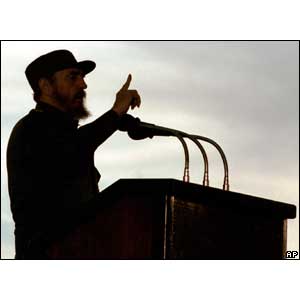
Cuba, the only communist country of Latin America has been governed for more than 40 years by only one president: Fidel Castro.
Today Fidel Castro, 80 years old and in delicate health, has transferred the powers to his brother
The Cuban revolution began in the year 1959, and since 1962 the U.S. organized a commercial blockade, while the government of the island sought the support of the USSR.
Since the USSR has disappeared, the government of Castro has intensified its actions against its political adversaries, and even also against some collaborators who are viewed as too moderate, such as former Foreign Minister Roberto Robaina.
The government condemned the opposition and arrested 74 dissidents, which was criticized by the European Union (E.U.).
The governments of Brazil and Venezuela financially support the Cuban government, as has China since the visit of the President Hu Jintao in the year of 2004.
An analysis of the actions of the Cuban government turns up the following keywords: revolution, repression, prison sentence, sanctions, embargoes, and dissident. Now the key question is, with Raul Castro will these intolerant words continue appearing, or will there be changes?
The future of Cuba is uncertain, because first one must evaluate the new functions of Raul Castro (the brother).
Nevertheless, Fidel's illness is big news, and almost all the newspapers and TV channels are closely following this political drama.
©2006 OhmyNews
by Alfredo Ascanio
Un artíoculo muy largo pero muy completo acerca de Fidel,la revolución y los grupos de apoyo, y escrito NEW YORKER por Jon Lee Anderson con el título : can the revolution outlive its leader? (Podrá la revolución sobrevivir a sus líderes? ) aparece en seguida:
La revista cultural AGULHA del Brasil
La revista digital AGULHA (Aguja) que viene del brasil toca una gran variedad de temas y además ve conecta con 35 revistas digitales del continente.
miércoles, julio 26, 2006
lunes, julio 24, 2006
Un pequeño ensayo de colores multiples
Los colores de mi hijo
Indira Páez
Yo nací en una casa de lo más multicolor. Y no, no me refiero a las paredes. Esas eran blancas, como las de cualquier casa de Puerto Cabello en los setenta. Mi casa era multicolor por dentro. Y es que mi mamá es de piel tan clara, que sus hermanos la bautizaron “rana platanera”. Y mi papá era de un trigueño agresivo, con bigote de charro, sonrisa de Gardel y cabello ensortijado, estirado a juro con brillantina. La vejez lo ha desteñido, a mi papá. Como si la melanina se acabara con el tiempo. Como si los años fueran de lejía.
De esa mezcla emulsionada salimos nosotros, cinco hermanos de lo más variopintos. Mi hermano mayor, vaya usted a saber por qué, parece árabe. Ojos penetrantes, nariz aguileña, frente amplia y cabello rizado (cuando existía, pues ahora ostenta una calvicie de lo más atractiva). Le sigue una hermana preciosa, nariz perfilada, pecas, ojos inmensos, sonrisa como mandada a hacer. Castaña clara y de cabello cenizo. Se ayuda con Kolestone, vamos a estar claros. Pero le queda tan bien que parece que hubiera nacido así.
Al tercero, extrañamente, le decían “el catire”. Nunca entendí por qué, con ese cabello de pinchos rebeldes que crece hacia arriba. Eso sí, tan rana platanera como la madre. Yo soy trigueña como mi padre, y mi nariz delata algún ancestro africano por ahí. Y mi hermana menor es pecosa y achinada, como si en algún momento los genes se hubieran vuelto locos y por generación espontánea hubieran creado una sucursal asiática en la casa.
Así, los almuerzos en mi casa parecían más una convención de las naciones unidas que otra cosa. Claro que yo jamás me di cuenta de eso. Para mí eran almuerzos, punto. Con el olor inenarrable de las caraotas negras de mi mamá y las tajadas de plátano frito que se hacían por kilos.
De chiquita nunca entendí por qué en el colegio de monjas un día una niñita me preguntó si mi papá era el chofer. Tampoco supe por qué no lo habían dejado entrar a cierto local nocturno muy de moda en los ochenta. Yo jamás me fijé en los colores de mi familia. Mi papá, mi mamá y mis hermanos, siempre fueron exactamente eso: mi papá, mi mamá y mis hermanos.
Cuando yo era chiquita pensaba que los colores los tenían las cosas, no la gente. No entendía por qué a algunos les decían negros si yo los veía marrones, y a otros les decían blancos si yo los veía como anaranjado claro tirando a rosa pálido. Y menos aún entendía por qué aparentemente y para muchos adultos, era mejor ser “blanco” que “negro”. Una vez mi papá se comió un semáforo y alguien le gritó: “¡negro tenías que ser!”. Yo me quedé estupefacta al descubrir que los “blancos” jamás se comían los semáforos.
Así las cosas, comenzó en mi adolescencia una suerte de fascinación por aquello de los colores de la gente, las etnias, las razas y esos asuntos que parecían importar tanto a la humanidad. Tanto, que hasta guerras entre países generaba. Tanto, que se mataba la gente por asuntos de piel. De genes. De células. De melanina.
Yo buscando vivencias reales, y con lo enamorada que soy, tuve novios marrones, rosados, amarillos y uno hasta medio verdoso. Me casé con un italiano y tuve una hija que parece una actriz de Zefirelli. Y finalmente me enamoré hasta los huesos y me casé otra vez. Con un marrón. Un marrón de esos que la gente llama “negro”.
Una tía abuela me dijo cuando me casé: “ni se te ocurra tener hijos con ese hombre, porque te van a salir negritos”. A mí no me cabía en la cabeza que a estas alturas de la historia universal, alguien pudiera hacer un comentario como ese. Pero mi tía tiene 84 años, y uno, a la gente de 84 años, le perdona todo. Hasta el racismo.
Como soy bien terca salí embarazada de mi esposo marrón. El embarazo fue una montaña rusa total, así que cuando nació mi hijo, sano, con diez deditos en las manos y diez en los pies, un par de ojos, orejas, boca, nariz y gritos, yo estallaba de felicidad. Y cuando uno estalla de felicidad, no escucha nada.
Pero resulta que han pasado cinco meses, y aunque sigo felicísima, se me ha ido pasando la sordera. Y como soy tan bruta, no termino de entender cómo es que tanta gente, que no solo mi tía la de 84, me pregunta “¿y de qué color es el niño?”. Sí, sí, así mismo. “¿De qué color es?”. Les importa muchísimo ese detalle a algunos. Tal vez a demasiados. Una amiga de España. Una antigua vecina. Una ex compañera de colegio. Una gente cualquiera que no tiene 84 años. Una gente que, que yo sepa, no pertenece al partido Neo Nazi, ni milita en el Ku Klux Klan, ni es aria, ni tiene esvásticas en la ropa. Una gente que se ofende si uno les dice racista. Llegan así, llaman, escriben. Y lo primero que preguntan, antes de esas típicas preguntas de viejita: “¿Cuánto pesó ?” “¿Cuánto midió?” “¿Lloró mucho?” “¿y de qué color es?”.
Y la verdad, lo confieso, a riesgo de quedar como una madre desnaturalizada, es que yo no me había fijado de qué color era mi hijo. Porque cuando nació mi hija la italianita nadie me preguntó eso.
Entonces no pensé que era tan importante saberse el color del hijo. Yo me sabía la fecha de su primera sonrisa. Me sabía cuándo se le puso la triple, cuándo comió papilla por primera vez. Sabía que tenía tres tipos de llanto (uno de hambre, uno de sueño y uno de ñonguera). Sabía que por las noches le gustaba quedarse dormida en mi pecho. Cosas, pues, intrascendentes. Igual con mi bebé. Ya me sé sus ojos de memoria, por ejemplo. A veces están a media asta y es que tiene sueño, pero lucha porque no quiere perderse nada. Me sé sus saltos cuando quiere que lo cargue. La temperatura de su piel, el olor de su nuca.
Pero el domingo pasado me encontré a una ex compañera de trabajo que no veía desde mi preñez, y ¡zuás!, me lanzó la pregunta. “¿Ya nació tu hijo? ¿Y de qué color es?”. Me agarró desprevenida, y no supe qué responderle, pero me prometí a mí misma averiguarlo, ya que a tanta gente parece importarle el asunto. Debe ser que es algo vital, y yo de mala madre no he prestado atención a la epidermis de mis críos.
Así que ante tanta curiosidad de la gente, me he puesto a detallar los colores de mi hijo. Y resulta que mi bebé es un camaleón. Sí, de verdad. Cambia de colores. A las cinco y media de la mañana, cuando se despierta pidiendo comida, es como rojo. Un rojo furioso y candelero. Después se pone como rosadito, y se ríe anaranjado. A veces pasa el día verde manzana, y me provoca darle mordiscos por todos lados. Cuando lo baño, y chapotea con el agua, se vuelve como plateado, una cosa increíble. Cuando se le cierran los ojitos del sueño, es amarillo pollito y provoca acunarlo y meterlo bajo las dos alas acurrucadito. Finalmente se duerme y, lo juro por Dios, se pone azul. Y brilla en la oscuridad.
Ese es mi hijo, multicolor. Sé que va a ser un poco difícil llenarle la planilla del pasaporte, o contestarles a las ex compañeras de colegio cuando pregunten de qué color es mi hijo. Pero eso es lo que hay. Lo juro. Mi hijo es color arco iris.
domingo, julio 16, 2006
Para oir buena musica desde China...
En el enlace de arriba aparece la hoja web que permite oir una de las Radios China que trasmite en inglés y que ofrecen buena música. La radio de la ALEGRIA desde JOY FM Broadcasting.
This is a link of Radio China International and here you can be delighted with good music from China.
Y si quieren ver un sitio con el arte chino, entonceshaga click aquí
This is a link of Radio China International and here you can be delighted with good music from China.
Y si quieren ver un sitio con el arte chino, entonces
Los Blogs de la region asiatica
En el vínculo de arriba aparece RFA -Radio Free Asia. Y allí además de oir buena radio pueden ustedes conocer: China Digital Times, los Global Voices online, y buscar los principales blogs de Burma, Cambodia, China, laos, North Korea, Tibet, Uyghur y Vietham y por supuesto algunas noticias de esta región del mundo.
Otro enlace interesante es la Radio China Internacional:
CHINA- RADIO
En esta emisora , en idioma inglés, se puede oir muy buena música.
Otro enlace interesante es la Radio China Internacional:
En esta emisora , en idioma inglés, se puede oir muy buena música.
miércoles, julio 12, 2006
ARTE y LITERATURA
En el enlace de arriba aparece la mejor hoja web sobre Arte y Literatura. Es un servicio de The Chronicle of Higher Education. Los temas : filosofía, estética, literatura, lenguaje, ideas, críticas, historia, música, arte, disputas, etc...
lunes, julio 10, 2006
EL ARBOL DE LA VIDA
El arbol de la vida es un proyecto de colaboración entre casi 4 mil hojas web de muchos biologos alrredor del mundo para informar sobre los seres vivos en el planeta, sus características y su evolución.
La Riqueza de las Redes
Arriba si hacen click van a poder bajar, en forma gratuita, a tu disco duro un libro excelente en formato PDF. Se trata de una obra escrita por el profesor YOCHAI BENKLER de La Universidad de Yale . El tema: un nuevo prisma para ver la economía mundial en una era de redes.
El Blog de Jaime Peña Donoso
Este blog que aparece en el enlace de arriba es de un periodista chileno que ganó el premio a la innovación de un blog en el concurso ATINA BLOG. Como me ha parecido un acierto sus escritos lo estoy colocando aquí para mis lectores.
domingo, julio 09, 2006
Diccionarios
En el enlace de arriba aparece la herramienta ONE LOOK, o sea un lugar para buscar diferentes definiciones de palabras en diversos diccionarios y también existen diccionarios en varios idiomas como aparece ahora:
Un diccionario en varios idiomas
Ahora bien, un proyecto interesante se llama en ingles Mi Palabra (MY-WORD), y en qué consiste? pues:
El propósito de este proyecto es desarrollar una manera mejor para que la gente aclare el significado de una palabra.
El mundo del Internet es un mundo nuevo. Muchas cosas son posibles que no eran prácticas hasta este momento, así pues decidímos experimentar. Para buscar el diseño “ideal” para el mundo de hoy que ayudaría a “entender” el significado de una palabra. Esto es un proyecto en negrilla. Hay varias cosas que serán nuevas para la mayoría de la gente - diferente de lo que utilizan a menudo.
Aquí están algunas de las pautas para el proyecto.
1. Utilizar más cuadros, pocas palabras.
2. No utilizar ninguna abreviatura.
3. Evitar las palabras que probablemente son mal entendidas.
4. Evitar demasiada información que pueda abrumar.
5. Incluir bastantes ejemplos de cómo se utiliza la palabra.
6. Utilizar ejemplos verdaderos, ejemplos no construidos.
7. Utilizar los archivos de los sonidos más bien que las pronunciaciones fonética.
8. Incluir el origen de la palabra cuando se sabe.
Se puedes buscar por el tema, alfabéticamente o hacer una búsqueda completa del sitio y comprobar nuestro progreso. Quiren conocer el proyecto ?, entoncesHAGAN CLICK AQUI
Otras refrencias se encuentran en:
ALL REFERENCES
LISTEN DE NEWS
Y si hay necesidad de traducir alguna de estas Hojas Web, entonces se puede utilizar:
EL TRADUCTOR BABEL
Ahora bien, un proyecto interesante se llama en ingles Mi Palabra (MY-WORD), y en qué consiste? pues:
El propósito de este proyecto es desarrollar una manera mejor para que la gente aclare el significado de una palabra.
El mundo del Internet es un mundo nuevo. Muchas cosas son posibles que no eran prácticas hasta este momento, así pues decidímos experimentar. Para buscar el diseño “ideal” para el mundo de hoy que ayudaría a “entender” el significado de una palabra. Esto es un proyecto en negrilla. Hay varias cosas que serán nuevas para la mayoría de la gente - diferente de lo que utilizan a menudo.
Aquí están algunas de las pautas para el proyecto.
1. Utilizar más cuadros, pocas palabras.
2. No utilizar ninguna abreviatura.
3. Evitar las palabras que probablemente son mal entendidas.
4. Evitar demasiada información que pueda abrumar.
5. Incluir bastantes ejemplos de cómo se utiliza la palabra.
6. Utilizar ejemplos verdaderos, ejemplos no construidos.
7. Utilizar los archivos de los sonidos más bien que las pronunciaciones fonética.
8. Incluir el origen de la palabra cuando se sabe.
Se puedes buscar por el tema, alfabéticamente o hacer una búsqueda completa del sitio y comprobar nuestro progreso. Quiren conocer el proyecto ?, entonces
Otras refrencias se encuentran en:
Y si hay necesidad de traducir alguna de estas Hojas Web, entonces se puede utilizar:
miércoles, julio 05, 2006
FreeSound : un proyecto de Sonidos
The Freesound Project is a collaborative database focusses only on sound. Este sitio es un projecto colaborativo para producir una base de datos de sonidos )no de canciones). Estos sonidos son de utilidad para los profesionales que se dedican a la producción de efectos bien sea en comedias de radio o en otros medios auditivos.
Los premios de las mejores WWW:The Webby Awards
The Webby Awards is the leading international award honoring excellence in Web design, functionality and creativity. Established in 1996 during the web's infancy, the Webbys are presented by The International Academy of Digital Arts and Sciences, a 500-member body of leading web experts, business figures, luminaries, visionaries and creative celebrities.
Reflecting the tremendous growth of the Internet as a tool for business and everyday lives, The Webbys honor excellence in over 65 categories.
Reflecting the tremendous growth of the Internet as a tool for business and everyday lives, The Webbys honor excellence in over 65 categories.
jueves, junio 29, 2006
Como buscar en la red
Los buscadores en la red son varios...pero cuáles osn los más eficientes? .Cómo se debe buscar una información sin que luego quedemos desfraudados? En el enlace de arriba aparecen varias indicaciones y en en este otro enlace que trata el tema de premios a los bucadores podemos complementar la información.
domingo, junio 25, 2006
Esta surgiendo un nuevo periodismo digital
Si...el enlace de arriba se refiere a un periódico de Corea del Sur que se llama OHMYNEWS. Cuál es la diferencia de otro diario, pues que en este ud. se puede afiliar como un reportero; es lo que ellos denominan el nuevo periodismo ciudadano. Es por primera vez que un diario permite que usted escriba en él. Yo conocía un lugar para poner noticias en el ciberespacio,pero me ha sorprendido este nuevo enfoque.
The upper link refers to a newspaper of South Korea that is called OHMYNEWS. Which it is the difference of another newspaper, therefore that in this you can be affiliated like a reporter; is what call the new civic journalism. It is for the first time that a newspaper permits that you write in it. I knew a place to put news in the cyberspace, but this new focus has surprised me.
OhmyNews is one of the first and largest International Web sites for citizen journalism, the same citizen-driven content that fuels the Twin Cities Daily Planet.
Es lo que se denomina el periodismo de ciudadanos (teoría y pràctica):
Haga CLICk aquí
También el CNN ha comenzado a buscar artículos o reportajes de ciudadanos en su nuevo enlace denominado EXCHANGE.
CNN Exchange invites YOU to connect with the news: Share your stories, your pictures, your videos wherever you see the I-Report logo. Weigh in on the blogs. Click your way through QuickVotes and more. Ver:
CNN-EXCHANGE
The upper link refers to a newspaper of South Korea that is called OHMYNEWS. Which it is the difference of another newspaper, therefore that in this you can be affiliated like a reporter; is what call the new civic journalism. It is for the first time that a newspaper permits that you write in it. I knew a place to put news in the cyberspace, but this new focus has surprised me.
OhmyNews is one of the first and largest International Web sites for citizen journalism, the same citizen-driven content that fuels the Twin Cities Daily Planet.
Es lo que se denomina el periodismo de ciudadanos (teoría y pràctica):
También el CNN ha comenzado a buscar artículos o reportajes de ciudadanos en su nuevo enlace denominado EXCHANGE.
CNN Exchange invites YOU to connect with the news: Share your stories, your pictures, your videos wherever you see the I-Report logo. Weigh in on the blogs. Click your way through QuickVotes and more. Ver:
miércoles, junio 21, 2006
WIKIS Made Simple-Very Simple
A Seattle startup called WETPAINT launched the newest Web-based "wiki" platform this week, offering people who register with the company the ability to create community websites that can be edited easily by any user, or by invited members only, depending on the creator's preference.
Wikis have been a popular tool for Internet geeks for about a decade, and now they're beginning to be adopted inside many businesses. For the most part, though, they haven't crossed into the mainstream -- the way that other Web-based publishing technologies such as blogs have. Wetpaint's founders hope to make that transition -- in part, by making their free, advertising-supported service as easy to use as familiar software tools such e-mail and word-processor programs.
Este es mi WIKI simple:
MI WIKI
Wikis have been a popular tool for Internet geeks for about a decade, and now they're beginning to be adopted inside many businesses. For the most part, though, they haven't crossed into the mainstream -- the way that other Web-based publishing technologies such as blogs have. Wetpaint's founders hope to make that transition -- in part, by making their free, advertising-supported service as easy to use as familiar software tools such e-mail and word-processor programs.
Este es mi WIKI simple:
lunes, junio 19, 2006
SINDICALIZAR los Blogs
Este Link trata el tema de sindicalizar los Blogs. Es el Blog de Jeff Barr. Tan importante es el tema que hoy con mi NetNewsWire pude encontrar unas opiniones mias que había emitido y que ya se me había olvidado donde estaban, o sea el asunto es:
ELNEWS-VINE de Askain
domingo, junio 18, 2006
Una curiosidad: arme una escultura desde el agua
En el enlace de arriba aparece VECTOR-PARK una herramienta para pasar un rato de ocio.
Los Mapas: una herramienta util
Si usted quiere encontrar los datos acerca de un determinado país o de una ciudad puede hacerlo con esta herramienta.
sábado, junio 17, 2006
Ten Steps to Professional Blogging
For too many months now, I've been hearing too many people say that you can't make money blogging. That it's futile. That only a-listers can make money blogging. It's frustrating for me to hear that because there's a big opportunity here for people to make some real money. This is the beginning of an e-book on making money thru blogging. I will enumerate the 10 steps that'll lead you to blogging success.
Let me start by telling you this isn't gonna make you a millionaire, nor is it a get rich quick scheme of any sorts. This is a process, that if followed, make it easy to pocket a little money doing something that is fun. How much can you make blogging? That's entirely up to you. I suggest starting off by blogging one half hour per day. Then as you see money coming in thru your blog, slowly increase the amount of time you spend blogging. I'm currently blogging several hours per day, even weekends.
Let me start by telling you this isn't gonna make you a millionaire, nor is it a get rich quick scheme of any sorts. This is a process, that if followed, make it easy to pocket a little money doing something that is fun. How much can you make blogging? That's entirely up to you. I suggest starting off by blogging one half hour per day. Then as you see money coming in thru your blog, slowly increase the amount of time you spend blogging. I'm currently blogging several hours per day, even weekends.
miércoles, junio 14, 2006
El grupo familiar de ASKAIN
En el enlace de arriba aparece el grupo familiar completo de ASKAIN (el editor de este Blog).
lunes, junio 12, 2006
El clima mundial
Ahora que en los meses de julio-agosto-septiembre se ponen de moda los huracanes y tempestades tropicale vale la pena consultar el clima mundial o por ciudades para poder planificar su viaje turístico sin riesgo alguno. En el enlace de arriba aparece el mejor documento sobre el asunto.
VIDEO
See the MyVU personal media viewer in the video: BEST of MacWORLD 2.006, bien sea con QuickTime o con WindowsMedia Player.
domingo, junio 11, 2006
Audio PLace Estudios
Esta es la Hoja Web del Ing. de Sonido Jesús Sánchez F., una empresa dedicada al audio, a los videos, al doblaje, etc..
sábado, junio 10, 2006
Su Centro Virtual de Formacion
Si ud. quiere tener su propio centro virtual de formación sin ningún costo puede entrar en el enlace de arriba que proviene de INTERFASE.
Interface es una empresa española especializada en la aplicación de las Tecnologías de la Información y la Comunicación (TICs) en los procesos de aprendizaje y formación. Situada en Galicia, provincia de A Coruña (España) , es actualmente, uno de los referentes europeos mas importantes en el desarrollo de tecnologías y métodos de gestión del aprendizaje. Interface, es líder absoluto en España en impartición de acciones de teleformación a través de las convocatorias de planes de formación continua de diversas entidades oficiales en el ámbito español ( Fundación Tripartita , Organismos Centrales , Autonómicos y Sindicatos ) con miles de acciones formativas certificadas en distintas convocatorias, en los últimos años. A partir del presente año, Interface ha comenzado a operar comercialmente en Argentina y en Venezuela, aplicando el " know how " característico de su actividad en los mercados internacionales.
Este fue difundido en Learning Times Org por Askain:
El Dato
Interface es una empresa española especializada en la aplicación de las Tecnologías de la Información y la Comunicación (TICs) en los procesos de aprendizaje y formación. Situada en Galicia, provincia de A Coruña (España) , es actualmente, uno de los referentes europeos mas importantes en el desarrollo de tecnologías y métodos de gestión del aprendizaje. Interface, es líder absoluto en España en impartición de acciones de teleformación a través de las convocatorias de planes de formación continua de diversas entidades oficiales en el ámbito español ( Fundación Tripartita , Organismos Centrales , Autonómicos y Sindicatos ) con miles de acciones formativas certificadas en distintas convocatorias, en los últimos años. A partir del presente año, Interface ha comenzado a operar comercialmente en Argentina y en Venezuela, aplicando el " know how " característico de su actividad en los mercados internacionales.
Este fue difundido en Learning Times Org por Askain:
viernes, junio 09, 2006
Un Blog sobre astronomia
Multiversos es un Blog de Andrés eloy Martinez Rojas de México y trata el tema de la astronomía utilizando la herramienta You TUBE
miércoles, junio 07, 2006
La revista Digital de cultura DESTIEMPOS
La revista digital destiempos proviene de México y en ella aparecen narrativas y poemas.Otra revista digital iberoaméricana es ALAIC que es editada en la Universidad de Sao Pablo en Brasil y que se dedica a la investigación en el área de la comunicación.O bien : RELIEVE una revista dedicada a la investigación educativa que proviene de México.
lunes, junio 05, 2006
Las Opiniones de Pedro
En el enlace de arriba aparece un interante blog de opinión, en el cual encontraremos reflexiones de la vida diaria.
domingo, junio 04, 2006
Una lista de todas las universidades mundiales
En el enlace de arriba aparece una lista de casi todas las universidades del mundo. Quizá esta información pueda ser de utilidad para ud. Los centros de educación superior de venezuela aparecen ahora:
Hacer Click Aqui
In the upper link appears a list of almost all the universities of the world. Perhaps this information can be of utility for you.
In the upper link appears a list of almost all the universities of the world. Perhaps this information can be of utility for you.
viernes, junio 02, 2006
Practicar el idioma ingles en ELT-PODCAST
ELT stands for English Language Teaching. These audio files are for students of English. On this page, you'll find our most recent recordings. Please click "Archive" above for our complete list.
jueves, junio 01, 2006
Lexicos : revista digital de cultura y ciencia
En el enlace de arriba aparece le revista digital Léxicos dedicada a la cultura y a la ciencia. El equipo de editores y redactores nos dicen lo siguiente:
"Esperamos que mirarla se convierta para el lector en una especie de juego, una experiencia que implique reconocerla, habitarla, y perderse en ella como si estuviera paseando sin rumbo fijo por una ciudad que visita por primera vez, derivando por la curiosidad del pensamiento y la expresión humana".
Este es también el BLOG de Léxicos:
domingo, mayo 28, 2006
Los enlaces politicos venezolanos

En seguida aparecen varios enlaces que tratan el tema de la política actual venezolana. Estos enlaces los he divido en dos:
Los enlaces de la oposición o grupos de la resistencia civil, como:
Los blog de los que apoyan el Socialismo del Siglo XXI :
Algunos enlaces interesantes

Existen actualmente muchos blogs en Internet. Se dice que es posible que existan más de 30 millones de acuerdo a los analistas. También no es ninguna sorpresa que existan algunos proyectos que por lo general nos han llamado la atención. Yo voy ahora a colocar mi lista de los que considero de gran interés para los académicos o los profesores,como:
El Blog de los Académicos en Internet
RHETORICA,una lista de enlaces de profesores universitarios, cubriendo varias disciplinas.- El sitio dedicado a la Sociología lo podemos encontrar en ANALISTA
PERIODISMO de Investigación se autotitula INSTAPUNDIC y siempre se ha dicho que es el lugar más visitado en la Red.
Igualmente un buen enlace que muchos norteamericano leen a menudo lo encontramos en CRITICA DE LOS MEDIOS
Ud. también puede visitar LOS ACADEMICOS Y SUS BLOGS, uno de mis enlaces favoritos desde hace ya varios años.
Ahora es el momento de hacer click.
El Juego de la Novela
Un proyecto interesante de una profesora de inglés y dedicada a la literatura. Utilizando el podcast, ella ha diseñado un juego que consiste en lo siguiente: ella describe en el Podcast el carácter de los personajes y relata pasajes de una novela, con la finalidad de que luego las personas descubran la obra literaria y en el Foro discuten el asunto. Si les interesa la literatura inglesa y quieren jugar, este el lugar adecuado.
It's an audio literature trivia game delivered as a podcast or on their webpage. Listen to the passage from a novel, then guess the character, novel and author via a web form.
Every other day or so, she'll make an audio recording from a novel. It will be short passage, always something a character says. Your task will be to guess the character, book and author.
RELIEVE es la revista de investigacion educativa

La revista digital RELIEVE proviene de la Universidad de Valencia, España, y se dedica al tema de investigación y evaluación educativa. Veamos lo que sus directores nos dicen sobre el objetivo de este proytecto:
RELIEVE es la primera revista electrónica de España, tiene una orientación académica con un exigente proceso de revisión por expertos y es totalmente gratuita. Aspira a ser un instrumento de comunicación para la comunidad educativa, en particular en temas de investigación y de evaluación educativa, entendidas en un sentido amplio. Pretende aprovechar eficazmente las posibilidades de comunicación e interactividad que ofrece Internet.
RELIEVE está auspiciada por AIDIPE (Asociación Interuniversitaria de Investigación en Pedagogía) cuya sede social está en Pg. de la Vall d'Hebron, 171. 08035-Barcelona. AIDIPE también edita, en formato impreso, la Revista de Investigación Educativa (RIE).
RELIEVE se edita actualmente desde el Departamento de Métodos de Investigación y Diagnóstico en Educación (MIDE) de Facultad de Filosofía y Ciencias de la Educación de la Universidad de Valencia (Av. Blasco Ibañez , 30. 46010-Valencia -Spain).
Un buen curso de HTML
Casi siempre necesitamos un buen curso de HTML para poder escribir bien o hacre tablas en estos blogs. Arriba he colocado el mejor curso de la red.
sábado, mayo 27, 2006
El Museo Virtual de Arte
Después del Código da Vinci se puso de moda volver a los museos de arte para examinar las pinturas sobre María Magdalena o conocer la Pintura sobre el rostro de la muchacha adornada con el sarcillo de perlas (Girl with a Pearl Earring) del pintor holandes Vermeer Van Delft (1.661-1,670), en fin...
The Web Gallery of Art is a virtual museum and searchable database of European painting and sculpture from 12th to mid-19th centuries. It was started in 1996 as a topical site of the Renaissance art, originated in the Italian city-states of the 14th century and spread to other countries in the 15th and 16th centuries. Intending to present Renaissance art as comprehensively as possible, the scope of the collection was later extended to show its Medieval roots as well as its evolution to Baroque and Rococo via Mannerism. More recently the periods of Neoclassicism and Romanticism were also included.
The collection has some of the characteristics of a virtual museum. The experience of the visitors is enhanced by guided tours helping to understand the artistic and historical relationship between different works and artists, by period music of choice in the background and a free postcard service. At the same time the collection serves the visitors' need for a site where various information on art, artists and history can be found together with corresponding pictorial illustrations. Although not a conventional one, the collection is a searchable database supplemented by a glossary containing articles on art terms, relevant historical events, personages, cities, museums and churches.
The Web Gallery of Art is intended to be a free resource of art history primarily for students and teachers. It is a private initiative not related to any museums or art institutions, and not supported financially by any state or corporate sponsors. However, we do our utmost, using authentic literature and advice from professionals, to ensure the quality and authenticity of the content.
We are convinced that such a collection of digital reproductions, containing a balanced mixture of interlinked visual and textual information, can serve multiple purposes. On one hand it can simply be a source of artistic enjoyment; a convenient alternative to visiting a distant museum, or an incentive to do just that. On the other hand, it can serve as a tool for public education both in schools and at home.
(La visita además se puede realizar con un bucador según el nombre del artista, incluso se pueden comparar copias de las colecciones, o en todo caso seleccionar un Tour en la guía que existe para este fin)
jueves, mayo 25, 2006
Hoy estuve oyendo la Musica de Dark Horse

La radio Dark Horse proviene de Inglaterra y siempre colocan excelente música. Gracias a la tecnología del PODOMATIC y a iTunes podemos pues oir muy buena música, mientras trabajamos en Internet con nuestro equipo MAC. Esta radio se autocalifica como : The Best Independent Music, y su enlace es:
La Investigacion Cualitativa

En el enlace de arriba profesor Martínez Miguelez, de la USB, nos deleita con su enfoque dedicado a la investigación cualitiva y para complementar este enfoque y verlo aplicado en un trabajo de investigación, la Profesora María de Lourdes Acedo de Bueno, también de la Universidad Simón Bolívar, nos ayuda a entender el asunto del tema:
sábado, mayo 20, 2006
El Sarcofago de las antiguas Hojas Web
Pero es verdad también que en esta era de la globalización está de moda conocer más sobre tecnologías digitales y en este lugar es posible:
Yo también creo interesante conocer el CEMENTERIO de antiguas hojas Web que han desaparecido, pues se dice que el 60% de estas iniciativas mueren y no continúan en el ciberespacio, solamente existe una persona que se dedique a coleccionarlas como aparece en seguida:
Si ustedes hacen CLICK arriba en el vínculo principal entonces pueden ir al MUSEO de las Hojas WEB ya desaparecidas. Esto es lo que se dice de ese museo:
WHAT IS THE MUSEUM OF E-FAILURE?
The Museum of E-Failure was launched in early 2000; it is an image gallery of some 1,250 screens captured from some 900 Web projects that for various reasons "went dark" during the years 1998 to 2004.
Some had a chance to post a self-penned epitaph in the form of a "farewell screen"; others simply expired and drifted lifelessly, with no visible indications for their demise - often for many months.
This collection provides a partial, but revealing look at the latter half of the Web's 10 years of existence. Annotations (Web Elegies) are included where possible in order to place each site in its historical context.
Unlike the far more extensive collection of historical material located at Archive.org's excellent Wayback Machine site, the sites in this collection are not working replicas, but screenshot recordings made (using the time-honored "ALT-PRINT-SCRN" method) when the site was still running, a technique allowing the preservation of dynamic elements, including banner advertisements, Java and Javascript, and streaming media in a way not always possible with the WayBack machine. It is hoped that this exhibit - a sample of cultural product created by the dotcom era's lost wunderkind - provides some small iota of insight into the Web's possibly central role in the future history of Dead Media.
domingo, mayo 14, 2006
Una herramienta para intercambio de Podcast

En el enlace de arriba aparece una herramienta para mandar Podcast por e-mail.
sábado, mayo 13, 2006
Otro Blog de alta calidad es DEKITA

Este es el Blog de mi amigo Felipe Perez Estevez

El Blog de Felipe Pérez es muy interesante porque trata el tema de la calidad de la vida en su sentido muy amplio. Y en relación a la calidad, podemos observar lo que está haciendo Teresa Almeida en su clases de inglés a jóvenes potugueses:
jueves, mayo 11, 2006
Ya MOODLE ha colocado sus tips
Desde el 15 de febrero del 2.006 el software MODDLE ha colocado en español y en otros idiomas todos los Tips para administrar mejor el uso de esa herramienta.
Además existe una lista de herramientas de Código Abierto en:
PLATAFORMAS
Todo ello lo podemos complementar con los Videos que aparecen en Teachers TV, donde realmente se aprende el arte de la pedagogía aplicada:
LOS VIDEOS
Además existe una lista de herramientas de Código Abierto en:
Todo ello lo podemos complementar con los Videos que aparecen en Teachers TV, donde realmente se aprende el arte de la pedagogía aplicada:
miércoles, mayo 10, 2006
Suscribirse a:
Entradas (Atom)